

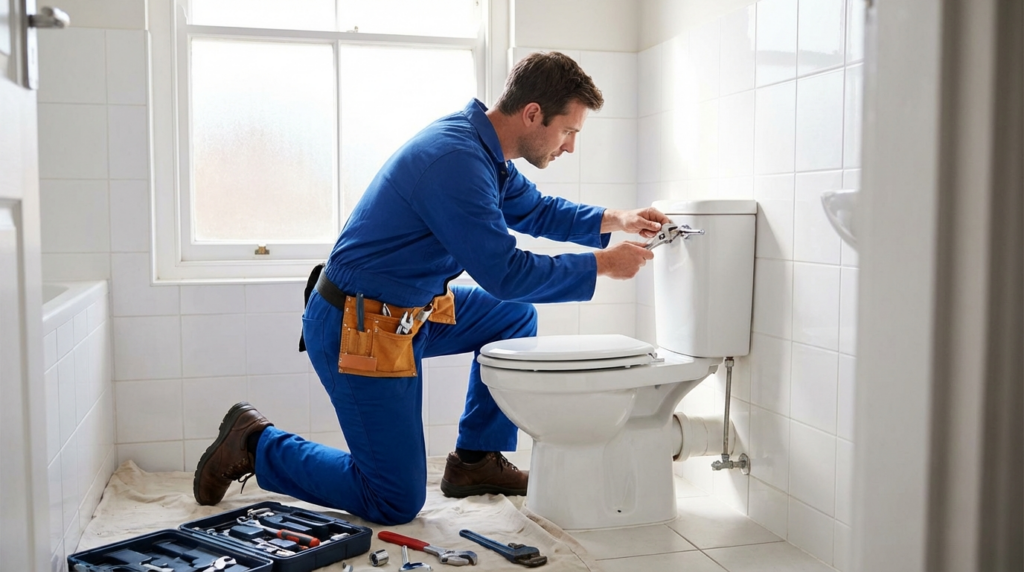
A toilet handle that sticks, feels loose, or does nothing at all is one of the most common plumbing nuisances Denver Metro homeowners encounter. The good news is that most toilet handle problems are inexpensive to fix and require only basic tools.
Denver’s unique environment plays a role in how quickly toilet components wear down. The Mile High altitude affects water pressure, and the region’s notoriously hard water, with calcium and magnesium levels averaging 150 to 250 mg/L, causes mineral deposits to build up on internal tank parts faster than in softer-water areas.
Why Toilet Handles Fail in Denver Metro Homes
Denver Metro sits at 5,280 feet above sea level. This altitude affects water pressure across the region, which in turn puts extra stress on toilet fill valves, flappers, and handle assemblies. Add Colorado’s hard water, rich in calcium and magnesium from the Rocky Mountain watershed, and you have conditions that accelerate wear on every moving part in your toilet tank.
The following are the most common reasons toilet handles fail in homes across Denver, Aurora, Lakewood, Arvada, Westminster, and surrounding communities.
Loose or Wobbly Handle
The nut securing the handle to the toilet tank can loosen over time, especially with repeated hard flushes. In Denver homes with older toilets, particularly those installed before 2000, the handle nut may be corroded from years of mineral deposits, making it harder to tighten.
Handle That Sticks Down After Flushing
If you have to hold the handle down to complete a flush, or it does not spring back up, the chain connecting the handle arm to the flapper is the likely culprit. A chain that is too short pulls the flapper open but cannot release it. Hard water deposits on the chain can also cause it to catch.
Handle That Does Nothing When Pressed
When pressing the handle produces no flush at all, the connection between the handle arm and the flapper chain has likely broken or come loose. The chain may have slipped off the arm, or the arm itself may have cracked, a common issue in older Denver homes where plastic tank components have become brittle.
Constantly Running Toilet
A toilet that runs continuously after flushing is often caused by a worn-out flapper that cannot create a proper seal. Denver’s hard water deposits can coat the flapper seat and prevent a tight closure. A running toilet can waste up to 200 gallons of water per day, a significant concern for Colorado homeowners committed to water conservation.
Tools and Parts You Will Need
Most toilet handle repairs require only basic tools available at any hardware store in the Denver Metro area. Before starting, turn off the water supply valve behind your toilet and flush to empty the tank.
You will need an adjustable wrench or pliers, a replacement toilet handle kit (typically $8 to $20 at Home Depot or Ace Hardware locations throughout Denver), a replacement flapper if needed (match your toilet brand), and a small wire brush for cleaning mineral deposits off the tank fittings.
How to Fix a Loose Toilet Handle
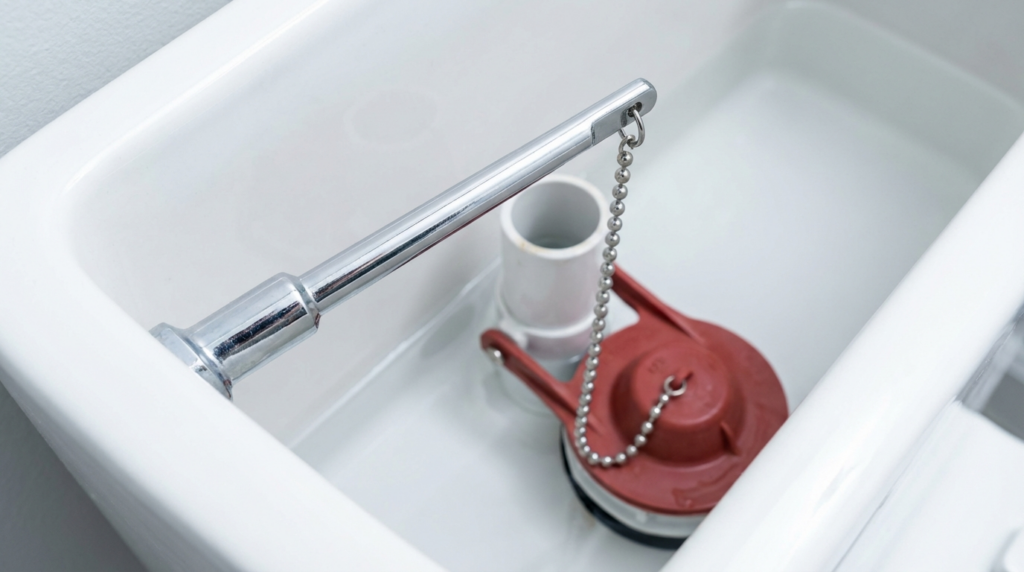
A loose handle is the simplest fix. Remove the tank lid and locate the nut on the inside of the tank where the handle arm passes through. Note that toilet tank nuts have a reverse thread, turn the nut clockwise to loosen and counterclockwise to tighten. This reverse threading trips up many DIYers.
Use pliers or an adjustable wrench to snug the nut until the handle feels firm. Do not overtighten, hairline cracks in older porcelain tanks are a real risk. If the nut is badly corroded, replace the entire handle assembly rather than forcing it.
How to Fix a Stuck or Non-Returning Handle
Start by checking the chain length. The chain connecting the handle arm to the flapper should have about half an inch of slack when the handle is in its resting position. Too little slack and the flapper stays partially open, causing a running toilet. Too much and the handle has to travel far before anything happens.
Unhook the chain from the handle arm and reconnect it at a link that gives the correct amount of slack. If the chain has heavy mineral buildup from Denver’s hard water, replace it, replacement chains are included in most toilet handle kits.
How to Replace the Entire Handle Assembly
If tightening does not solve the problem, or if the handle arm is cracked, a full handle replacement is the next step. Remove the tank lid and disconnect the chain from the arm. Hold the handle from outside the tank while you loosen the mounting nut inside. Slide the old handle out.
Insert the new handle through the mounting hole and hand-tighten the interior nut (remember: reverse thread). Reconnect the chain with appropriate slack, restore water supply, and test the flush. A full replacement typically takes under 15 minutes.
If these steps sound more involved than you expected, that is completely normal. Toilet hardware can be tricky, especially in Denver Metro homes where hard water has been at work for years. Precision Plumbing offers fast, affordable toilet repairs throughout the Denver-Boulder corridor. A quick call to (720) 464-4485 is often the most efficient solution.
When to Call Precision Plumbing
Some toilet problems go beyond a handle swap. If DIY repairs are not resolving the issue, it is time to call a professional. Precision Plumbing has served Denver Metro homeowners since 1982, and our licensed plumbers can diagnose and fix toilet problems quickly, often on the same day.
Contact Precision Plumbing at (720) 464-4485 if you notice any of the following:
- The toilet rocks or shifts when you sit down, which may indicate a wax ring failure or a cracked base.
- Water pools at the base of the toilet after flushing.
- The handle repair does not stop a running toilet after multiple attempts.
- Your toilet is more than 15 to 20 years old and experiencing repeated issues. Older toilets use significantly more water per flush than the modern low-flow models required by Colorado building codes, so replacement often pays for itself quickly.
- You hear unusual sounds from the tank, such as constant water movement or a hissing fill valve, even after servicing the handle and flapper.
- There are signs of water damage, staining, or soft flooring around the base of the toilet.
A toilet problem that keeps coming back is your home telling you something bigger is going on. Our team can run a full toilet diagnostic, recommend repairs or a water-efficient replacement, and get your bathroom back to normal with minimal disruption. We serve Denver, Aurora, Lakewood, Boulder, Arvada, Westminster, Thornton, Littleton, and more than 25 communities across the Front Range. Call (720) 464-4485 to schedule service.
Frequently Asked Questions
Why does my toilet handle feel different at high altitude in Denver?
Denver’s altitude affects municipal water pressure, which can make toilet fill valves and flush mechanisms behave differently than they would at sea level. Slight variations in water pressure are normal, but if the handle feels unusually stiff or sluggish, check the fill valve adjustment as well as the handle assembly.
How long do toilet handles last in Denver Metro homes?
Most toilet handles last 5 to 10 years before wearing out. In Denver Metro, hard water deposits from the Rocky Mountain watershed can shorten that lifespan by coating metal parts and causing corrosion. Regular cleaning of the tank interior every one to two years can extend handle and flapper life significantly.
Can hard water damage my toilet’s internal parts?
Yes. Colorado’s hard water, which runs 150 to 250 mg/L in the Denver Metro area, leaves calcium and magnesium deposits on flappers, chains, fill valves, and the flapper seat. Over time, these deposits prevent the flapper from sealing properly and can cause the handle arm to become stiff or corroded.
What is the best toilet handle replacement for a Denver home?
Look for a universal toilet handle kit with an adjustable arm length and a corrosion-resistant metal or heavy-duty plastic nut. Brands like Fluidmaster and Korky are widely available at Denver-area hardware stores and are compatible with most toilet brands. Avoid cheap chrome-plated handles, the plating corrodes quickly in hard-water conditions.
How do I stop my toilet from running after fixing the handle?
A running toilet after a handle fix usually means the chain is still too short, leaving the flapper slightly open. Adjust the chain length first. If the toilet continues to run after that, the flapper itself is likely worn and needs replacement. Flapper kits cost $5 to $15 at any hardware store and take about ten minutes to install.
When should I replace the whole toilet instead of just the handle?
If your toilet requires repeated repairs, uses 3.5 gallons or more per flush (pre-1994 models), or is cracked in the bowl or tank, replacement is worth considering. Modern 1.28 GPF toilets required by Colorado building codes use significantly less water and pay for themselves through lower water bills in areas served by Denver Water or Aurora Water.
About Precision Plumbing Heating, Cooling & Electric
Precision Plumbing Heating, Cooling & Electric has served Denver Metro homeowners since 1982. Based in Louisville, Colorado, our licensed plumbers handle everything from minor toilet handle repairs to full bathroom remodels, sewer line replacements, and water heater installations. We serve over 25 communities throughout the Denver-Boulder corridor, including Denver, Aurora, Boulder, Arvada, Westminster, Thornton, Lakewood, Littleton, and more. Call us at (720) 464-4485 or contact us to schedule service.