

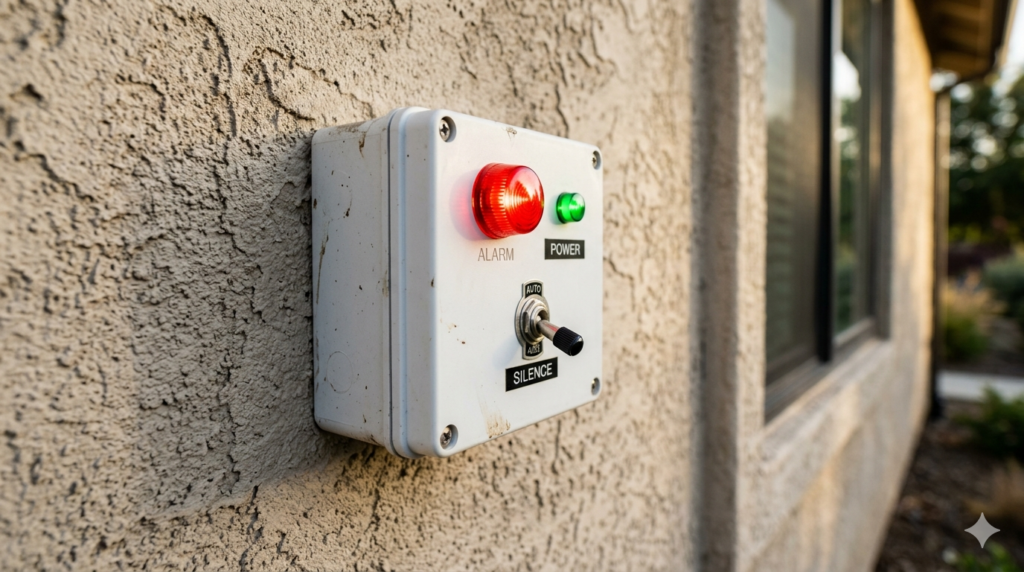
A loud beeping noise and a flashing red light on the wall of your utility room or garage usually mean one thing for properties on a septic system: the tank or pump chamber is trying to get your attention. For homeowners in rural Boulder County, where municipal sewer lines do not reach many properties west of the foothills or in unincorporated areas like Niwot, Hygiene, and Coal Creek Canyon, that alarm is the early warning system standing between you and a sewage backup inside your home.
The good news is the alarm has done its job. You typically have a 24 to 48 hour window before wastewater starts backing up into the lowest fixtures in the house, and many of the underlying causes are surprisingly fixable once you know what to look for.
Key Takeaways
- A septic alarm signals either high water in the pump chamber or low water from a leak, not an immediate emergency.
- You generally have 24 to 48 hours to act before a backup occurs, but only if you reduce water use immediately.
- Common causes range from a tripped breaker to a failed pump, clogged filter, saturated drain field, or root intrusion in the sewer line.
- Boulder County’s variable soils, snowmelt cycles, and rural property layouts make heavy-rain and saturation triggers especially common.
- Some causes are homeowner-fixable in minutes; others require a licensed plumber, septic contractor, or both.
What a Septic Alarm Actually Tells You
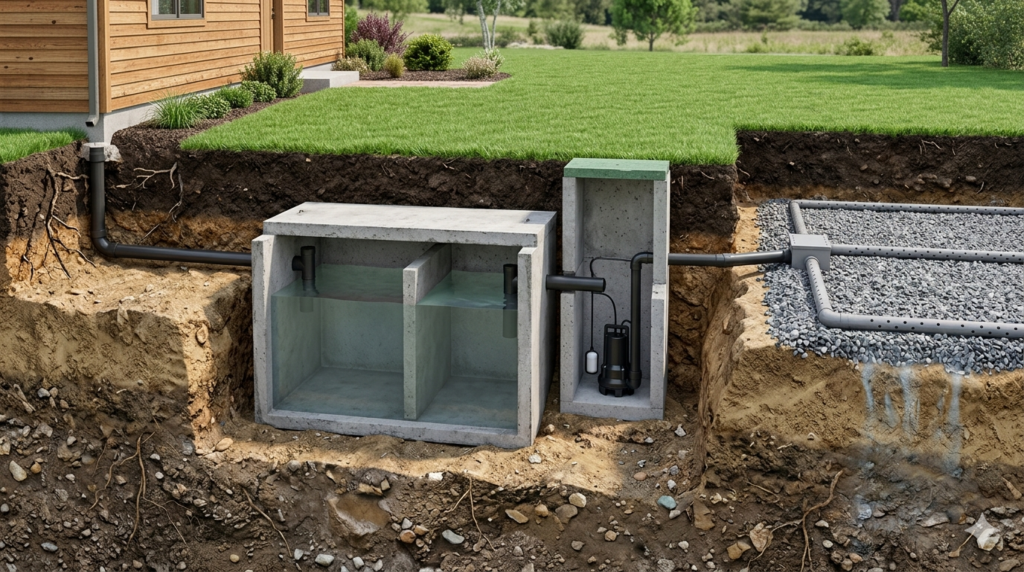
Most residential septic systems include a control panel mounted on an exterior wall or inside the garage or utility room, with a green light indicating power and a red light indicating an alert. The red light is wired to a float switch inside the pump chamber, the tank, or both. When wastewater levels rise above the high-water threshold, or in some systems drop below a low-water threshold, the float trips and the alarm sounds.
That distinction matters. A high-water alarm usually points to something blocking outflow or overwhelming the system’s capacity. A low-water alarm often points to a leak or a stuck float. Identifying which signal you are dealing with narrows the troubleshooting list considerably and tells you whether the problem is upstream of the tank, inside the tank, or downstream in the drain field.
Cause 1: Excessive Household Water Use
The simplest reason a septic alarm sounds is also the most common: the household put too much water through the system in too short a window. Three back-to-back loads of laundry, a houseful of holiday guests showering one after another, or a long irrigation cycle on a softener regeneration day can all push the pump chamber past its high-water threshold faster than the pump can move effluent out to the drain field.
The fix: Stop all non-essential water use for the next 12 to 24 hours. Skip laundry and dishwashing, take shorter showers, and avoid running multiple fixtures at once. If excessive use was the only cause, the pump should catch up and the red light should clear on its own within a pump cycle or two.
Cause 2: Pump or Float Switch Failure
Septic pumps run multiple cycles every day, year after year, and like any motor they eventually wear out. A burned-out pump motor, a jammed impeller, corroded wiring, or a float switch that has become stuck open or closed are among the leading reasons a high-water alarm will not clear no matter how much you reduce water use.
A stuck float is sometimes the result of debris, scum buildup, or even a tether that has wrapped around something inside the chamber. A failed pump, on the other hand, usually requires replacement of the unit itself.
The fix: This one is not a DIY job. Septic tank lids hold concentrated hydrogen sulfide and methane gases that can be deadly within seconds, and the electrical components inside a pump chamber sit in standing wastewater. A licensed plumber or septic contractor has the gas monitors, lifting equipment, and lockout procedures to inspect and replace pumps and floats safely.
Cause 3: Tripped Breaker or Power Interruption
Before assuming the worst, walk to your electrical panel. The septic pump runs on its own dedicated circuit, often labeled “septic,” “pump,” or “sewer.” A tripped breaker means the pump has not been moving wastewater out of the chamber, which is exactly what triggers a high-water alarm. Power outages from Colorado wind events or winter storms can have the same effect.
The fix: Reset the breaker once. If it stays on, give the pump 10 to 15 hours to catch up and watch whether the red light clears. If the breaker trips again immediately, do not keep resetting it. Repeated trips usually mean a short in the pump wiring or a seized motor drawing too much current, and continuing to cycle it can cause further damage.
Cause 4: Clogged Effluent Filter
Most septic tanks installed in Boulder County over the last two decades include an effluent filter at the outlet baffle, a cartridge-style screen designed to catch solids before they reach the pump chamber or drain field. Over time, that filter accumulates a mat of grease, lint, paper fibers, and biofilm. Once it clogs, wastewater can no longer flow from the main tank into the pump chamber, levels back up, and the alarm sounds.
The fix: Effluent filters are designed to be removed, rinsed off with a garden hose over the inlet side of the tank, and reinserted. That said, opening the tank access risers is not something to do casually. If you have never serviced your filter before or you do not know where it is located, schedule a septic contractor for routine maintenance and ask them to walk you through the filter’s location and cleaning interval.
Cause 5: Heavy Rain or Saturated Drain Field
Boulder County properties contend with conditions that put real stress on drain fields. Spring snowmelt off the Front Range can saturate soils for weeks, summer monsoon storms drop several inches of rain in an afternoon, and the mix of decomposed granite, clay, and rocky alluvial soils common in the foothills affects how quickly a drain field can absorb effluent. When the soil around your absorption field is already saturated, the drain field cannot accept new wastewater, levels back up into the tank, and the alarm trips even though nothing inside the system has failed.
The fix: Reduce water use until the ground dries out. If your alarm consistently sounds after heavy rain or during spring runoff, that is a signal to have the drain field evaluated. Persistent saturation alarms often point to a drain field that is undersized, aging, or partially failing, all of which are findings a septic contractor or onsite wastewater treatment system (OWTS) professional should diagnose.
Cause 6: Tank Leak or Cracked Component
A septic alarm that signals a low water level rather than a high one usually points to something letting wastewater out of the tank where it should not be going. Cracks in older concrete tanks, a damaged baffle, corroded steel components, or a leak at a pipe connection can all drop the water level below the low-float threshold.
Signs that point in this direction include soggy ground or unusually green grass over the tank or transfer line, faint sewage odors near the access lids, and an alarm that returns even after the pump appears to be working correctly.
The fix: Tank repair and replacement work falls squarely in the licensed septic contractor’s territory, and in Boulder County any tank repair, alteration, or replacement requires a permit through Boulder County Public Health. Do not attempt to seal cracks yourself. The work has to meet OWTS regulations and be inspected.
Cause 7: Drain Field Failure or Root Intrusion
The most serious cause of a recurring septic alarm is failure somewhere between the tank and the drain field, or in the drain field itself. Tree roots from cottonwoods, willows, elms, and silver maples, all of which are common across Boulder County properties, aggressively seek out the moisture and nutrients inside sewer and septic lines. Once roots find a hairline crack or loose joint, they grow inward, catch debris, and eventually block the line entirely.
The same is true for the sewer line that runs between your house and the septic tank. A collapsed or root-blocked sewer line stops wastewater from reaching the tank at all, but the symptoms look almost identical to a tank-side problem: slow drains, gurgling fixtures, and a triggered alarm if your control panel monitors flow rather than just water level.
The fix: A sewer camera inspection is the only reliable way to confirm root intrusion or a collapsed line. Once the problem is located, options range from mechanical drain clearing and hydro jetting to clear roots and debris, all the way up to sewer line repair or trenchless replacement for badly damaged lines.
What to Do Right Now When the Alarm Sounds
When the beeping starts, work through these steps in order:
- Silence the alarm. Press the red button or flip the silence switch on the control panel. The red light should stay on, since the underlying condition has not been resolved.
- Stop using water. No laundry, no dishwasher, short showers only, minimal flushing.
- Check the breaker. Find the septic pump circuit at your electrical panel. If it tripped, reset it once.
- Walk the yard. Look for standing water, soggy ground, or unusually lush grass over the tank or drain field. Note anything you see for the contractor.
- Wait 10 to 15 hours. If the cause was high water from heavy use or a tripped breaker, the pump should catch up and the red light should clear.
- Call a professional if the alarm persists. If the red light stays on, the alarm keeps re-triggering, drains start to slow inside the house, or you see standing water outside, do not wait for a backup.
Never open the septic tank lid yourself. The gases inside are immediately dangerous, and there is no homeowner-level fix that requires opening the tank.
When to Call a Licensed Plumber Instead of a Septic Pumper
Septic systems sit at the intersection of two trades. Septic contractors handle the tank, the pump, the drain field, and the OWTS permits. Licensed plumbers handle the sewer line between the house and the tank, interior drain issues, and any work involving pipes inside the home that connects to the septic system.
When the alarm is tied to a slow drain inside the house, a gurgling toilet, recurring clogs in the main sewer line, or root intrusion in the line between the foundation and the tank, that is plumbing work. A plumbing inspection and a camera scope of the sewer line will tell you whether the problem is upstream of the septic system entirely. Homeowners often save themselves a wasted septic pump-out by ruling out a sewer-side blockage first.
For tank pumping, float and pump replacement, drain field rehabilitation, and OWTS permit work, you will need a Boulder County-registered septic contractor. The two trades coordinate regularly, and a clear diagnosis on the plumbing side often shortens the septic contractor’s visit considerably.
Preventing Future Septic Alarm Calls in Boulder County
A few habits go a long way toward keeping the alarm silent:
- Spread out water use. Run one load of laundry per day rather than four on Saturday. Stagger showers when guests are visiting.
- Pump the tank on schedule. Most Boulder County properties need pumping every three to five years, depending on household size and tank capacity.
- Service the effluent filter. Ask your septic contractor to clean it during every pumping visit.
- Keep aggressive trees away from the line. Cottonwoods, willows, and silver maples should sit well clear of the sewer line, the tank, and the drain field.
- Scope the sewer line periodically. A camera inspection every two to three years catches root intrusion and pipe damage before it triggers a backup, especially for older homes around Longmont and the unincorporated foothills.
- Watch what goes down the drain. Wipes, grease, paper towels, and harsh chemicals all stress the septic system and shorten the life of the drain field.
Frequently Asked Questions
How long do I have before sewage backs up into my house after the alarm goes off?
Most systems are designed to give you 24 to 48 hours of normal use before a backup occurs, but only if you reduce water use immediately after the alarm sounds. Heavy use during that window shortens the timeline significantly.
Can I silence the alarm and ignore it?
The silence button stops the noise but does not fix the underlying problem. The red light will stay on until the water level returns to normal. If you silence the alarm and continue using water as usual, you are likely to end up with a sewage backup inside the house.
Does a septic alarm always mean my tank is full?
No. A red light usually means the water level in the pump chamber is high, not that the tank itself is full of solids. The two issues can occur together, but the alarm is monitoring level, not capacity.
Why does my alarm go off every time it rains hard?
Heavy rain or rapid snowmelt saturates the soil around the drain field, which slows or stops absorption of effluent. The tank backs up, levels rise in the pump chamber, and the alarm trips. Recurring rain-triggered alarms usually mean the drain field needs evaluation.
Is it safe to open the septic tank lid myself to check?
No. Septic tanks contain concentrated hydrogen sulfide and methane gases that can be fatal in seconds, and the lids are heavy and sometimes structurally degraded. All access work should be done by a licensed septic contractor with proper safety equipment.
Will a plumber pump my septic tank?
Plumbers handle the sewer line, the interior drain system, and the pipes running to and from the tank. Tank pumping itself is the work of a licensed septic contractor with a vacuum truck and the permits to haul septage. Both trades often work together on the same property.
Need Plumbing Help in Boulder County?
If your septic alarm has surfaced sewer line, drain, or interior plumbing problems, the team at Precision is ready to help. Our licensed plumbers can run a camera inspection on your sewer line, clear root intrusion, and repair the line between your home and your septic tank. Contact us to schedule a service across the Denver-Boulder metro.
About Precision Plumbing, Heating, Cooling & Electric
Precision Plumbing, Heating, Cooling & Electric has served homeowners across the Denver-Boulder metropolitan area for more than 40 years, delivering plumbing, HVAC, and electrical work backed by decades of local experience. From sewer line diagnostics and root intrusion repair to whole-home plumbing inspections, our licensed technicians know the soils, climate, and infrastructure that shape what works in Boulder County. Every job is handled by trained professionals who understand the standards local properties require.