

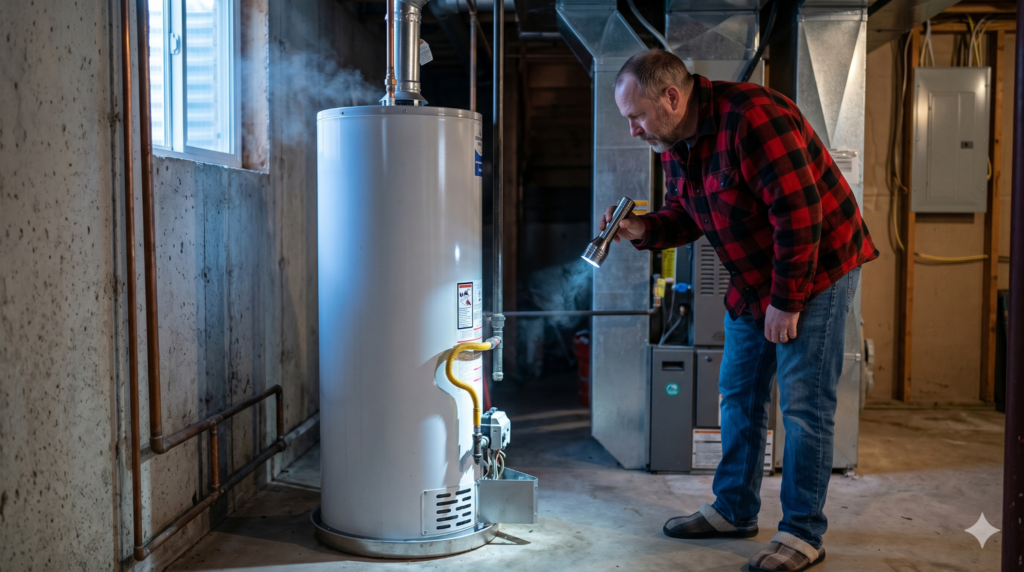
Stepping into a cold shower on a Boulder winter morning is the kind of surprise nobody wants. One day the water heater runs fine, the next day every faucet in the house is pulling cold. Before you assume the worst and start pricing replacements, walk through a short list of checks that solve a surprising number of hot water problems without a service call.
Most cases of no hot water in house plumbing come down to a handful of repeatable culprits: a tripped breaker, an extinguished pilot light, a tripped high-temperature reset, a closed gas valve, or a thermostat that drifted out of spec. The fix is sometimes a button press. Sometimes it is more involved. Knowing which is which saves time, and it tells you whether the next step is a flashlight or a phone call.
Key Takeaways
- Roughly nine out of ten “no hot water” calls trace back to power, gas supply, the pilot light, the reset button, or the thermostat setting.
- Gas water heaters fail differently than electric models, so the first checks are not the same for both.
- A water heater reset button that keeps tripping is a warning sign, not a fix. Reset it once. If it trips again, stop and call a professional.
- Boulder’s overnight temperature swings put extra strain on water heaters in unheated basements, garages, and crawlspaces during late fall and winter.
- Persistent lukewarm water, rumbling sounds, rust-colored water, or water pooling near the tank are signals that the unit needs hands-on attention beyond DIY troubleshooting.
Start With the Obvious: Power, Gas, and the Thermostat
The first three checks take about five minutes and resolve more calls than every other cause combined.
- Power. If you have an electric water heater, head to your main electrical panel and look for a tripped double-pole breaker labeled for the water heater. A tripped breaker sits between the “on” and “off” positions. Flip it fully to off, then back to on. If it trips again immediately, that points to a deeper electrical problem and you should not keep resetting it.
- Gas. For gas water heaters, follow the gas line from the unit back to the shutoff valve. The handle should be parallel to the pipe, not perpendicular. If anyone has worked on gas appliances recently, the valve may have been turned and not turned back. Also check whether other gas appliances in the home are working. If the furnace and stove are cold too, the issue is upstream of the water heater and may involve your utility or the gas line itself.
- Thermostat setting. Most manufacturers ship water heaters set around 120 degrees Fahrenheit. If a curious kid or a guest twisted the dial down to vacation mode, the unit may be running but barely warming the water. Set it back to the 120 to 125 degree range and give it 30 to 45 minutes to recover.
If none of those checks restore hot water, move to the diagnostic steps specific to your fuel type.
Gas Water Heater Not Heating? Check the Pilot Light and Burner
A gas water heater not heating almost always has one of three problems: a pilot light that has gone out, a thermocouple that has failed, or a clogged burner assembly. You can investigate the first one yourself.
Remove the access panel at the base of the tank and look through the small window or opening. If you see no flame, the water heater pilot light is out. Follow the relighting instructions printed on the label attached to the side of the tank. The general sequence is to set the gas control knob to “off,” wait five minutes for any residual gas to clear, switch the knob to “pilot,” hold it down while pressing the igniter button, and continue holding for about 30 seconds after the flame catches. Release slowly and turn the knob to “on.”
If the pilot will not stay lit, the thermocouple is the most likely cause. That is the small copper rod sitting in the pilot flame. When it heats up, it signals the gas valve to stay open. A worn or misaligned thermocouple sends the wrong signal, and the gas valve shuts off as soon as you release the knob. Thermocouple replacement is doable for a confident DIYer, but the part has to be matched correctly and the connection has to be gas-tight. If you are not certain, this is a job for a licensed plumber or a gas line repair professional.
A pilot that lights but immediately goes out can also point to a backdrafting flue, a dirty pilot tube, or a failing gas valve. None of those should be diagnosed by trial and error.
Electric Water Heater Not Heating? Reset Button and Heating Elements
Electric water heater not heating problems usually trace back to the high-temperature reset button or one of the two heating elements inside the tank.
The water heater reset button is a small red button located behind a removable access panel, typically on the upper thermostat assembly. When the water inside the tank gets too hot, the reset switch trips and cuts power to prevent damage. To reset, turn off power at the breaker, remove the access panel and any insulation covering the thermostat, and press the red button firmly until you feel or hear it click. Replace the panel, restore power, and wait 30 minutes to see if the water heats.
If the reset trips again within hours or days, do not keep cycling it. A reset that will not stay set indicates a failing thermostat, a shorted heating element, or wiring problems. Repeated resets can damage components further and create a fire risk.
A water heater with one bad heating element produces a tell-tale symptom: warm water that runs out fast. Most residential electric tanks have two elements, an upper and a lower. The lower element heats most of the volume, and the upper finishes the job at the top of the tank. When the lower element fails, the upper one alone can only heat the top third of the tank, so the household gets a short burst of hot water and nothing more. Element testing requires a multimeter and a comfort level with working inside the access panel after power is fully disconnected. If that is outside your wheelhouse, schedule a water heater repair visit and let a technician handle it safely.
A persistently tripping breaker on the water heater circuit can also signal an electrical fault that has nothing to do with the heater itself. In that case, looping in an electrician forelectrical repair makes more sense than swapping water heater parts.
Lukewarm Water or Hot Water That Runs Out Fast
When the water is warm but not hot, or the supply runs out long before the shower should be over, the diagnosis shifts. The unit is doing something, just not enough. Use the symptom-to-cause map below to narrow it down.
| Symptom | Most Likely Cause | What to Try First |
| Lukewarm water at every fixture | Thermostat set too low or single failed heating element | Raise thermostat to 120 degrees; if no improvement, schedule diagnostic |
| Hot water runs out in 5 to 10 minutes | Lower heating element failed (electric) or significant sediment buildup | Flush the tank or call for service |
| Hot at some fixtures, cold at others | Mixing valve, anti-scald valve, or crossed connection | Check faucet temperature limiters; inspect plumbing |
| Hot water comes back after long wait | Tank undersized for current household demand | Consider water heater installation of a larger or tankless unit |
| Rumbling or popping sounds from tank | Sediment layer insulating the burner from the water | Annual water heater maintenance flush |
| Rust-colored hot water only | Corroded anode rod or tank interior | Have a technician inspect and quote next steps |
Sediment is the silent killer of Front Range water heaters. Hard mineral content in Boulder-area water settles to the bottom of the tank over time, forms an insulating layer between the burner and the water, and forces the unit to work harder for less output. An annual flush is the simplest preventive habit a homeowner can build.
Tankless units do not store water, so they fail differently. If a tankless heater is producing lukewarm water or shutting off mid-shower, the cause is typically a clogged inlet filter, scaled heat exchanger, or a flow sensor reading low. Tankless systems need their own service approach, which is why a dedicated tankless water heater repair visit is the right call when one stops performing.
Why Boulder’s Cold Snaps Make Hot Water Failures Worse
Front Range winters do not just feel harder on water heaters. They are harder on them.
When overnight lows drop into the single digits and incoming municipal water arrives at the tank near 40 degrees Fahrenheit instead of the 60-degree summer baseline, the heater has to work roughly twice as hard to deliver the same shower temperature. A unit that was already running on a failing element or sediment-clogged burner often picks the coldest week of the year to give up entirely.
Water heaters installed in unheated garages, crawlspaces, or detached utility rooms face another problem: ambient temperatures around the tank pull heat out faster, and exposed supply lines feeding the unit can partially freeze. A water heater that suddenly produces no hot water on the first hard freeze of the season is sometimes a frozen inlet line, not a broken appliance.
If the unit is more than 10 years old and it is choosing this winter to act up, also consider whether you are looking at end-of-life rather than a quick fix. Our breakdown of thesigns your water heater is on its last leg covers the warning signals that point toward replacement rather than another repair.
Signs You Should Stop Troubleshooting and Call a Pro
Some problems are clear DIY territory. Others are not. Stop and call a licensed plumber if you see any of the following:
- The smell of gas anywhere near the unit. Leave the home, then call your utility and a plumber.
- Water pooling around the base of the tank or visible rust on the bottom seam.
- A reset button or breaker that trips repeatedly within minutes of resetting.
- Scalding hot water at one fixture and cold at another.
- Sounds like banging, rumbling, or hissing that did not exist before.
- Discolored or sulfur-smelling hot water.
- A unit older than 12 years with any of the symptoms above.
A working water heater is not optional in a Boulder winter, and a failing one can cause water damage that costs far more than the repair itself. Knowing when to call ends up being the most valuable troubleshooting skill a homeowner has.
Frequently Asked Questions
Why is there no hot water in my house all of a sudden?
A sudden total loss of hot water is almost always a power or fuel-supply issue. For electric units, check the breaker and the reset button. For gas units, check the pilot light and the gas shutoff valve. If those are all set correctly and the tank still produces no hot water, a failed heating element, gas control valve, or thermocouple is the next likely cause.
How long does it take a water heater to reheat?
A standard 40 to 50 gallon gas tank typically reheats from cold in about 30 to 45 minutes. Electric tanks take roughly twice as long, around 60 to 90 minutes, because their heating output is lower. After resetting a tripped breaker or relighting a pilot, give the unit at least an hour before deciding the fix did not work.
Is it safe to reset a water heater myself?
Pressing the reset button once is generally safe as long as power is off at the breaker first and the access panel is properly replaced afterward. What is not safe is repeatedly resetting a button that keeps tripping. That is a warning that something inside the unit is failing, and continued resets can damage components or create a fire hazard.
Why does my hot water run out so fast?
A short hot water supply usually means one of two things: a failed lower heating element on an electric unit, or a thick sediment layer at the bottom of a gas tank that is displacing usable water volume. Both have clear fixes, but neither resolves on its own.
Should I drain my water heater every year?
Yes, for tank-style water heaters in the Boulder area, an annual flush is recommended. Hard water mineral content settles into a layer on the tank bottom and reduces both efficiency and lifespan. Routine water heater maintenance extends the working life of the unit and keeps recovery times where they should be.
When is a no-hot-water situation an emergency?
Any time you smell gas, see water pooling around the tank, hear unusual noises, or have a household member who medically needs hot water for treatment or hygiene, treat it as urgent and call emergency plumbing service rather than waiting for a scheduled appointment.
When to Call Precision Plumbing
When the checks above do not bring hot water back, the next step is a diagnostic visit from a licensed plumber who can test components, isolate the failure, and recommend the right repair. Contact us to schedule service or reach out online and our team will get back to you with a same-day appointment whenever availability allows. We service tank, tankless, gas, and electric water heaters across the greater Denver-Boulder metro.
About Precision Plumbing, Heating, Cooling & Electric
Precision Plumbing, Heating, Cooling & Electric has been the trusted plumbing, HVAC, and electrical contractor in Boulder, CO and the surrounding Denver metro for more than 40 years. Family-owned and locally operated since 1982, our licensed technicians handle everything from quick water heater diagnostics to full system replacements, with a focus on getting the job right the first time.