

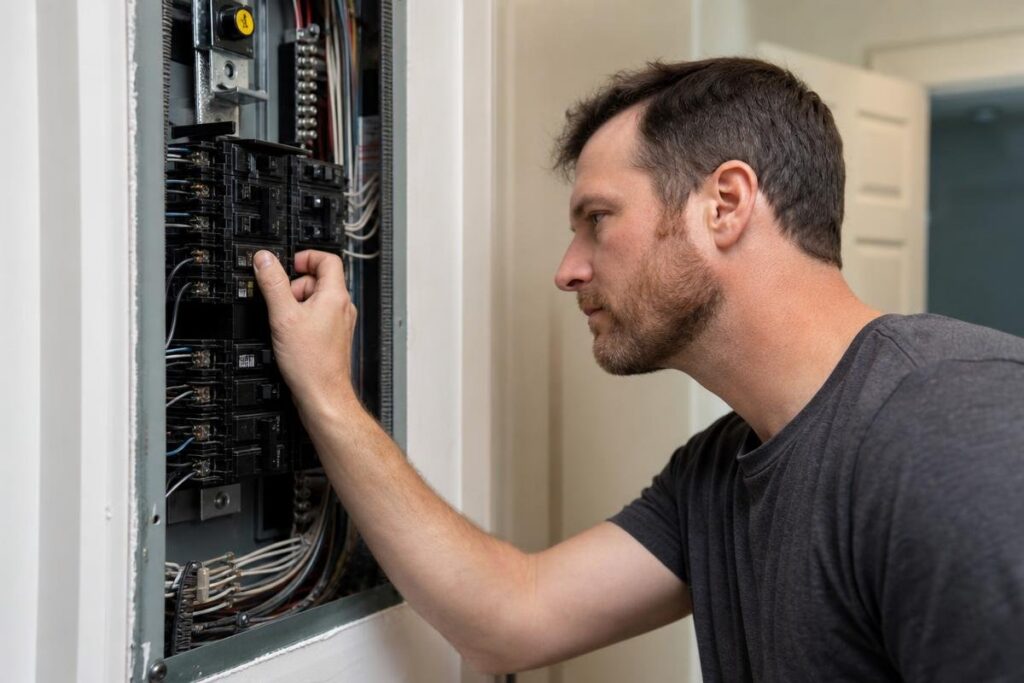
Wondering about the home electrical wiring in your Louisville, CO house? You’re not alone. Homes here range from pre-war builds near downtown to newer subdivisions, and each era comes with its own wiring quirks and safety concerns. As a Louisville-based team, we’ve been serving Boulder County homeowners, including Louisville, since 1982, and we know exactly what to look for. Whether you’re planning a panel upgrade, adding circuits, or just trying to understand what’s behind your walls, this post covers what you need to know.
Need a DORA-licensed electrician serving Louisville? Schedule a wiring inspection with our Louisville-based team today.
Key Takeaways
- Home electrical wiring varies significantly by decade, and older Louisville homes often have wiring that no longer meets current safety codes.
- Boulder County requires a licensed electrician to pull permits for most residential electrical work, including panel upgrades and new circuits.
- Homes rebuilt after the Marshall Fire must meet NEC 2020 code, including AFCI breakers on most circuits.
- Dry Colorado conditions can cause older wire sheathing to become brittle near heat sources over time.
- Knowing your wiring type is the first step toward keeping your home safe and up to code.
What Is Home Electrical Wiring and How Does It Work?
Home electrical wiring is the network of wires, cables, and components that moves power from the utility grid to every outlet, switch, and fixture in your house. Understanding the basic electrical concepts behind this system helps you spot problems early and know when to call a professional.
The Basic Path Electricity Takes Through Your Home
Power enters your home through the utility meter on the outside wall. From there it travels to your main service panel, which splits that power into individual branch circuits. Each circuit runs out to outlets, switches, and light fixtures, then loops back to the panel through a neutral conductor. That round trip happens constantly, every time you flip a switch.
Most homes in Coal Creek Ranch and newer local subdivisions were built with 200-amp service. Older homes, especially those built before 1980, often carry 100-amp panels. That was fine decades ago, but modern appliance loads can push those older panels to their limits.
Key Components: Panel, Circuits, Outlets, and Grounds
Here are the five parts of your circuit breaker panel wiring system you need to know:
- Service panel: The distribution hub, sometimes called the breaker box, that controls every circuit in your home.
- Hot wire (black or red): Carries live current from the panel to the device.
- Neutral wire (white): Returns current back to the panel to complete the circuit.
- Ground wire (bare copper or green): Gives fault current a safe path to earth instead of through you.
- Circuit breaker: Cuts power automatically if a circuit draws too much current, protecting your wiring from overheating.
The ground wire is the one most homeowners overlook. It does nothing during normal operation, but the moment something goes wrong, it is what keeps a fault from becoming a serious injury. If your breaker keeps tripping, that is often the system doing exactly what it was designed to do.
Common Types of Residential Wiring Found in Louisville, CO Homes
What type of electrical wiring is inside your walls depends almost entirely on when your home was built. Homes near the historic downtown core around Main Street and Pine Street can have wiring that’s 80 or more years old. Newer subdivisions built in the 1990s and 2000s are a completely different story. Here’s a breakdown of the common types of residential electrical wiring we see across the area.
Romex (NM-B Cable): The Modern Standard
Romex is the most common residential wiring type in homes built after the mid-1960s. It bundles a hot wire, neutral wire, and ground wire inside a single plastic sheath. For 15-amp circuits in bedrooms and living areas, you’ll typically see 14-gauge wire. Kitchens and bathrooms usually run 12-gauge on 20-amp circuits.
One thing specific to Colorado’s semi-arid climate: the dry conditions can make older plastic Romex sheathing brittle near heat sources. If your home has an aging forced-air furnace, the wiring nearby is worth a professional look.
Aluminum Wiring: A Risk in Mid-Century Homes
Many homes built between 1965 and 1973 used aluminum wiring during a copper shortage. Aluminum expands and contracts more than copper. Over time, that movement loosens connections at outlets and switches, and loose connections create heat and fire risk.
This is not a DIY fix. CO/ALR-rated devices or COPALUM crimp connectors are the professional solution. If your home is from that era and you’re seeing tripped breakers or warm outlets, check out the signs it may be time to upgrade your electrical panel before the problem gets worse.
Worried about aluminum wiring in your mid-century home? Get a free panel assessment from our licensed electricians.
Knob-and-Tube and Other Legacy Wiring
Knob-and-tube wiring shows up in the oldest homes near downtown. It has no ground wire, which means no real protection for modern appliances and no compatibility with GFCI outlets. Many Colorado insurance carriers will not cover homes with active knob-and-tube wiring. That alone is reason enough to have it evaluated.
If your home predates the 1950s and has never been rewired, this is likely what’s inside your walls. Our licensed electricians serving Boulder County see this regularly in older Colorado housing stock.
Think you have knob-and-tube wiring? Book an inspection before it affects your insurance or a future sale.
How to Read Electrical Wire Color Coding
Wire colors are not random. Every color tells you what that wire does inside the circuit. Knowing the basics helps you understand what your electrician is talking about, not wire anything yourself.
Standard Color Codes for 120V and 240V Circuits
Here is what each color means in standard residential wiring:
- Black: Hot wire. Carries live current in 120V and 240V circuits.
- Red: Second hot wire. Used in 240V circuits and 3-way switch wiring.
- White: Neutral wire. Returns current back to the panel.
- Green or bare copper: Ground wire. Safety path if something goes wrong.
- Gray: Neutral wire, typically used in conduit or some commercial-style residential runs.
There is one important exception for older homes. In pre-1980s homes, white wires were sometimes used as hot wires in switch loops. Homes built before 1975 in Lafayette, Erie, and similar older Front Range communities can have this exact situation. A professional should mark those white wires with black tape to prevent dangerous confusion. If you see a white wire in a switch box and your home is older, do not assume it is neutral. If you are noticing other odd electrical behavior, our post on common breaker tripping covers related warning signs.
What the Labels on Wire Sheathing Tell You
The plastic sheath wrapping the wire bundle has printed codes and a color of its own. Both matter.
- 14-2 WG: 14-gauge wire, 2 conductors plus a ground. Used on 15-amp circuits.
- 12-3 WG: 12-gauge wire, 3 conductors plus a ground. Common for 240V appliances like dryers and ranges.
Sheath color gives you a quick gauge read on modern NM-B cable: white sheath means 14-gauge (15A), yellow means 12-gauge (20A), and orange means 10-gauge (30A). If your panel upgrade is overdue, see the signs it may be time to upgrade your electrical panel for a full breakdown.
What Does Home Electrical Wiring Work Actually Cost?
Electrical work in Boulder County is not cheap, and the price swings a lot depending on what your home needs. Older neighborhoods in Longmont or Lafayette with finished walls and no basement access cost more to wire than a newer build with an open basement. Here are real ranges to help you plan.
Typical Price Ranges for Common Wiring Projects
These are general national ranges. Our electricians need to inspect your home before giving you a firm number.
- Single outlet or switch: $150 to $300
- New circuit added to panel: $300 to $800
- Panel upgrade (100A to 200A): $1,500 to $3,500. Read the signs it may be time to upgrade your electrical panel if you are not sure yours needs it.
- Whole-house rewiring: $8,000 to $20,000 or more
- Level 2 EV charger installation: $500 to $1,500. See our guide on EV charger installation in Louisville for what the process looks like.
- Generator hookup and transfer switch: $500 to $1,500
Factors That Affect the Final Cost in Boulder County
Several things push the price up fast. Boulder County requires permits for most residential electrical work, including new circuits and panel upgrades. Those permit fees are a real line item. Homes with aluminum wiring or knob-and-tube add labor cost because older wiring requires more care to work around safely.
Wall accessibility matters too. A finished wall with no attic or basement access means more drywall work. That adds hours. If your breaker keeps tripping and you are not sure why, that is a sign to call an electrician before the home rewiring cost grows larger than it needs to be.
Need a straight answer on what your wiring project will cost? Call our team at (720) 464-4485 and we will walk you through it.
Electrical Wiring Safety: What You Should and Should Not Do
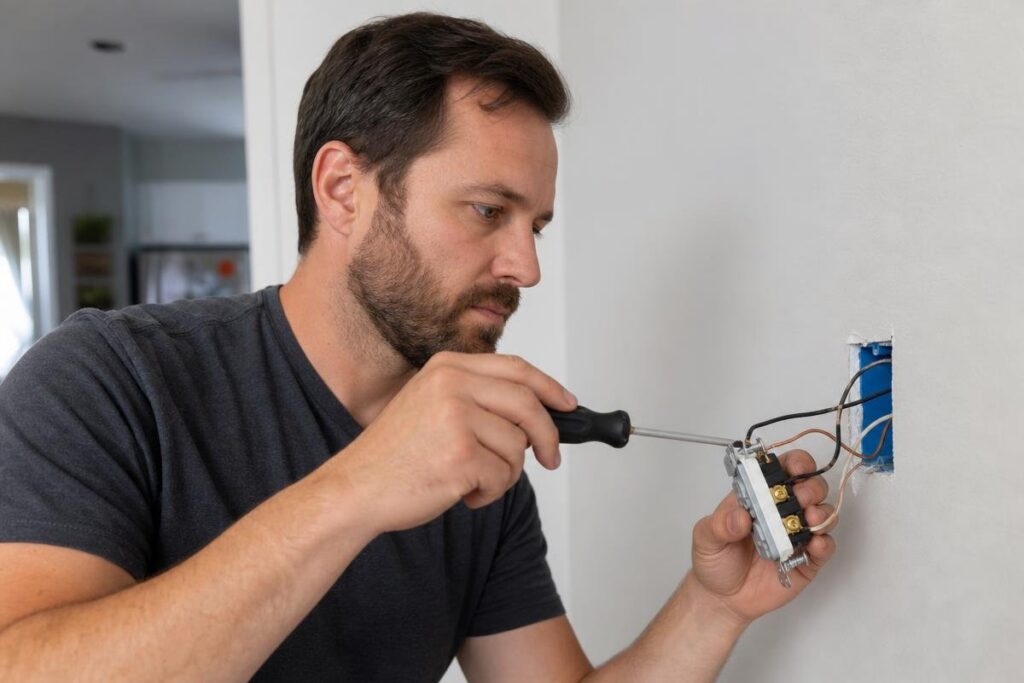
Residential electrical wiring is not a full DIY-free zone. There are a handful of tasks you can handle safely. But the line between safe and dangerous is sharper than most homeowners expect, and crossing it in Colorado can cost you more than a repair bill.
Wiring Tasks Homeowners Can Safely Handle
Keep this list short. These are the tasks where the risk is genuinely low, as long as you confirm power is off first.
- Replacing a cover plate or outlet face (no wiring involved)
- Resetting a tripped breaker once to test it
- Swapping a light bulb or globe
- Installing a plug-in smart device or smart plug
Even for these tasks, turn off the relevant breaker and use a non-contact voltage tester before you touch anything. Do not skip this step.
When to Stop and Call a Licensed Electrician
The following work requires a certified contractor in Colorado. Boulder County inspectors are thorough, and unpermitted work is a real liability if you plan to sell. In a competitive real estate market, unpermitted electrical work found during a home inspection can delay or kill a deal. For a full breakdown of what to watch for, see these home electrical safety checks every Louisville homeowner should make.
- New circuits or subpanel additions: Requires a permit. A licensed electrician must pull it.
- Main service panel or meter work: Never a DIY task. Full stop.
- Aluminum wiring connections: Common in homes built in the 1960s and 1970s. Requires specific connectors and a professional hand.
- GFCI or AFCI breaker installation: Required by code in most locations. Permit required.
- Running wire through finished walls: Requires inspection and permit.
- 240V appliance wiring: Dryers, ranges, EV chargers, and HVAC systems all fall here.
- Any work requiring a permit: Colorado does not allow homeowners to self-permit most residential electrical work. Unpermitted work can void your homeowner’s insurance.
Our licensed electricians in the area pull permits, handle inspections, and make sure the work is done to current NEC code. That protects you now and when you sell.
Warning Signs Your Louisville Home’s Wiring Needs Attention
Something feels off with your electrical system. Maybe lights flicker. Maybe an outlet stopped working. These are signals your home electrical wiring is telling you something. Do not ignore them. A professional should evaluate any of the issues below before they become a fire hazard.
Visible and Audible Red Flags
These signs mean stop and call someone. Do not wait.
- Flickering or dimming lights: Could be a loose connection or an overloaded circuit. A bad bulb is possible, but if it happens on multiple fixtures, it is a wiring issue.
- Burning smell or discolored outlets: This is arcing or overheating. Call immediately. Do not use that outlet again until an electrician inspects it.
- Warm outlets or switch plates: Never normal. Heat at an outlet means something is wrong behind the wall.
- Buzzing or crackling sounds: Electrical arcing from an outlet or your panel is a fire hazard. Turn off the circuit and call for help.
- Breakers tripping repeatedly: An overloaded circuit or a wiring fault. If the same breaker keeps tripping, read our post on the signs it may be time to upgrade your electrical panel to understand what is driving it.
Performance Clues That Point to Wiring Problems
These are slower warning signs. Still worth acting on.
- Intermittent outlets: A loose wire at the outlet or junction box. Outlets should work every time.
- Lights dim when appliances start: Undersized wiring or an overloaded circuit. Common in Centennial Valley homes with original wiring feeding modern appliance loads.
- Extension cords everywhere: Not enough outlets for the load. That usually points to undersized original wiring.
- Two-prong ungrounded outlets: Pre-1960s wiring. A safety and homeowners insurance issue, especially in older homes near the historic downtown core.
- Fuse box instead of a breaker panel: Likely original wiring that is 50-plus years old. Our licensed electricians serving Boulder County see this regularly in the area’s mid-century housing stock.
How Louisville, CO Homes Differ from the National Average
Most national wiring guides describe a generic American home. Homes in the greater Louisville area don’t fit that mold. The housing stock here spans nearly a century of construction, and local events like the Marshall Fire have added a layer of code complexity you won’t find in a generic guide.
Housing Age and Wiring Eras in Louisville’s Neighborhoods
The neighborhood you live in tells us a lot about what’s inside your walls. Older homes near the historic downtown core around Main Street and Pine Street may still have knob-and-tube wiring or early aluminum branch circuits. Homes built in the 1990s and 2000s in Centennial Valley typically have copper Romex and 200-amp panels, which is a much safer starting point.
Then there are the post-Marshall Fire rebuilds. The December 2021 fire destroyed or damaged hundreds of homes in the area, including neighborhoods near Harper Lake and adjacent Superior. Every rebuilt home had to meet NEC 2020 standards, including AFCI breakers on most circuits and GFCI protection in all required locations. If you bought a rebuilt home, confirm those permits were closed and inspections passed. Our electricians serving Superior, CO handle exactly this kind of post-rebuild verification.
One more local factor: the dry, semi-arid climate here can make older plastic wire sheathing brittle over time, especially near forced-air furnace systems. That’s a real concern in homes with aging HVAC equipment.
Colorado Code Requirements That Affect Wiring Work
Colorado follows NEC 2014 or later for most jurisdictions, which means AFCI breakers are required on most living-area circuits and GFCI protection is required within six feet of any water source. Permits are required for new circuits, panel upgrades, and rewiring. Homeowners generally cannot self-permit electrical work here. A DORA-licensed electrician must pull the permit.
If you’re planning any upgrades, a home energy audit in Louisville is a smart first step to identify where your residential electrical wiring and circuit breaker panel wiring fall short of current code. Our team operates out of 413 S Arthur Ave, Louisville, CO 80027, so we know these permit requirements firsthand.
Frequently Asked Questions
What type of wiring does my home have?
Start with your home’s build year. Pre-1965 homes in older neighborhoods near Main Street may have knob-and-tube wiring. Homes built between 1965 and 1973 could have aluminum branch wiring. Anything built after the mid-1970s is likely copper Romex. A licensed electrician can open an outlet and identify the wiring type in minutes. Wiring type directly affects your homeowner’s insurance coverage and what upgrade options are safe for your home.
Can I do my own electrical work?
Minor tasks like swapping a cover plate or resetting a breaker are generally fine, as long as you confirm power is off first. Most residential electrical wiring work in our area requires a licensed electrician to pull a permit. Unpermitted work can void your homeowner’s insurance and create serious problems when you sell. If you are unsure whether a job needs a permit, call us before you start.
What is the difference between AFCI and GFCI protection?
GFCI detects current leaking to ground and protects you from shock. You see it as the outlet with test and reset buttons near water sources. AFCI detects dangerous arcing inside your wiring and protects against fire. It lives at the breaker level, not the outlet. Current code requires both in most new and renovated homes. They are not interchangeable, and older homes in Erie, Broomfield, and Lafayette often lack one or both.
How long does a whole-house rewiring take?
Plan on 3 to 7 days for a typical 1,500 to 2,500 square foot home. Aluminum or knob-and-tube homes take longer due to added complexity. If you are curious about home rewiring cost or what the process involves, our team can give you a clear timeline after an initial inspection. You can also read the signs it may be time to upgrade your electrical panel for more context on when a full rewire becomes necessary.
Do I need GFCI outlets in every room?
Not every room, but more than most homeowners expect. NEC requires GFCI protection in kitchens, bathrooms, garages, unfinished basements, outdoor areas, and within 6 feet of any sink. If your home was built before the mid-1970s, it almost certainly lacks GFCI in all required locations. If you keep asking yourself when to call an electrician, this is a good reason.
How do I find a licensed electrician near me?
Look for a DORA-licensed electrician who pulls permits and provides documentation. If your home was built before 1975, or you noticed any of the warning signs covered in this guide, schedule an inspection now.
Ready to Get Started with Precision Plumbing Heating, Cooling & Electric?
Call (720) 464-4485 to speak with our team directly. We’re ready to answer your questions, walk you through your options, and help you find the right solution for your needs. Whether you’re just starting to plan or ready to move forward, we’ll make the process simple and stress-free.
Reach out today and let’s talk about how we can help.