

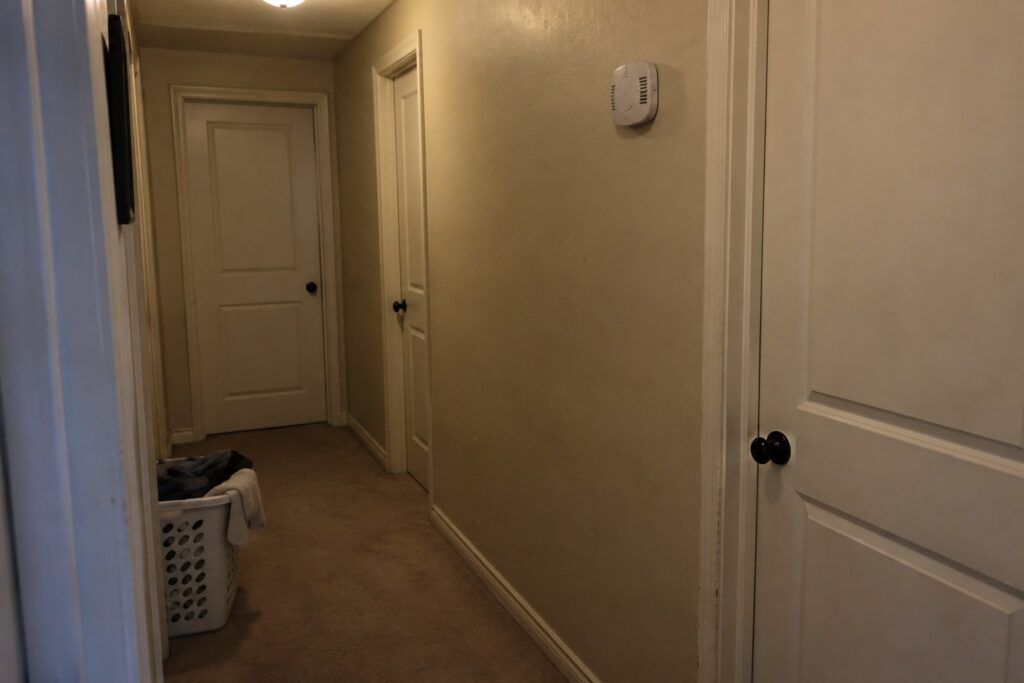
Knowing where to place carbon monoxide detectors is one of the simplest ways to protect your family once the furnace starts running for the season. Carbon monoxide has no color, smell or taste, so an alarm in the right spot is your only real warning. At Precision Plumbing Heating, Cooling & Electric, our licensed technicians have worked on furnaces, boilers, water heaters and electrical systems in Louisville homes since 1982. Below, we walk through where alarms belong, where they do not, what Colorado law expects, and how routine heating maintenance keeps carbon monoxide from building up in the first place.
Want a second set of eyes on your alarms and heating equipment before the first cold snap? Our team can help.
Key Takeaways
- The CPSC and NFPA recommend carbon monoxide alarms on every level of your home and outside each separate sleeping area, with alarms inside bedrooms offering the best protection.
- Keep alarms away from heating vents, windows, humid bathrooms and the immediate area around fuel-burning appliances, and follow the height guidance printed in the manufacturer instructions.
- Colorado law requires an operational carbon monoxide alarm within 15 feet of each bedroom entrance in many homes with a fuel-fired appliance, fireplace or attached garage when they are sold, transferred or rented.
- Interconnected alarms are best because when one sounds, they all sound, which matters in larger or multi-level homes.
- If a carbon monoxide alarm sounds, get everyone outside to fresh air, call 911 and do not go back in until responders say it is safe.
- An annual furnace inspection catches problems like cracked heat exchangers and blocked flues before they turn into a carbon monoxide hazard.
October is when most Louisville homes switch from cooling to heating. The National Weather Service office in Boulder puts the average first fall freeze in early to mid October, and that is usually when furnaces in Coal Creek, Old Town Louisville and the neighborhoods along Highway 36 run their first real cycles in months.
That first stretch of heating season is exactly when a hidden problem can show up. Getting your alarms in the right places now means you are covered before the windows close for winter.
Why Carbon Monoxide Risk Rises in October
Carbon monoxide is produced when fuel such as natural gas, propane, oil or wood burns. In a healthy system, that exhaust is carried safely outside. When something goes wrong, it can spill into your living space instead.
First Furnace Cycles of the Year
Your furnace has likely been idle since spring. Over the summer, dust settles on burners, critters can nest in vent terminations, and small cracks or loose connections go unnoticed. The first few heating cycles are when those issues surface, often without any obvious sign.
Boilers and gas water heaters face similar risks. A water heater runs year-round, but its venting can be affected when the furnace that shares a flue starts back up.
Closed Windows and Tighter Homes
Through the summer, open windows and screen doors bring in plenty of fresh air. Once overnight lows drop, those windows stay shut. That keeps heat in, but it also means less natural air exchange to dilute any carbon monoxide that escapes from an appliance.
Many Louisville homes have also been updated with new windows, insulation and weatherstripping. Those upgrades save energy, but a tighter home makes proper appliance venting even more important.
Attached Garages
Attached garages are common across Boulder County. Warming up a car in the garage, even with the big door open, can push exhaust into the house through the connecting door, especially on a cold morning. Gas-fired equipment located in the garage adds another potential source.
Fireplaces and Upslope Storms
Gas and wood fireplaces get their first use of the year in fall as well. Front Range upslope snowstorms can also cover exterior vent terminations with drifting snow, which can block exhaust from high-efficiency furnaces and water heaters. That is one more reason to have working alarms in place early.
Where to Place Carbon Monoxide Detectors in Your Home
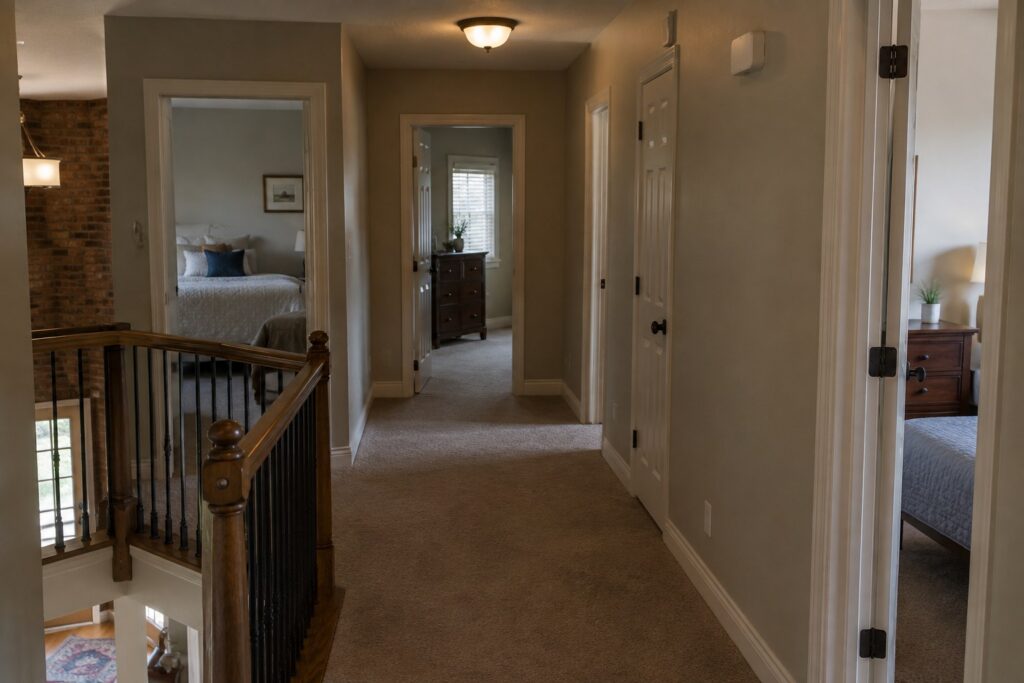
The U.S. Consumer Product Safety Commission and the National Fire Protection Association agree on the basics. Here is how their guidance translates to a typical Louisville house.
On Every Level of the Home
Place at least one carbon monoxide alarm on each level, including a finished basement where people spend time. Carbon monoxide mixes with air and spreads through the home, so an alarm on each floor gives you the best chance of an early warning wherever it starts. The CPSC notes that alarms should not go in attics or unfinished basements unless the unit is designed for that location, so check the instructions.
Outside Each Sleeping Area
NFPA guidance calls for an alarm in a central location outside each separate sleeping area, in the immediate vicinity of the bedrooms. If your bedrooms are split, such as a main suite on one end and kids’ rooms on the other, each group needs its own alarm in the nearby hallway.
Inside Bedrooms for the Best Protection
The CPSC says alarms inside each bedroom offer the best protection. Carbon monoxide poisoning is most dangerous while people are asleep, because early symptoms like headache, dizziness and nausea can go unnoticed. An alarm in the room is loud enough to wake a sleeping child or a heavy sleeper behind a closed door.
Near, but Not Inside, the Attached Garage
If you have an attached garage, place an alarm in the living space near the door that connects to the house. Do not put a standard household alarm inside the garage itself. Temperature swings, dust and vehicle exhaust can cause false alarms or shorten the life of the sensor.
Follow the Manufacturer’s Height Guidance
You may hear that carbon monoxide alarms must go low on the wall or high on the ceiling. The truth is that the right height depends on the specific unit. The CPSC notes that alarms may be plugged into a receptacle or mounted high on the wall. Your best move is to read the installation instructions and follow them exactly.
Not sure your current alarms are in the right spots or still working? Our team can talk it through with you.
Places to Avoid When Installing a CO Alarm
A carbon monoxide alarm in the wrong spot can either miss a real problem or sound so often that you are tempted to unplug it. Both outcomes leave your family less protected.
Right Next to Fuel-Burning Appliances
Avoid mounting an alarm within several feet of a furnace, boiler, water heater, gas range or fireplace. These appliances can release a small puff of carbon monoxide when they start up, which may trigger nuisance alarms. Check the instructions for the minimum distance your unit recommends.
Near Vents, Windows and Doors
Heating and cooling registers, ceiling fans, open windows and exterior doors move a lot of air. That airflow can dilute carbon monoxide around the sensor and delay a warning. The CPSC also advises against locations where furniture or draperies can cover the alarm.
Humid Bathrooms and Laundry Rooms
Steam from showers and dryers can affect sensor performance. Keep alarms out of bathrooms and laundry rooms and put them in a nearby hallway instead. Louisville’s dry air is easy on most electronics, but a steamy bathroom is a different story.
Quick Placement Reference
| Room or Location | Place or Avoid | Why |
|---|---|---|
| Hallway outside bedrooms | Place | NFPA and CPSC guidance calls for an alarm outside each separate sleeping area. |
| Inside each bedroom | Place | The CPSC says this offers the best protection while people sleep. |
| Each level, including finished basements | Place | Gives early warning wherever carbon monoxide starts in the home. |
| Living space by the attached garage door | Place | Catches exhaust that seeps in from vehicles or garage equipment. |
| Inside the garage | Avoid | Temperature swings, dust and exhaust can cause false alarms and wear out sensors. |
| Within several feet of a furnace, water heater or range | Avoid | Startup emissions can trigger nuisance alarms. |
| Next to heating vents, fans or windows | Avoid | Moving air can dilute carbon monoxide and delay a warning. |
| Bathrooms and laundry rooms | Avoid | Humidity and steam can affect the sensor. |
| Behind furniture or curtains | Avoid | Blocked airflow keeps gas from reaching the sensor. |
What Colorado Law Says About CO Alarms
Colorado has had a carbon monoxide alarm law on the books since 2009. Under C.R.S. 38-45-102, the seller of an existing single-family home that has a fuel-fired heater or appliance, a fireplace or an attached garage must make sure an operational carbon monoxide alarm is installed within 15 feet of the entrance to each bedroom, or in any location specified by state or local building code, when the home is offered for sale or transfer.
Rentals and New Construction
The same law applies similar requirements when qualifying single-family homes are rented, and when homes are newly built or have a change of occupancy. Related sections cover multi-family buildings. If you are a landlord in Louisville, Lafayette or Superior, it is worth confirming that every unit meets the current requirements before a new tenant moves in.
Check Current Local Code
Nothing here is legal advice. Building codes are updated over time, and the City of Louisville and Boulder County may have their own requirements for remodels, additions and new construction. Before you sell, rent or remodel, check the current code with your local building department or a qualified professional. Keep in mind that the law sets a minimum. CPSC and NFPA guidance, including alarms on every level and inside bedrooms, often goes further.
Choosing Battery, Hardwired or Interconnected Alarms
Placement is half the battle. The type of alarm you choose affects how reliable it is and how well it warns everyone in the house.
Battery-Operated Alarms
Battery units are easy to add anywhere and keep working during a power outage. Some models use a sealed long-life battery that lasts for the life of the alarm. The trade-off is that standard battery units depend on you to replace batteries and respond to low-battery chirps.
Hardwired and Plug-In Alarms
Hardwired alarms connect to your home’s electrical system, and plug-in units go into an outlet. The CPSC recommends that hardwired and plug-in alarms have battery backup, so they keep working when Xcel Energy power goes out during a winter storm. Hardwired installation involves household wiring, so it is a job for a licensed electrician.
Interconnected Alarms
Both the CPSC and NFPA recommend interconnecting alarms for the best protection. When one alarm senses carbon monoxide, every alarm in the home sounds. That matters in a two-story home where a problem in a basement mechanical room might otherwise go unheard upstairs. Many homeowners pair this with combination smoke and CO alarms. Our smoke and CO detector installation service can add or upgrade hardwired, interconnected alarms throughout your home.
Look for a Certified Alarm
The EPA recommends choosing an alarm certified to the current UL 2034 standard or an equivalent recognized standard. You will usually find the listing on the package and on the back of the unit.
Testing, Replacing and Responding to Alarms
A carbon monoxide alarm only helps if it works. A few simple habits keep yours ready.
Test Monthly
Press the test button on each alarm once a month. If you have interconnected alarms, confirm that all of them sound together. Replace batteries according to the manufacturer’s schedule, and never ignore a chirp.
Replace on Schedule
Carbon monoxide sensors wear out. Many alarms are designed to last somewhere around 5 to 10 years, but lifespans vary by model. Check the date on the unit and the manufacturer’s instructions. Many newer alarms also give an end-of-life signal that sounds different from the alarm tone.
What to Do When an Alarm Sounds
If your carbon monoxide alarm goes off, treat it as real. Get everyone, including pets, outside to fresh air right away. Call 911 from outside. Do not go back in until emergency responders tell you it is safe. If anyone feels sick, tell the dispatcher so medical help is on the way.
If you ever smell gas, the steps are similar. Leave the home immediately, do not flip switches or use any flame, and call Xcel Energy’s gas emergency line at 800-895-2999 or 911 once you are outside. After responders clear the home, have a licensed technician find and fix the source before you use the appliance again.
A Broader Safety Check
Fall is a good time to look at the bigger picture. Our electrical safety inspection reviews wiring, outlets and other components that keep your alarms and home systems working safely.
How an Annual Furnace Inspection Reduces CO Risk
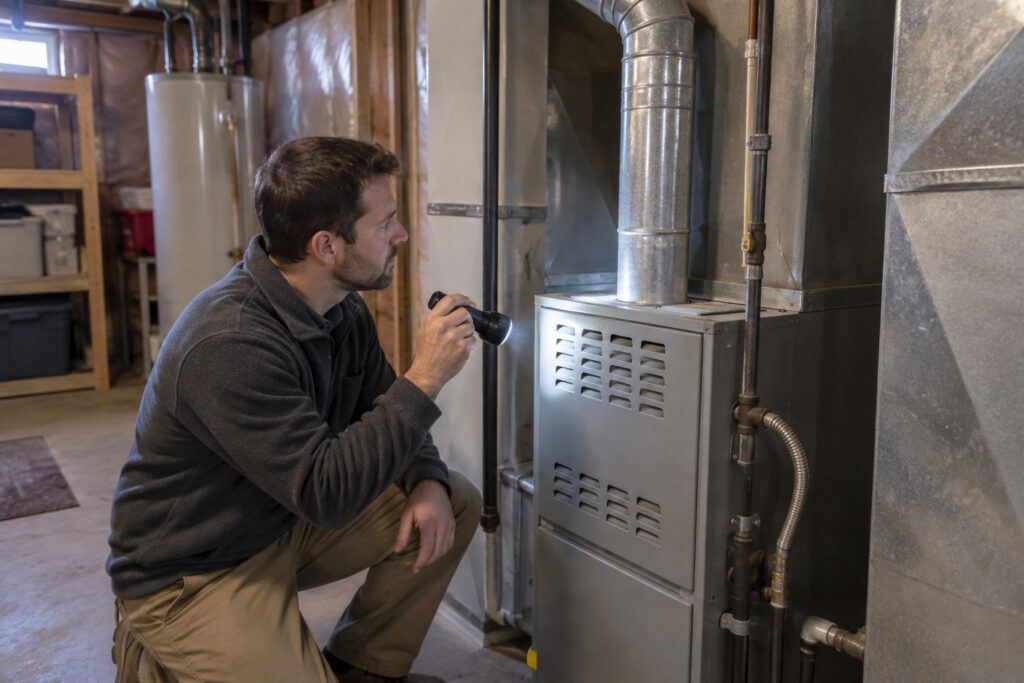
Alarms warn you about carbon monoxide. Regular maintenance helps keep it from escaping in the first place. That is why we recommend pairing smart alarm placement with yearly service on every fuel-burning appliance.
Cracked Heat Exchangers
The heat exchanger separates combustion gases from the air your furnace blows through your home. Years of heating and cooling cycles can cause cracks. A crack can allow exhaust into the airflow, and it is not something you can spot without the right tools. Annual furnace maintenance includes a close look at this critical part.
Blocked or Damaged Flues and Vents
Bird nests, debris, disconnected vent pipe and snow-covered terminations can all keep exhaust from leaving your home. Our technicians check venting from the appliance to the outdoors. If we find a problem, our furnace repair team explains your options and gives you upfront, honest pricing before any work begins.
Burner and Combustion Problems
Louisville sits around 5,300 feet, and thinner air affects combustion. Dirty burners or improper setup can make an appliance burn less cleanly. A trained technician checks the burner operation and safety controls so your system runs the way it was designed to.
Don’t Forget Boilers and Water Heaters
If you heat with hot water, regular boiler maintenance covers venting and combustion safety too. Gas water heaters run all year and share many of the same risks, so routine water heater maintenance is worth adding to your fall checklist.
Ready to get your heating equipment checked before the cold settles in? Book a visit with our team.
Frequently Asked Questions
How Many Carbon Monoxide Detectors Do I Need?
Plan for at least one alarm on every level of your home and one outside each separate sleeping area. The CPSC says adding alarms inside each bedroom offers the best protection. A two-story Louisville home with a finished basement and split bedrooms may need several. Walk your floor plan and count every level and sleeping area to find your number.
Can I Put a Carbon Monoxide Detector in My Garage?
Standard household alarms generally should not go inside a garage. Vehicle exhaust, dust and temperature swings can cause false alarms and shorten the sensor’s life. Instead, place an alarm inside the living space near the door to the attached garage. Always follow your alarm’s instructions, since some specialty units are designed for different environments.
Should a CO Detector Go High or Low on the Wall?
It depends on the specific alarm. Carbon monoxide mixes with air, and the CPSC notes alarms may be plugged into an outlet or mounted high on the wall. The most reliable answer is in the manufacturer’s installation instructions. Follow the height they list, and keep the unit clear of furniture, curtains and air vents.
Is a Combination Smoke and CO Alarm a Good Choice?
Combination alarms can be a smart, space-saving option, especially in hallways outside bedrooms where both types are recommended. Make sure the unit is certified for both smoke and carbon monoxide, and check placement rules for each, since smoke alarms have their own guidance. Hardwired, interconnected combination alarms should be installed by a licensed electrician.
Why Is My Carbon Monoxide Alarm Chirping?
A chirp usually signals a low battery or an alarm that has reached the end of its service life. Check the manual, because chirp patterns differ by model. Replace the battery if needed, and check the date on the unit. If the alarm is past its lifespan, replace it. A continuous loud alarm is different and means get outside.
Does a New Furnace Still Need a CO Alarm?
Yes. Even a new, properly installed furnace burns fuel and produces exhaust. Venting can be blocked by snow or debris, and other sources like water heaters, fireplaces and attached garages still exist. Colorado law and national safety guidance apply regardless of equipment age. Working alarms plus annual maintenance give you the strongest protection.
Knowing where to place carbon monoxide detectors, keeping them tested and pairing them with annual heating maintenance are the best ways to keep your family safe this winter. If you want help with alarm installation or a furnace inspection, call Precision Plumbing Heating, Cooling & Electric at (720) 464-4485. As a trusted electrical contractor in Louisville, we serve homeowners in Louisville, Boulder, Superior, Lafayette, Erie, Broomfield and the greater Denver metro area from our office at 413 S Arthur Ave, Louisville, CO 80027.
Ready to Get Started with Precision Plumbing Heating, Cooling & Electric?
Our licensed technicians have helped Louisville families stay safe and comfortable since 1982. Call (720) 464-4485 or reach out online to schedule alarm installation, furnace maintenance or an electrical safety inspection.