

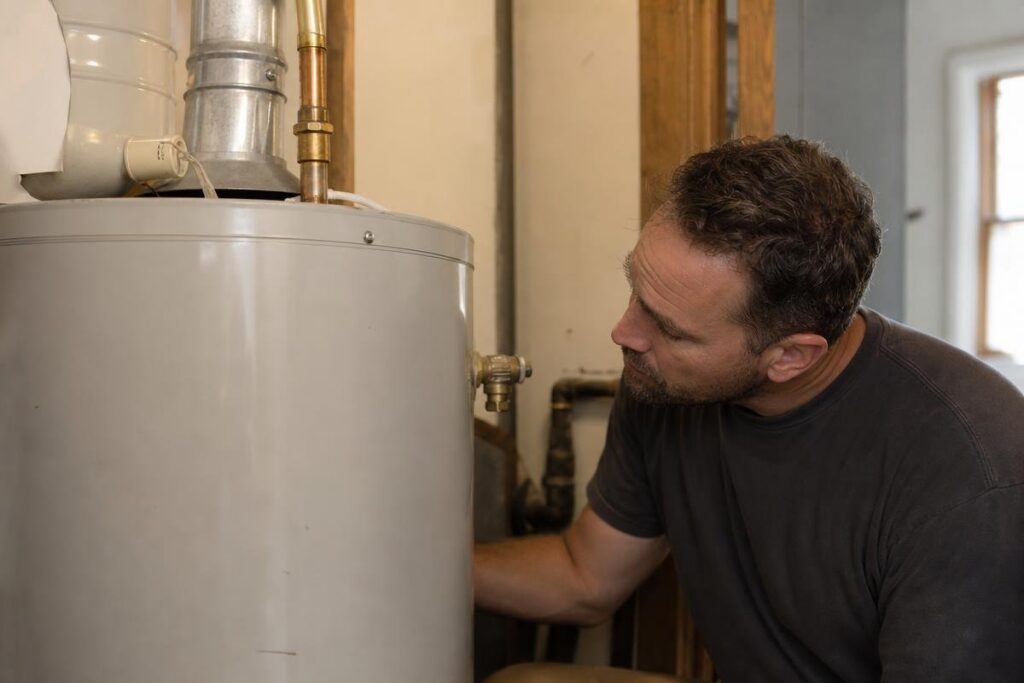
A water heater making noise is one of those things Louisville homeowners tend to ignore until it turns into a cold shower or a flooded utility room. Most sounds have a clear cause, and knowing what you’re hearing can tell you whether you need a simple flush or a full replacement. Our office sits just up the road in Louisville, CO, and we have been diagnosing and repairing water heaters across Boulder County since 1982.
We know exactly what the area’s hard water and cold winters do to a tank over time. Hearing something strange from your water heater? Let’s figure out what it is.
Key Takeaways
- A water heater making noise usually points to sediment buildup, pressure issues, or a failing heating element.
- Boulder County’s hard water accelerates sediment deposits, making Louisville tanks more prone to popping and rumbling sounds.
- Most noise problems can be fixed with a tank flush, but some sounds signal it’s time for a replacement.
- Water heaters in Louisville’s 1980s-2000s homes are often at or past their 10-12 year service life.
- Catching the problem early almost always costs less than waiting for a full breakdown.
The Three Root Causes Behind Most Water Heater Noises
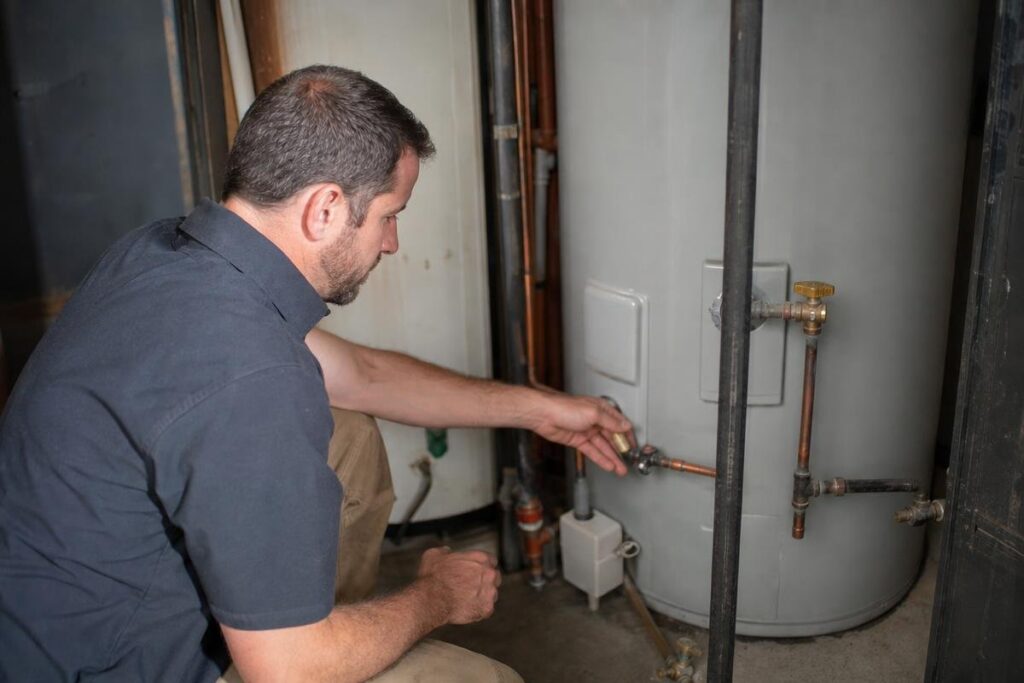
A water heater making noise is usually caused by one of three things: sediment buildup on the tank floor, a loose heating element, or pressure fluctuations in your supply line. Most noises are maintenance signals, not emergencies. The exception is loud banging paired with a gas smell. That needs immediate attention.
Boulder-area water pulls dissolved calcium and magnesium from the Rocky Mountain aquifer system. That mineral load settles inside your tank and causes most of the sounds homeowners call us about. Our licensed technicians have been diagnosing these issues for Front Range homeowners for more than four decades.
This guide covers every common water heater sound, what each one means, and when it is time to call a plumber. If you are already seeing other warning signs beyond the noise, check out 5 signs your water heater is on its last leg before reading further.
Not Every Water Heater Noise Is a Problem. Here Is How to Tell.
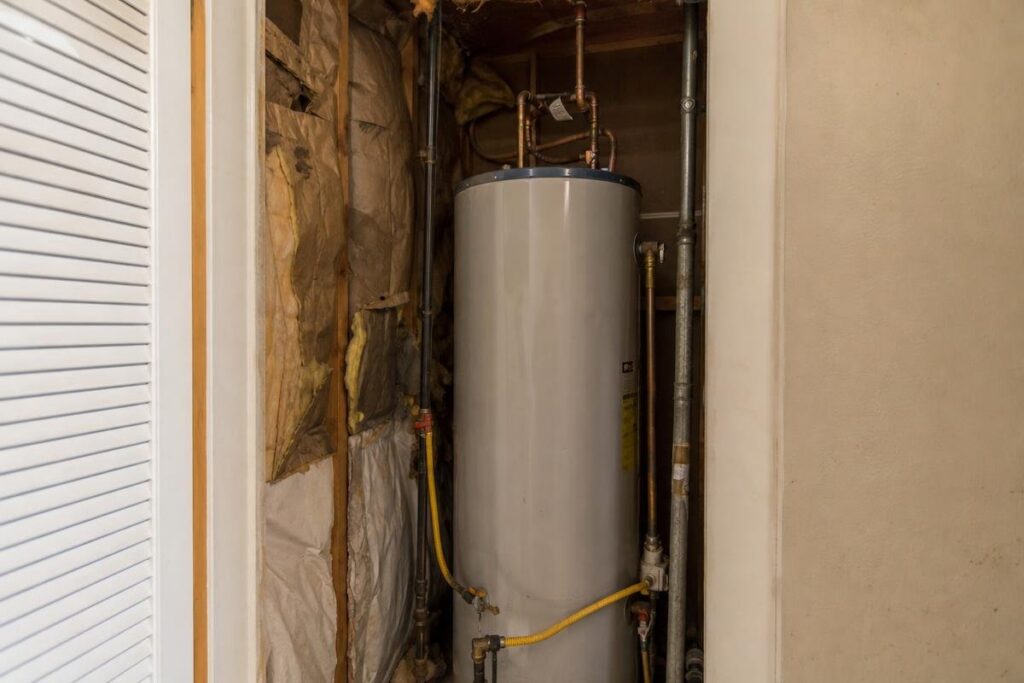
A rattling or humming tank causes a lot of unnecessary worry. Some sounds are completely normal. Others signal a real problem that needs attention. Knowing the difference saves you from panicking over nothing and from ignoring something that could turn into a costly repair.
Louisville saw significant residential development in the 1980s and 1990s as Boulder County expanded eastward, so a large share of local tanks are now at or past their service life. In homes across Lafayette and Superior from that era, aging tank water heaters are more likely to develop warning sounds. If your unit is getting close to the 10-12 year mark, pay closer attention to what you are hearing.
Normal Sounds You Can Safely Ignore
These sounds require zero action on your part.
- Soft ticking or clicking: Metal pipes and the tank expanding and contracting with temperature changes. Completely normal.
- Faint humming: Electric heating elements vibrating slightly in the water. Nothing to fix.
- Low whoosh: The gas burner igniting at the start of a heating cycle. That is just your unit doing its job.
The Sounds That Mean Something Is Wrong
These are the trouble signals worth taking seriously. Each one gets its own section below, so you will know exactly what is happening and what to do.
- Loud popping or rumbling: Sediment buildup forcing water through mineral deposits at the bottom of the tank.
- Banging or knocking: Water hammer in the supply pipes, not the tank itself.
- Hissing or sizzling: Condensation hitting the burner or a possible leak.
- High-pitched whistling or screeching: A T&P (temperature and pressure) relief valve or inlet valve under stress.
- Persistent loud humming: A loose heating element that needs tightening or replacement.
Popping and Rumbling: The Most Common Water Heater Noise in Colorado
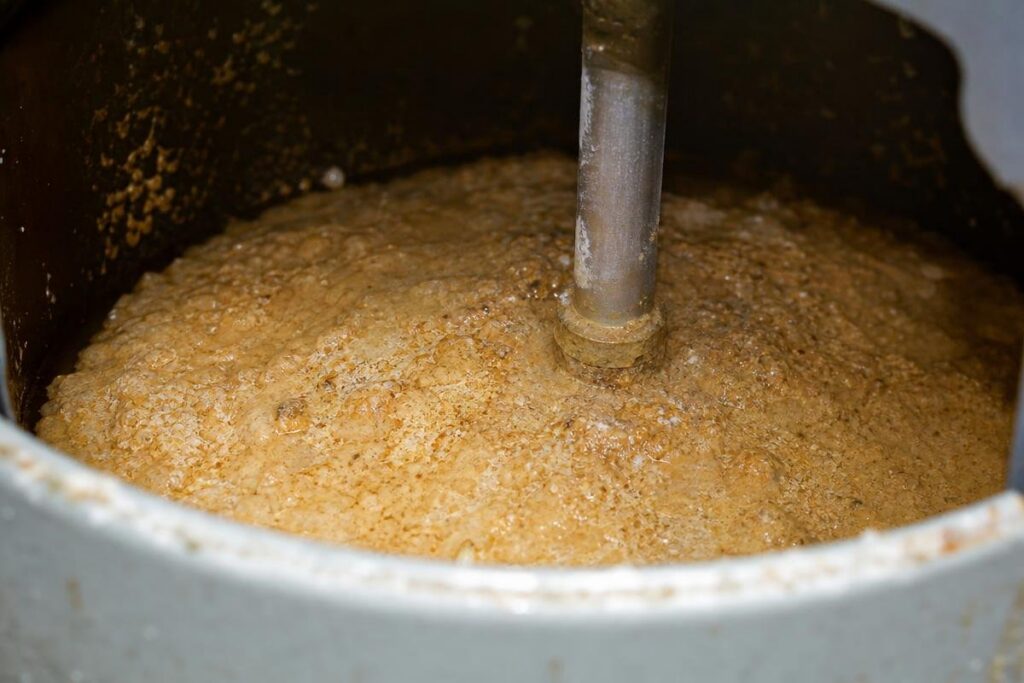
That popping or rumbling sound you hear during or after a heating cycle is almost always sediment. Cold water enters the tank, and dissolved calcium and magnesium minerals settle on the tank floor over time. The burner then superheats the water trapped beneath that sediment layer, and it forces its way through, creating that familiar popping or rumbling sound.
Why Sediment Builds Up Faster in Boulder-Area Water
Colorado Front Range water is naturally mineral-heavy. Snowmelt travels through the same limestone and granite geology that feeds Boulder County’s water supply before it reaches your tap. That process dissolves calcium and magnesium into the water. Homes in Superior and Broomfield on municipal water still accumulate meaningful deposits, especially in tanks older than five to seven years.
Hard freeze events from November through March make it worse. Rapid temperature swings cause the sediment layer to shift and crack, which intensifies the popping sound during each heating cycle. If your tank is six or more years old and has never been flushed, the buildup is almost certainly there.
How to Tell If Sediment Is Your Problem
Run through this quick self-check:
- The noise happens mainly during or just after the heating cycle.
- Hot water recovery takes noticeably longer than it used to.
- Hot tap water looks slightly discolored or rust-tinged.
- The tank is six or more years old and has never been flushed.
If two or more of these apply, sediment is the likely cause. At that point the real question is whether an annual flush is enough or whether the tank has reached the end of its useful life. Our guide on whether to repair or replace a water heater on its last leg walks through exactly how to make that call. Not sure if your tank needs a flush or a replacement? We’ll give you a straight answer.
Banging and Knocking: When the Noise Is Coming From Your Pipes, Not the Tank
A loud bang from your water heater area does not always mean the tank is the problem. Sometimes the noise is a water hammer, a pressure shockwave that travels through your supply lines when a valve closes fast. It sounds like it is coming from the water heater, but the tank itself is fine.
What Causes Water Hammer
Here is the basic mechanism. When a dishwasher cycle ends or a washing machine inlet valve snaps shut, the sudden stop of water flow creates a pressure wave. That wave has to go somewhere, and it makes your pipes knock against the framing or each other. You hear a bang right as the demand stops.
Older homes in Lafayette, Longmont, and Broomfield are especially prone to this. Many tract homes built in the 1980s were never fitted with water hammer arrestors because they were not standard practice at the time. If your home has galvanized or copper supply lines and no air chambers, banging supply pipes are a common complaint.
Quick Fixes vs. When You Need a Plumber
Check the easy things first:
- Tighten any loose pipe straps where supply lines run through framing
- Check your water pressure with an inexpensive gauge at an outdoor hose bib; the ideal range for Colorado homes is 40 to 60 psi
- If pressure reads above 60 psi, try lowering it slightly at the main shutoff
Call a plumber if the banging is frequent, if pipes have visibly shifted, or if you notice signs of a leaking pipe nearby. Repeated pressure shockwaves stress joints over time and can cause slow leaks that go unnoticed for months.
Hissing, Sizzling, Whistling, and Screeching: What Each Sound Signals
Hissing or Sizzling
On a gas water heater, a brief hissing or sizzling sound is often just condensation dripping onto the burner. Along the Front Range from November through March, tanks refill with very cold groundwater, making this more common. It usually stops once the tank reaches temperature.
On electric units, sizzling points to the lower heating element sitting in sediment and overheating. That is a different problem covered in the section on popping and rumbling, where we explain the sediment mechanism in full.
One situation requires immediate action. If the hiss is constant and you smell sulfur or rotten eggs, stop reading and leave the house now. Do not flip any switches. Call your gas company from outside. That combination is a possible gas leak, and it is not a job for a plumber until the gas company clears the line.
Whistling or Screeching
Whistling is one of the more straightforward sounds to diagnose. It usually comes from one of three places:
- A partially closed cold-water inlet valve restricting flow
- A T&P (temperature and pressure) relief valve venting because tank pressure is too high
- A waterlogged expansion tank that can no longer absorb pressure fluctuations
Start with the simplest check. Find the cold-water inlet valve on top of the tank and confirm the handle runs parallel to the pipe. Parallel means fully open. If the valve is already open and the whistling continues, call us. A T&P valve venting under pressure needs same-day attention.
Ticking, Clicking, and Humming: The Noises You Can Usually Ignore
Ticking and Clicking Explained
These are almost always thermal expansion. The metal tank and supply pipes expand when heated and contract when cooled. That movement creates audible ticks. It is completely normal and not a sign of damage.
Heat trap nipples are another common culprit. These are the plastic or brass fittings on the inlet and outlet ports of your tank. Water flowing through them creates a soft clicking sound. Neither situation requires any action on your part.
During winter heating cycles, the temperature swing between tank-off and tank-on is larger, so the ticking can get more noticeable. That is just physics, not a failing unit. If you want to understand what your heating system is telling you before winter ends, that context helps.
When Humming Becomes a Problem
A soft hum from an electric water heater is normal. The heating element vibrates slightly in the surrounding water. You should not hear it from another room.
If the hum is loud or comes with reduced hot water output, the lower heating element may have come loose. A loose element vibrates more aggressively against the tank. That is one of the less obvious causes that homeowners miss. A plumber can tighten or replace it in a single visit. This is not a DIY task because it involves draining the tank and working with electrical connections. Not sure if what you are hearing is normal? Call us at (720) 464-4485 and we will tell you straight.
The One Maintenance Task That Prevents Most Water Heater Noise
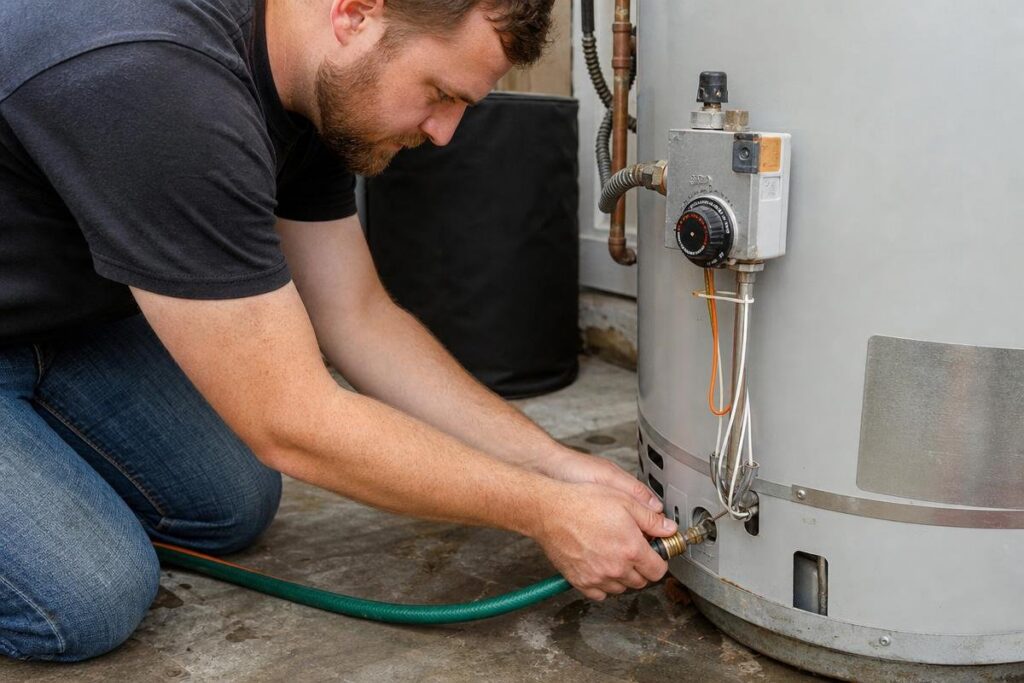
Flushing your tank once a year removes the sediment buildup that causes most popping and rumbling sounds. That’s it. One task. It’s the single most effective thing you can do to keep your water heater quiet and running efficiently. Homes in Erie and Longmont on municipal water pick up dissolved calcium and magnesium that settle to the tank bottom over time, and that layer of mineral crust is what creates the rumble you’re hearing.
Tanks older than 10 years that have never been flushed need a plumber’s eyes first. Disturbing heavy sediment can cause a brittle drain valve to fail, and that’s a bigger problem than the noise.
How to Flush Your Water Heater
- Set the thermostat to pilot on a gas unit, or flip the breaker on an electric unit.
- Connect a garden hose to the drain valve at the base of the tank.
- Run the hose to a floor drain or outside.
- Open a hot-water faucet somewhere in the house to prevent a vacuum from forming.
- Open the drain valve and let the tank drain completely.
- Briefly open the cold-water inlet to flush any remaining sediment out.
- Close the drain valve, remove the hose, let the tank refill, then restore power or relight the pilot.
One important caution: if the drain valve leaks after you close it, or the water still runs brown after a full flush, call a plumber. Do not close a leaking drain valve and walk away.
How Often Should You Flush Your Tank?
Once a year works for most homes. If you have a water softener, you can stretch that to every 18 to 24 months, since softened water deposits fewer minerals. Homes in Broomfield with softeners installed often go longer between flushes without issue. Pairing your flush with an end-of-winter heating check is a smart way to stay on schedule without adding another item to your calendar.
When a Noisy Water Heater in Boulder Means It Is Time for a Replacement
Age and Noise Together Are the Real Red Flag
A noisy water heater under 8 years old is almost always fixable. A noisy unit over 10 to 12 years old is a different story. At that age, the noise is often the tank telling you it is done.
Noise alone is not always the deciding factor. But noise combined with any of these means it is time to think seriously about whether to repair or replace the tank rather than patch it again:
- Rusty or discolored hot water at the tap
- Visible corrosion or rust on the tank body
- Two or more repairs in the last two years
- Rising energy bills with no change in how much hot water you use
Homes built in the 1980s through early 2000s across Louisville, Lafayette, and Superior often still have their original tank units. At elevations above 5,000 feet, incoming groundwater runs cold. Your tank works harder to reach temperature, and that extra thermal stress shortens the lining and anode rod faster than it would at lower elevations. Every year you skip a flush, the mineral buildup compounds that wear.
Tank vs. Tankless: Is This the Right Time to Switch?
Tankless water heaters eliminate the sediment problem entirely. No storage tank means no place for minerals to settle and create that noise in the first place. They also last 20 or more years versus 10 to 12 for a standard tank unit.
The trade-off is real: higher upfront cost, and gas units sometimes need a larger gas line. If you plan to stay in your home more than 5 years, the long-term math often favors going tankless. We can walk you through both options without any pressure.
Why Boulder and Louisville Homeowners Trust Us Since 1982
Precision Plumbing Heating, Cooling & Electric has been diagnosing water heater noises, leaks, and failures in this area since 1982. That is over 40 years of hands-on experience, right here in the neighborhood. Our office sits at 413 S Arthur Ave, Louisville, CO 80027. We are not a regional call center. We are your neighbors.
We are family-owned and woman-led, which means accountability matters here. When a technician shows up at your door, that work reflects on us personally. Our customers describe our techs as “informative and polite,” and our 4,213 reviews average 4.8 out of 5 stars. Those numbers come from real Louisville, Lafayette, and Longmont homeowners who called us with the same concerns you are reading about right now.
We offer same-day appointments and emergency service when you cannot wait. If you want to stay ahead of problems, a seasonal heating system check is a smart first step before small noises become big repairs. The smart decision is to call Precision.
Frequently Asked Questions
Is a water heater making noise dangerous?
Most noises are not immediately dangerous. Popping, rumbling, ticking, and humming all point to maintenance needs, not emergencies. The exception: hissing combined with a gas smell means leave the house now and call your gas company from outside. A whistling T&P (temperature and pressure relief) valve also needs same-day attention from a licensed plumber.
Why does my water heater make a popping noise?
A water heater popping noise almost always comes from sediment sitting on the tank floor. Trapped moisture forces through that sediment layer as the burner heats the water, creating the pop. Annual flushing prevents it. If your tank is over 10 years old and the popping is loud, it is time for a replacement evaluation.
Can I fix a noisy water heater myself?
Flushing the tank is a DIY-friendly job most homeowners finish in under an hour with a garden hose. Tightening pipe straps to stop water hammer is also reasonable. T&P valves, heating elements, gas connections, and drain valves require a licensed plumber. Do not guess on those.
How much does it cost to fix a noisy water heater in Boulder?
Cost depends on the cause. A tank flush is the least expensive fix. Replacing a heating element or inlet valve is a moderate repair. If sediment has corroded the tank lining, the repair-or-replace math usually favors a new unit. We give you the exact number before any work begins.
How long does a water heater last in Colorado?
Most tank water heaters last 10 to 12 years. Hard mineral content in the Louisville and Boulder County area accelerates wear on the anode rod and tank lining without annual flushing. Tankless units typically last 20 or more years with proper maintenance.
What is the banging noise in my pipes when I use hot water?
That is almost always water hammer, a pressure shockwave that hits when a valve closes quickly. It is a pipe issue, not a tank issue. Check that your cold-water inlet valve is fully open and that pipe straps are tight. Older Lafayette and Longmont homes with galvanized or copper supply lines are especially prone to this. Persistent banging may need a water hammer arrestor or a pressure-reducing valve adjustment.
Heard a noise you cannot place, or does your tank match two or more sediment warning signs? Call our team at (720) 464-4485 or schedule online. We offer same-day appointments and will tell you exactly what the problem is and what it costs to fix before any work begins. The smart decision is to call Precision.
Ready to Get Started with Precision Plumbing Heating, Cooling & Electric?
Call (720) 464-4485 to speak with our team directly. We’re ready to answer your questions, walk you through your options, and help you find the right solution for your needs. Whether you’re just starting to plan or ready to move forward, we’ll make the process simple and stress-free. Reach out today and let’s talk about how we can help.