

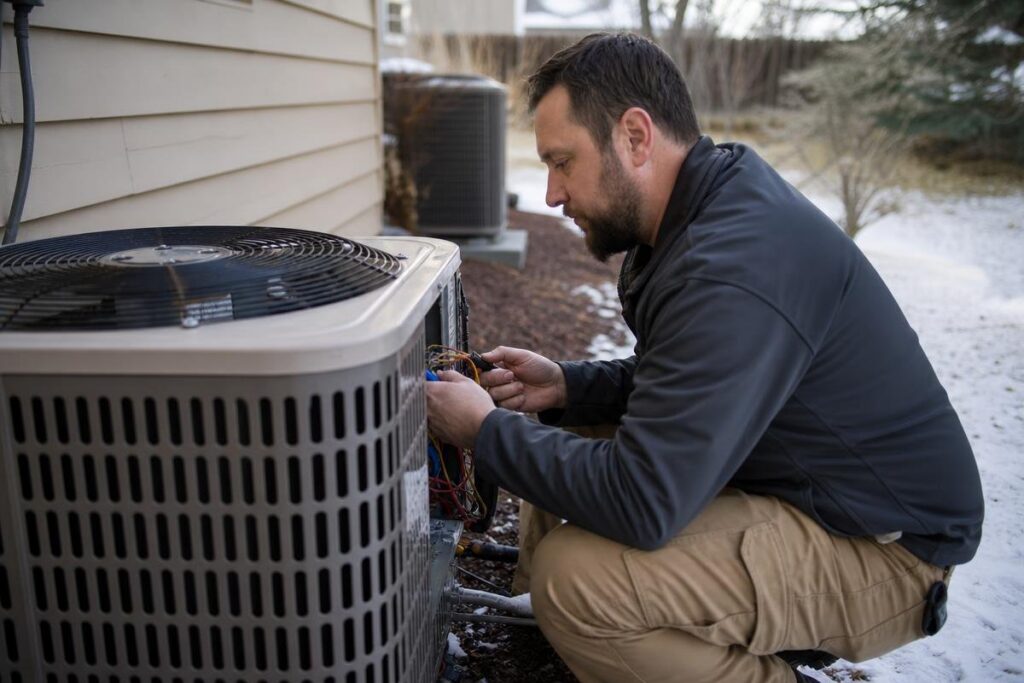
Louisville winters are no joke. January lows regularly drop into the teens, and when a cold snap pushes temperatures below zero, your heat pump is working harder than it was ever designed to. Heat pump efficiency drops fast in extreme cold, and most homeowners don’t realize it until they see a high Xcel Energy bill. We’ve been helping Louisville, CO homeowners get more out of their heating systems since 1982, and we’re right here at 413 S Arthur Ave when you need us.
Want your heat pump running at peak efficiency this winter? Our NATE-certified technicians can pinpoint what’s dragging your system down.
Key Takeaways
- Heat pump efficiency drops significantly once outdoor temperatures fall below 25°F, a common condition in Louisville, CO winters.
- High-HSPF2 (Heating Seasonal Performance Factor) heat pumps qualify for Xcel Energy rebates that can offset your upfront installation cost.
- Simple maintenance steps like cleaning filters and clearing outdoor units can recover meaningful efficiency losses before they hit your bill.
- Cold-climate heat pumps rated for sub-zero operation are a smart upgrade for the Front Range’s elevation and temperature swings.
It’s January. Temperatures outside drop to 18°F, and your heat pump is working overtime. You notice your electric bill is climbing fast. That’s not a coincidence. Whether you own an older ranch home near downtown Louisville or a newer build in Centennial Valley, the physics are the same once the mercury drops.
At those temperatures, a standard heat pump starts leaning on its backup electric strip heat, and that shift is where your bill takes off. We’ll break down exactly why below.
Precision Plumbing Heating, Cooling & Electric has served Louisville and the surrounding Front Range since 1982, and we see this pattern every winter at homes across the area. This article covers efficiency ratings like SEER2 and HSPF2, cold-weather performance factors specific to Colorado’s Front Range, practical maintenance steps your system needs before winter ends, and rebates that can offset upgrade costs.
What Do Heat Pump Efficiency Ratings Actually Mean?
Efficiency ratings on a heat pump are not just marketing numbers. They tell you exactly how hard your system works for every dollar you spend on electricity. Once you understand three key ratings, the EnergyGuide label starts making real sense.
HSPF2: The Number That Tells You How Far Your Heating Dollar Goes
HSPF2 stands for Heating Seasonal Performance Factor 2. It is the federal test standard the Department of Energy updated in 2023. The number measures how many BTUs (British Thermal Units) of heat your system delivers for every watt-hour of electricity it consumes across a full heating season. Higher is better.
The federal minimum for a split-system heat pump is 7.5 HSPF2. High-efficiency units hit 9.5 HSPF2 or above. That gap matters. A 9.5-rated unit delivers roughly 26% more heat per electricity dollar than a 7.5-rated unit. Over a Colorado winter, that difference adds up fast.
SEER2 and COP: Two More Numbers Worth Understanding
SEER2 (Seasonal Energy Efficiency Ratio 2) measures cooling performance, not heating. It matters for summer, but it does not tell you much about January heating bills. The number to watch in winter is COP, or Coefficient of Performance.
COP is a real-time snapshot. A COP of 3.0 means your heat pump delivers 3 units of heat for every 1 unit of electricity it uses. A properly running heat pump in mild weather sits in the 2.0 to 3.0 range or better. Compare that to electric resistance strip heat, which runs at a fixed COP of 1.0, one unit of heat for one unit of electricity. That is the entire reason heat pumps beat straight electric heat by such a wide margin.
The catch is that COP drops as outdoor temperatures fall. When it gets below 20°F along the Front Range, your system is working harder for less output. That is the core winter challenge, and it is exactly what the next section covers.
How Colorado’s Climate Zone Changes the Rules
Colorado sits in the DOE Northern climate zone. That designation matters because Northern-zone installations must meet higher HSPF2 minimums than Southern-zone states. A unit that qualifies in Georgia may not meet Colorado’s threshold.
It also affects your rebate eligibility. Xcel Energy’s rebate tiers are tied directly to HSPF2 thresholds, with the highest rebate level typically requiring 9.5 HSPF2 or better. Choosing a higher-rated unit does not just lower your energy bill. It can also put real money back in your pocket at installation time.
Why Winter Is the Hardest Season for Heat Pump Efficiency in Louisville
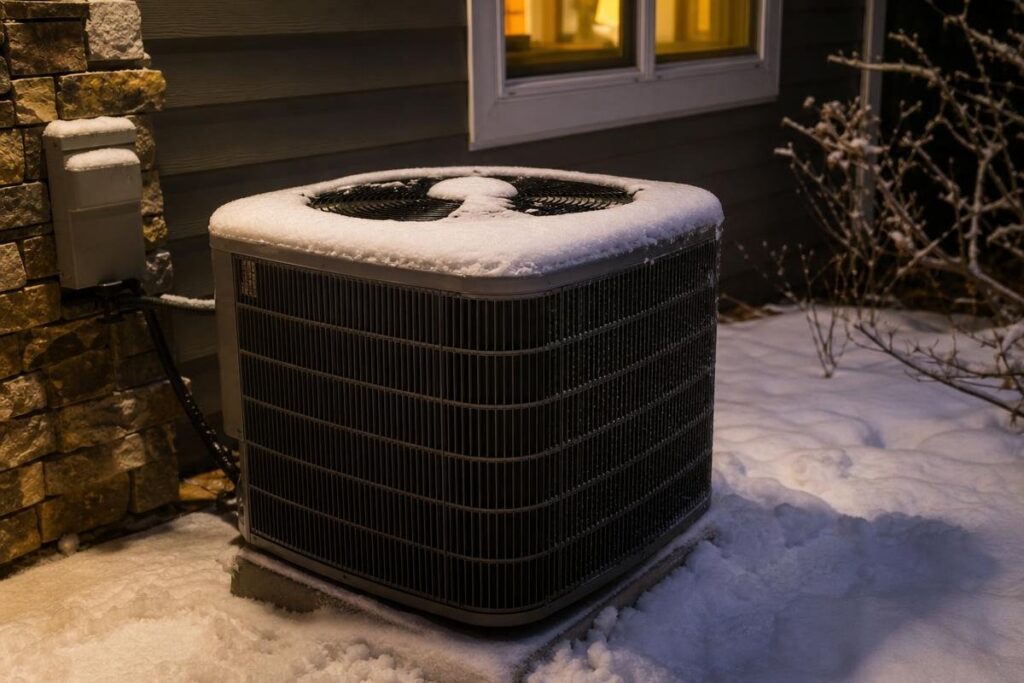
Heat pumps don’t generate heat. They move it. That distinction matters a lot once temperatures start dropping across the Front Range. The colder the outdoor air, the less heat energy there is to extract, and the harder your system has to work to keep up.
What Happens to Heat Transfer When the Temperature Drops
Most standard heat pumps run efficiently between 35°F and 65°F. Below 35°F, the coefficient of performance (COP) starts falling. Below 17-20°F, many standard units hit their rated balance point. That means the system can no longer keep up with heat loss on its own.
Average January lows in Louisville hover around 18-22°F, with cold snaps that push well below 0°F. Those are exactly the conditions that stress a standard heat pump hardest. If your system isn’t rated for cold-climate operation, those nights are expensive.
How Colorado’s Thin, Dry Air Affects the Refrigerant Cycle
Here’s something most homeowners don’t think about. At roughly 5,335 feet of elevation, the air is less dense than at sea level. That means 25°F air here contains less heat energy than 25°F air in Denver’s lower-elevation suburbs or anywhere in the Midwest. Your compressor has to work harder to pull the same amount of usable heat out of it.
This part of Colorado sees average relative humidity around 40-50%. That low humidity actually reduces the risk of coil icing compared to humid Southern climates. But it doesn’t offset the density problem. Thin, cold, dry air still forces the refrigerant cycle to run harder and longer. Running a heat pump through a Colorado winter is a different challenge than what most manufacturers design for at sea level.
The Hidden Cost of Backup Strip Heat
When your heat pump can’t keep up, backup electric resistance strip heat kicks in. As noted above, strip heat runs at a COP of 1.0, far below what your heat pump manages in milder weather, and that gap shows up directly on your January electric bill.
Most homeowners don’t realize they’ve been running on strip heat for weeks. If you’re weighing whether a gas backup system makes more sense for extreme cold nights, that’s worth a real conversation before next winter. A cold-climate heat pump rated to -13°F can dramatically cut how often strip heat engages, and that’s where the real savings are.
Not sure how often your system is falling back on strip heat? We can measure it and show you the numbers.
7 Practical Ways to Improve Your Heat Pump’s Winter Efficiency
These tips come straight from what our technicians check on every winter service call. Some you can handle yourself this weekend. Others need a pro. All of them make a real difference in heat pump performance through a Front Range winter.
Quick Wins You Can Do This Weekend
- Clear the outdoor unit. Remove leaves, snow, and any ice buildup from around the cabinet. Keep at least 18 inches of open space on all sides. Never let snow pack against the coils.
- Check your air filter. A clogged filter forces the blower to work harder and chokes airflow across the indoor coil. For most Louisville homes, a MERV 8 to 11 filter changed every 60 to 90 days is the right balance. Read more about choosing the right MERV rating for your home before your next filter swap.
- Unblock every supply and return vent. Closing vents in unused rooms feels logical, but it raises static pressure and cuts airflow efficiency across the whole system. Leave them open.
- Seal air leaks around doors and windows. Every gap lets conditioned air escape, which forces longer run cycles and burns more electricity. A tube of weatherstrip foam costs a few dollars and pays back fast.
Thermostat Settings and Airflow Habits That Matter
- Hold a steady setpoint. This is one of the most overlooked heat pump maintenance tips. Large temperature setbacks, like dropping 8 to 10 degrees overnight, force the system to recover fast. That recovery often triggers expensive backup strip heat. A smart thermostat with a dedicated heat pump or “intelligent recovery” mode handles this automatically and keeps efficiency high.
To answer the question directly: no, you should not crank the thermostat down at night the way you would with a gas furnace. Small setbacks of 2 to 3 degrees are fine. Big ones cost you more than they save.
Pro-Level Tasks Worth Scheduling Before the Next Cold Snap
- Annual refrigerant check. Low refrigerant is one of the top causes of poor winter performance. A certified technician checks the charge level and inspects for leaks. Because this involves handling refrigerant, it must be done by an EPA 608 certified technician and is not a DIY task.
- Coil cleaning. Dirty indoor and outdoor coils reduce heat transfer efficiency noticeably. A full tune-up covers both coils, and our team checks everything else at the same visit. See what a thorough end-of-season heating checkup actually covers.
Plan on professional service once a year. Before the first hard freeze is the right time to schedule it, not after your system is already struggling at 2 a.m.
Does Your Heat Pump’s Efficiency Rating Match Your Home’s Size?
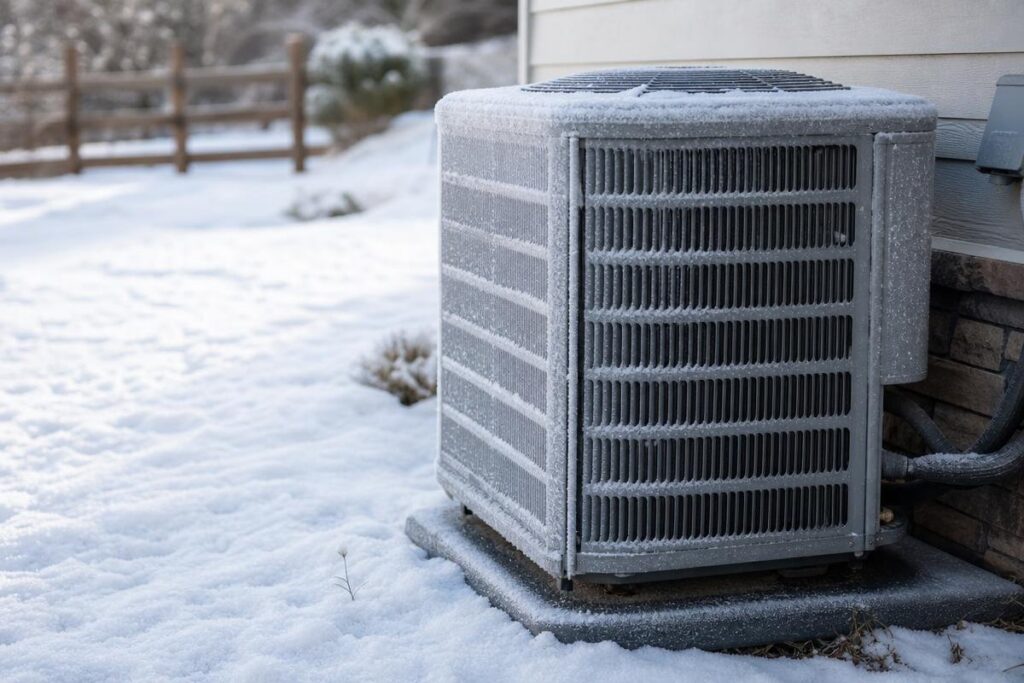
A high SEER2 or HSPF2 rating on the box does not guarantee efficient heating in your home. Sizing matters just as much as the rating itself. A unit that is too big or too small for your square footage will waste energy no matter what the spec sheet says.
What Short-Cycling and Constant Running Tell You About Sizing
An oversized heat pump short-cycles. That means it fires up, heats the space quickly, and shuts off before completing a full run cycle. Short cycles under 7 to 10 minutes are a red flag. The system never reaches peak heat pump efficiency, and you end up with uneven temperatures from room to room.
An undersized unit has the opposite problem. It runs almost constantly, leans hard on backup electric strip heat, and still struggles to hold its setpoint on nights when temperatures drop below 20°F. In Louisville, those cold snaps are not rare. If your strip heat is carrying most of the load through January, your system is probably undersized for your home.
- Short cycles under 7 to 10 minutes: likely oversized
- Cannot hold setpoint below 20°F without continuous strip heat: likely undersized
- Uneven room temperatures throughout the home: also a sizing signal
A bigger heat pump is not always the answer. Oversizing causes its own efficiency losses and shortens equipment life.
How a Manual J Load Calculation Catches the Problem
A Manual J load calculation is the industry-standard method for sizing heating and cooling equipment. It accounts for your home’s square footage, insulation levels, window area, home orientation, and local climate data including this area’s heating degree days. That last input matters here. Our winters are real, and the math should reflect them.
A common contractor shortcut is matching the new unit’s tonnage to whatever the old unit was. That skips the calculation entirely and locks in whatever sizing mistake already existed. Our technicians can assess sizing during a service call and flag whether a load calculation is needed before you invest in new equipment.
Correct HVAC sizing matters for both furnaces and heat pumps, and getting it right upfront saves real money over the life of the system. Think your heat pump might be the wrong size? Our team can assess your system and run the numbers. Call us at (720) 464-4485 to schedule a service visit.
Colorado Rebates That Reward High-Efficiency Heat Pumps
Upgrading to a cold-climate heat pump is a real investment. The good news is that homeowners in the Front Range area can stack multiple incentives to bring that cost down significantly. Two programs are worth knowing about right now.
Xcel Energy Rebates: What Qualifies and How Much
Xcel Energy is the primary utility for most of the communities we serve across the region. Their 2026 rebate program ties rebate amounts directly to your unit’s HSPF2 rating (Heating Seasonal Performance Factor, second generation). Units that hit a 9.5 or higher HSPF2 rating typically qualify for the highest rebate tier.
A few things to keep in mind:
- Installation must be done by a licensed contractor
- You will need to submit equipment documentation with your rebate application
- Rebate amounts vary by equipment tier and can change mid-year
For the full breakdown of how Xcel Energy heat pump rebate tiers work in Colorado, read our dedicated guide on Xcel heat pump rebates rather than relying on a number that may already be outdated.
The Federal 25C Tax Credit and How It Stacks With Xcel
The Inflation Reduction Act’s 25C tax credit covers 30% of the installed cost of a qualifying heat pump, up to $2,000 per year. To qualify, your unit must meet the Consortium for Energy Efficiency (CEE) highest efficiency tier. Not every heat pump on the market clears that bar, so confirm the model before you buy.
Here is the part worth highlighting: the 25C credit stacks directly with your Xcel rebate. That means homeowners in Thornton, Westminster, and other communities we serve can offset a meaningful chunk of the total installed cost by combining both programs. The tax credit applies to the year of installation. Talk to a tax professional about your specific situation before filing.
Wondering how much you could save by combining an Xcel rebate with the federal tax credit? We’ll walk you through what your home qualifies for.
How Louisville’s Climate Compares to Other Colorado Communities We Serve
Not every Colorado community puts the same demand on a heat pump. Our shop at 413 S Arthur Ave sits at roughly 5,335 feet, placing Louisville in the DOE Northern heating climate zone. That matters when you are picking a unit. A heat pump spec’d for Denver’s slightly lower elevation and urban heat island effect can underperform on a cold night here, where temperatures regularly drop to the high teens in January with occasional dips below zero.
Denver stays a few degrees warmer overnight because of the density of buildings and pavement around it. Longmont, on the other hand, sits more exposed to north winds off the plains, which can push the wind chill lower than what a thermometer shows. And while Chinook wind events warm things up fast in some spots, our more exposed eastern position means those warm spells do not always reach us the same way.
If you are still deciding between a heat pump and a gas system for one of these colder Front Range communities, this breakdown of why correct HVAC system sizing matters for furnaces and heat pumps is worth reading before you commit.
The bottom line: heat pump winter performance across Colorado varies more than most people expect. We serve homeowners in Erie, Longmont, Westminster, and beyond, and we size equipment for each community’s actual conditions, not a one-size average.
Frequently Asked Questions
Is a heat pump actually more efficient than a gas furnace in a Colorado winter?
In mild weather above 35°F, a heat pump delivers 2 to 3 units of heat for every unit of electricity it consumes. That makes it 2 to 3 times more efficient than a gas furnace at the same output. You can read more about how heat pump and gas furnace operating costs compare in Colorado to see how the math shakes out for your home. Below 20°F, efficiency drops, but a cold-climate unit still beats resistance strip heat by a wide margin.
What HSPF2 rating should I look for in Colorado?
Look for at least 9.5 HSPF2 (Heating Seasonal Performance Factor, second generation). That threshold qualifies you for Xcel Energy heat pump rebates and the federal 25C tax credit at its highest tier. Cold-climate models, sometimes called hyper-heat or H2i units, hold that rating even when outdoor temps drop well below freezing. Those are the units that make the most sense for Front Range winters.
Why does my heat pump blow cool air sometimes in winter?
That is almost always a defrost cycle. The system briefly reverses itself to melt ice off the outdoor coil, and the air from your vents may feel cool for 5 to 10 minutes. Completely normal. If your heat pump blows cool air constantly and never reaches your thermostat setpoint, that is a different story. It could be a low refrigerant charge, a dirty coil, or a failing reversing valve. Call us.
How often should I schedule a heat pump tune-up?
Once a year, before the heating season starts. A tune-up covers refrigerant charge, coil cleaning, electrical connections, and a filter check. Catching a small refrigerant issue in October costs far less than an emergency call in January when temps in Thornton or Westminster drop overnight.
What happens when temperatures drop below zero?
Standard heat pumps lose efficiency fast below 20°F and may stop heating effectively near 0°F. Cold-climate units rated to negative 13°F or lower keep working on the coldest nights and reduce how often your backup strip heat kicks in. If your current unit is a standard model, those cold snaps are costing you money every time they hit.
How much can I save by upgrading to a high-efficiency cold-climate heat pump?
Savings depend on your home size, current equipment age, and usage habits. We give you a written estimate before any work begins, so you know the numbers upfront. No surprises.
Your heat pump should keep up with a Colorado winter without sending your energy bill through the roof. If it is not doing that, something is off. Maybe the refrigerant charge is low. Maybe it is a standard unit trying to do the job of a cold-climate model. Our NATE-certified team can find the problem and fix it. Call us at (720) 464-4485 or schedule a tune-up online. We will give you a written estimate before any work begins.
Ready to Get Started with Precision Plumbing Heating, Cooling & Electric?
Call (720) 464-4485 to speak with our team directly. We’re ready to answer your questions, walk you through your options, and help you find the right solution for your needs. Whether you’re just starting to plan or ready to move forward, we’ll make the process simple and stress-free.
Reach out today and let’s talk about how we can help.