

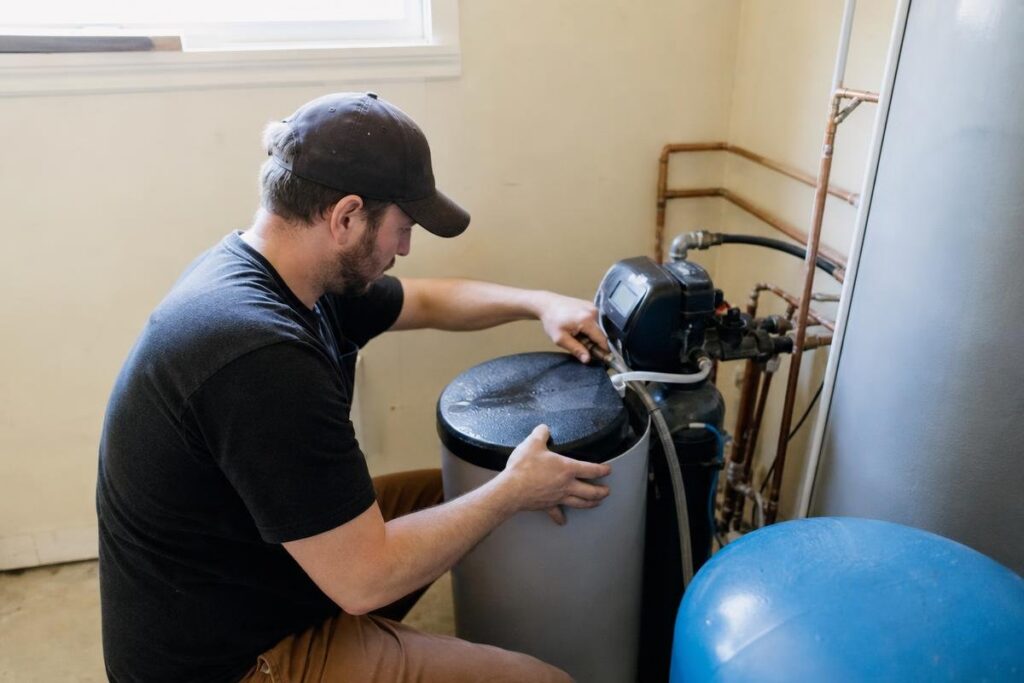
Dealing with hard water in Louisville, CO? You’re not alone. Louisville tap water typically runs between 150 and 250 mg/L of dissolved minerals, putting most homes firmly in the moderately hard to very hard range. That mineral load leaves scale on your fixtures, shortens the life of your water heater, and makes soap feel like it never fully rinses. Precision Plumbing Heating, Cooling & Electric has been solving hard water problems for local homeowners since 1982, and our team is based right here in Louisville at 413 S Arthur Ave, serving the community for more than four decades with fully licensed and insured technicians.
Ready to stop fighting scale and buildup? Get a free water test from our Louisville plumbing team and get a straight recommendation for your home.
Key Takeaways
- Louisville water hardness ranges from 150 to 250 mg/L, making hard water solutions a practical necessity for most homes here.
- Salt-based water softeners are the most effective fix for very hard water, but salt-free conditioners and filters are solid alternatives depending on your setup.
- Hard water accelerates scale buildup inside water heaters and pipes, shortening equipment life and raising energy costs over time.
- Homes in Old Town Louisville with pre-1990 copper or galvanized pipes should pair a softener installation with a pipe inspection.
- Simple DIY steps like vinegar rinses help with surface deposits, but a whole-home softener is the only lasting solution.
How Do You Know If You Have Hard Water in Your Louisville Home?
Hard water leaves a trail of clues throughout your home. You just have to know where to look. The dry Front Range climate makes those clues even more obvious. Water evaporates fast here, and minerals get left behind on every surface they touch.
The Most Common Hard Water Warning Signs
Walk through your bathroom and kitchen. Here is what hard water actually looks like:
- White or yellowish scale buildup: Crusty deposits around faucets, showerheads, and sink drains. That chalky ring does not scrub off easily.
- Soap scum that will not rinse clean: Hard water minerals react with soap and form a stubborn film on tubs, tiles, and shower doors.
- Stiff, scratchy laundry: Towels feel rough. Colors fade faster. Minerals bind to fabric fibers during the wash cycle.
- Spots on dishes and glassware: Pull a glass out of the dishwasher and hold it to the light. White spots or a cloudy film means minerals dried on the surface.
- Reduced water heater efficiency: Scale builds up inside the tank and on heating elements. If you have noticed your unit struggling, read our guide to troubleshoot a water heater that is not heating for related signs and fixes.
- Low water pressure at fixtures: Scale narrows pipe openings over time. Older homes in Old Town Louisville with galvanized steel pipes see this problem faster.
- Dry skin and hair after showering: Minerals strip moisture and leave a residue. If your skin feels tight right after rinsing, your water is likely the cause.
How to Test Your Water Hardness at Home
Louisville water often tests in the moderately hard to very hard range. You have three solid options to confirm it yourself:
- At-home test strips: Pick these up at any hardware store. Dip the strip, wait the recommended time, and compare the color to the chart. Fast and inexpensive, though less precise than a lab result.
- Mail-in certified lab kit: Gives you a full mineral profile including hardness, pH, chlorine, and iron levels. Good option if you want data a local plumber can act on.
- On-site professional water test: A licensed plumber tests your water at the tap and walks you through the results. Most accurate option, and you get solution recommendations on the spot.
Test strips are a good starting point. A lab kit or professional test tells you the full story, especially for warning signs in your home that point to multiple mineral issues at once.
Why Hard Water Is Bad for Your Home (and Your Wallet)
What Hard Water Does to Your Plumbing and Appliances
Here’s the chemistry in plain terms. When hard water is heated or evaporates, the calcium and magnesium minerals in it precipitate out as calcium carbonate scale. That’s not a plumbing defect. It’s just what happens when water carrying a high mineral load hits heat or dry air. And in this arid climate, water evaporates fast, leaving deposits behind faster than in humid regions.
That scale causes real damage in three specific ways.
- Water heater efficiency drops 25 to 30 percent (U.S. Department of Energy): Scale coats the heating element like insulation. Your water heater works harder and longer to hit the same temperature.
- Pipes narrow over years: Copper and galvanized steel pipes accumulate scale on their interior walls. Flow slows. Pressure drops. Fittings take more stress. Older homes in the Coal Creek corridor with pre-1990 plumbing are especially vulnerable to this.
- Appliances fail early: Dishwashers and washing machines are rated for a certain lifespan. Hard water shortens it. Internal components scale up, motors strain, and repair calls come sooner than they should.
The Hidden Cost of Ignoring Hard Water
The dollar impact adds up in four real ways. First, a scaled water heater drives up your energy bill every single month. Second, appliance repairs and early replacements cost far more than a water softener ever would. Third, hard water requires roughly twice the soap and detergent to lather properly. You’re buying more product and getting worse results. Fourth, if scale has already narrowed your pipes, you’re looking at earlier fixture and pipe replacement.
If you’ve noticed no hot water in your house, scale buildup inside aging pipes is one of the first things our team checks. Treating hard water isn’t just about comfort. It’s about protecting what you’ve already paid for.
The right hard water solution pays for itself over time. The next section covers exactly what your options are.
Wondering which system fits your home? Schedule a softener consultation and free water test with our licensed Louisville team.
5 Hard Water Solutions for Louisville Homeowners
The right solution depends on your hardness level, household size, and budget. With water hardness in the 9 to 15 GPG range across most of this area, you have real options. Here are the five we install and recommend most often.
1. Salt-Based Ion Exchange Water Softener
This is the gold standard for hard water above 7 GPG. Resin beads swap calcium and magnesium ions for sodium ions, then regenerate using sodium chloride or potassium chloride. It fully removes hardness minerals from every tap in the house. One note: some municipalities regulate brine discharge, so check with Louisville Utilities before installation. Our team handles that research for you.
2. Salt-Free Water Conditioner (Template-Assisted Crystallization)
A salt-free conditioner does not remove minerals. Instead, it changes their crystalline structure so they cannot stick to pipe walls or fixtures. No salt, no brine discharge, no electricity. It is a solid fit for moderately hard water or for homeowners in brine-restricted areas. Above 15 GPG, its effectiveness drops off. For homes sitting at the higher end of the local hardness range, a traditional softener will outperform it.
3. Whole-House Water Filtration System
Filtration and softening are not the same thing. A whole-house filter removes chlorine, sediment, VOCs, and iron. It does not soften water on its own. That said, pairing a carbon filtration stage with a softener gives you a complete system. Municipal water here is chlorine-treated, so the carbon stage makes a noticeable difference in taste and smell at every tap. If you want to understand how local conditions stress your plumbing, our post on how summer heat can stress your plumbing system covers related pipe and water quality concerns worth reading alongside this.
4. Reverse Osmosis Drinking Water System
A reverse osmosis system pushes water through a semi-permeable membrane, removing dissolved minerals at a single point of use, typically under the kitchen sink. The drinking water it produces is very pure. The trade-off: it only treats that one tap. Use it alongside a softener or conditioner for whole-house coverage plus ultra-pure drinking water at the kitchen faucet.
5. Magnetic or Electronic Descalers
These devices clamp onto your main line and claim to alter mineral behavior using a magnetic or electronic field. They are the lowest-cost option. The evidence is mixed. They may reduce some scale buildup in pipes, but they do not remove minerals. For homes above 7 GPG, a softener or salt-free conditioner will deliver far more consistent results. We are honest about this one: it is a last resort, not a first choice.
Water Softener vs. Water Filter: Which Does Your Louisville Home Actually Need?
This is the question we hear most from homeowners in and around Louisville. The short answer: it depends on what your water test shows. Here is a simple way to think about it.
When a Water Softener Is the Right Call
Louisville’s municipal water typically runs between 9 and 15 GPG. That puts it firmly in the “very hard” range. A salt-based softener is the right solution when:
- Your water test shows hardness above 7 GPG
- You see white scale buildup on faucets, showerheads, or appliances
- Your water heater is losing efficiency faster than it should
- Soap and shampoo refuse to lather properly
Scale buildup inside a tankless water heater is a real problem at Louisville’s elevation. Water boils at a lower temperature up here, which changes how minerals precipitate inside the heat exchanger. A softener stops that damage before it starts. If your water heater is already struggling, learn how to troubleshoot a water heater that is not heating for step-by-step guidance.
When a Whole-House Filter Makes More Sense
A whole-house filter is not a substitute for a softener when hardness is above 7 GPG. It does not remove calcium and magnesium. But a filter makes sense when:
- Hardness is below 7 GPG but chlorine taste or sediment is present
- You want to protect a softener’s resin bed from sediment and iron fouling
- Discoloration or odor is the primary complaint
Louisville’s municipal supply is chlorinated. A carbon filter stage genuinely improves taste and removes volatile organic compounds that a softener leaves behind.
When You Need Both
Most Louisville homes benefit from a paired system. Here is what our team typically installs: a whole-house sediment and carbon filter on the inlet line, followed by a salt-based softener. The filter protects the resin bed and removes chlorine. The softener handles hardness. Add an under-sink reverse osmosis unit at the kitchen tap and you have ultra-pure drinking water on top of that.
A whole-house filter alone cannot replace a water softener if your hardness is above 7 GPG. These two systems do different jobs.
|
Feature |
Salt Softener |
Salt-Free Conditioner |
Whole-House Filter |
RO System
|
|---|---|---|---|---|
|
Removes hardness minerals |
Yes |
No (conditions only) |
No |
Yes (at tap) |
|
Removes chlorine and VOCs |
No |
No |
Yes (carbon stage) |
Yes |
|
Requires salt |
Yes |
No |
No |
No |
|
Whole-house coverage |
Yes |
Yes |
Yes |
No (point of use) |
|
Best for hardness above 7 GPG |
Yes |
Partial |
No |
No |
Not sure which system your home needs? Our team can test your water and give you a straight recommendation. Call us at (720) 464-4485 to schedule a visit.
What Does Water Softener Installation Cost in Louisville, CO?

Cost is usually the first question homeowners ask once they decide to do something about hard water. That makes sense. Louisville area water runs 150 to 250 mg/L (9 to 15 GPG), which puts it firmly in the moderately hard to very hard range. At that level, treatment is not optional if you want to protect your appliances and pipes. Here are general industry ranges for 2026.
Typical Cost Ranges for Softeners and Filtration Systems
These are regional market ranges, not Precision Plumbing Heating, Cooling & Electric’s specific prices. A free in-home assessment gives you the most accurate number for your situation.
- Salt-based softener installed: $800 to $2,500
- Salt-free conditioner installed: $1,000 to $3,000
- Whole-house carbon and sediment filter installed: $300 to $1,200
- Reverse osmosis under-sink system installed: $300 to $700
- Paired softener plus whole-house filter system: $1,500 to $4,000
What Affects the Final Price
Five factors move the number up or down the most.
- Water hardness level: Higher hardness requires a higher grain capacity unit, which costs more upfront.
- Household size and water usage: Larger families need higher flow rates, which means a bigger system.
- Existing plumbing configuration: Older homes in Old Town Louisville with tight utility rooms or aging galvanized pipe often need extra labor.
- Brand and warranty: WQA-certified units carry longer warranties and lower lifetime cost, even if the sticker price is higher.
- Salt type: Potassium chloride costs more per bag than sodium chloride, but some municipalities prefer it due to brine-discharge concerns.
The only way to get a real number is a walk-through of your home. Our team offers a free in-home water test and assessment so you know exactly what you need before spending anything. Call us at (720) 464-4485 to schedule your assessment.
Hard Water and Louisville, CO: What Local Homeowners Should Know
Where Louisville’s Water Comes From
Louisville Utilities draws water from Boulder Reservoir and the Left Hand Creek watershed. That water is treated and delivered to your tap, but the mineral load it carries is baked in long before it reaches the treatment plant. Snowmelt percolates through limestone and granite formations, picking up calcium and magnesium carbonate along the way. That’s not a treatment failure. It’s geology.
The result is water that typically falls in the 150 to 250 mg/L range, or 9 to 15 grains per gallon. That puts most local homes squarely in the moderately hard to very hard category. Whole-home water filtration won’t change the source. A properly sized water softener will.
How Louisville’s Water Profile Affects Your Home
Every neighborhood draws from the same municipal supply. Old Town Louisville, Steel Ranch, the Coal Creek corridor, it doesn’t matter where you live. Hard water is consistent across the city.
What does vary is how your home handles it. Older homes built before 1990, especially in Old Town and near downtown Louisville, often have copper or galvanized steel pipes with years of accumulated scale. A softener stops future buildup. But if your home is in that age range, a pipe inspection is worth scheduling before you invest in water treatment.
Elevation matters here too. At roughly 5,335 feet, water boils at a lower temperature than it does at sea level. That changes how scale precipitates inside tankless water heaters and storage tank units. If you’ve noticed faster-than-expected buildup or performance drops, learn how to troubleshoot a water heater that is not heating.
The dry climate makes things worse on fixtures. Water evaporates quickly here, leaving mineral deposits behind faster than in humid regions. That white crust on your faucets and showerheads isn’t cosmetic. It’s a sign of what’s happening inside your pipes too. If you’re also noticing reduced flow, check out our post on fixes if there is no hot water.
Frequently Asked Questions
How hard is the water in Louisville, CO?
Water here typically falls in the 150 to 250 mg/L range, which is 9 to 15 GPG. That puts most homes in the moderately hard to very hard category. A quick in-home water test gives you the exact number for your tap, since seasonal blending from the Boulder Reservoir and Left Hand Creek watershed can shift levels throughout the year.
What is the difference between a water softener and a water conditioner?
A salt-based softener physically removes calcium and magnesium through ion exchange, replacing them with a small amount of sodium. A conditioner changes the mineral structure so scale is less likely to stick, but the minerals stay in the water. For very hard water, softeners are more effective. Conditioners work better for moderately hard water or homes with brine-discharge restrictions.
Can I install a water softener myself, or do I need a plumber?
Small countertop or under-sink units are fine as DIY projects. Whole-house softeners are a different story. They require cutting into your main water line, which needs a licensed plumber in this state. Improper installation can void the unit warranty and create real leak risks. Our team makes sure the bypass valve and drain line are set up correctly the first time.
How often does a water softener need maintenance?
Plan to add salt to the brine tank every 4 to 8 weeks, depending on your household size and hardness level. Clean the resin bed with a resin cleaner once a year to prevent iron fouling. The resin itself may need replacement every 5 to 10 years. If you pair a whole-house filter with your softener, swap those cartridges every 3 to 12 months depending on filter type.
Will a water softener make my water taste salty?
A properly set softener adds roughly 20 to 40 mg of sodium per liter, which most people cannot taste at all. If your water tastes noticeably salty, the unit is likely malfunctioning or set incorrectly. For drinking water with zero sodium, pair your softener with an under-sink reverse osmosis system.
Does hard water affect my water heater warranty?
Yes, and this catches a lot of homeowners off guard. Many manufacturers void coverage when scale damage is found and you cannot show proof of adequate water treatment. Given the hardness levels common in this area, scale can build up significantly within just a few years. If you want to protect that investment, learn how to troubleshoot a water heater that is not heating before the problem starts.
How long does water softener installation take?
A standard whole-house softener installation runs 2 to 4 hours. If you add a whole-house filter at the same time, plan for 3 to 5 hours. Water service goes off briefly during the work, but full pressure is restored the same day.
Ready to Get Started with Precision Plumbing Heating, Cooling & Electric?
Call (720) 464-4485 to speak with our team directly. We’re ready to answer your questions, walk you through your options, and help you find the right solution for your needs. Whether you’re just starting to plan or ready to move forward, we’ll make the process simple and stress-free.
Reach out today and let’s talk about how we can help.