

Worried about home electrical safety in Louisville, CO? You’re not alone. Many homes here, especially in the older neighborhoods around Old Town Louisville and the Coal Creek area, have aging panels, outdated wiring, and outlets that haven’t been looked at in decades. Precision Plumbing Heating, Cooling & Electric has served Louisville and the surrounding Boulder County for decades, and our licensed electricians know exactly what to look for. These 9 checks can help you catch small problems before they become serious hazards.
Schedule an electrical safety check with our Louisville team today.
Key Takeaways
- Home electrical safety checks can prevent fires, shocks, and costly emergency repairs in Louisville homes.
- Older Louisville neighborhoods are most likely to have outdated panels, aluminum wiring, or overloaded circuits.
- Summer thunderstorms along the Front Range make whole-home surge protection a smart investment for local homeowners.
- All electrical work in Colorado requires permits and a licensed contractor, so skip the DIY on serious issues.
- Nine quick checks can tell you whether your home’s electrical system needs professional attention now.
What Causes Electrical Fires in Colorado Homes?
The leading causes of electrical fires in Colorado homes are aging aluminum wiring, overloaded panels, and weather-related surge damage from Front Range thunderstorms. Understanding these real causes is the first step toward home electrical safety. Most fires trace back to old wiring, misused appliances, and weather stress that most national guides never mention.
Aging Wiring and Overloaded Circuits
Homes in the older sections of Old Town Louisville are at the highest risk. Many were built before 1970 with aluminum branch wiring. Aluminum expands and contracts with every heat cycle, and over decades those connections loosen. Loose connections arc. Arcing ignites fires inside your walls, where you cannot see it happening.
Original 60-amp panels make things worse. A central AC unit, an EV charger, and an electric water heater can collectively demand more amperage than your entire panel was rated to handle. If your breakers trip often, that is your panel telling you it is overwhelmed. Read our post on signs it may be time to upgrade your electrical panel to know what to watch for.
Appliance and Outlet Hazards
NFPA residential fire data from 2022 points to the same culprits year after year: overloaded extension cords, damaged receptacles, and misused appliances. Running a space heater through a power strip is a common mistake. So is ignoring a cracked outlet cover or a plug that feels warm to the touch.
GFCI outlets are required by code in kitchens, bathrooms, garages, and outdoor areas in newer construction. But many homes built before the mid-1990s never had them installed. That missing protection is a real residential electrical hazard, especially near water sources.
Weather-Related Electrical Stress Along the Front Range
Our local climate adds risks that most homeowners do not think about. At roughly 5,335 feet, this area sees dramatic temperature swings, hard freezes, and afternoon thunderstorms that roll in fast every summer. Those freeze-thaw cycles crack outdoor conduit. Summer lightning generates power surges that can damage wiring and appliances in seconds. Low winter humidity builds static that degrades insulation over time.
These are not abstract risks. The 2021 Marshall Fire, which tore through parts of Louisville and Superior, drove a lasting surge in demand for electrical inspections as homeowners rebuilt and neighbors reassessed the safety of surviving homes. If you have noticed that a breaker keeps tripping in your home after a storm, surge damage or a stressed circuit is often the reason. Whole-home surge protection is one of the most practical electrical fire prevention tips for any local homeowner.
Not sure if your panel is safe after the Marshall Fire or a recent storm? Get a professional safety assessment from our Louisville team.
The 9-Point Home Electrical Safety Checklist for Louisville Homeowners
Walk through your home with this checklist once a year. It takes about 30 minutes and can catch problems before they become fires. Some checks you can do yourself. Others need a professional. We’ll tell you which is which.
1. Electrical Panel
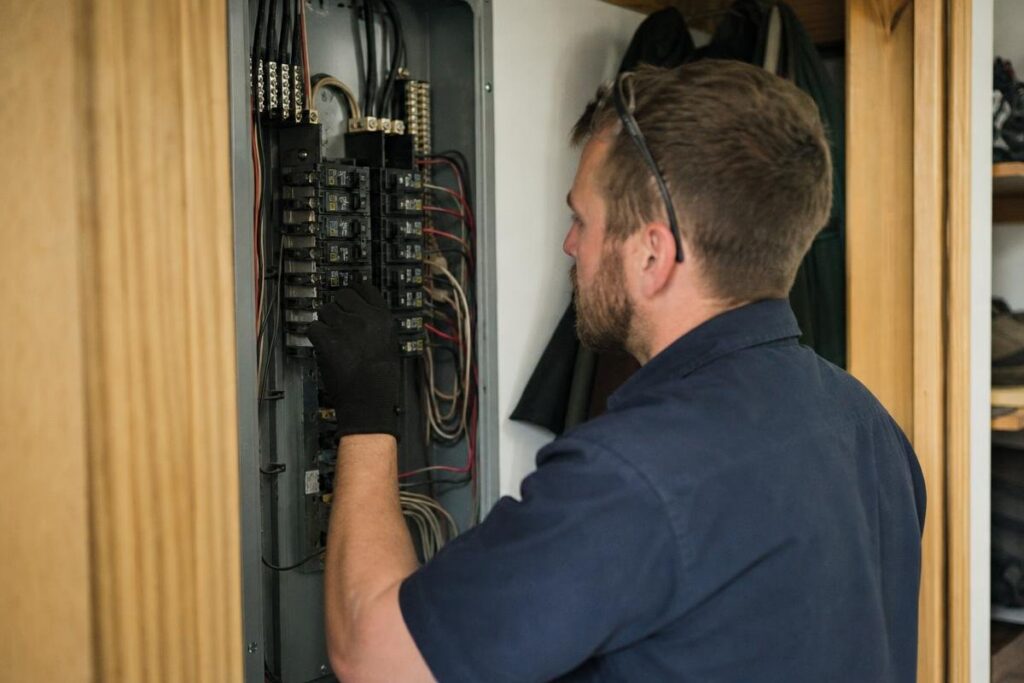
Open your panel and look for tripped breakers, burn marks, rust, or any warmth radiating from the box. Double-tapped breakers, two wires sharing one terminal, are a code violation and a fire risk. If your home has a Federal Pacific or Zinsco panel, stop here and call us. Both have documented failure histories. Our guide on the signs it may be time to upgrade your electrical panel explains what to look for before your next inspection.
2. GFCI and AFCI Outlets
Find every GFCI outlet in your bathrooms, kitchen, garage, and outdoor areas. Press the Test button. Power to that outlet should cut immediately. Press Reset to restore it. If nothing happens, the unit is dead and needs replacing. AFCI breakers in bedroom circuits use the same Test and Reset sequence at the panel itself. Any unit that fails to respond is a job for a certified electrician.
3. Flickering Lights
A single flickering bulb is usually just a bad bulb. Lights flickering in multiple rooms at the same time are a different problem entirely. That pattern points to a loose connection, an overloaded circuit, or a failing breaker. Do not ignore it and do not try to fix it yourself. If you want to understand what’s driving this, our article on how breakers keep tripping in your home covers the most common wiring causes.
4. Extension Cords
Extension cords are temporary tools, not permanent wiring. Running them under rugs, through doorways, or daisy-chaining power strips are all fire hazards. If you rely on extension cords in a room every single day, that room needs more outlets. Adding a dedicated circuit is a straightforward job for a professional and far cheaper than a fire.
5. Warm or Discolored Outlets
Touch the cover plate on your outlets. It should feel cool or room temperature. If a plate feels warm or looks brown or scorched, there is arcing happening inside the wall. Stop using that outlet right now. Flip the breaker for that circuit and schedule a professional inspection before you restore power to it.
6. Appliance Cords
Pull your refrigerator, washer, dryer, and dishwasher out slightly and inspect the cords where they meet the plug. Look for fraying, cracking, or kinking. The same check applies to cords running to your HVAC equipment. Damaged insulation at the plug end is a shock and fire hazard. Tape is never an acceptable fix. Replace the cord or the appliance.
7. Smoke and CO Detectors
Colorado law requires working smoke detectors on every level of your home and outside every sleeping area. Test each unit monthly using the test button. Sensors degrade over time, and units older than 10 years need to be replaced, not just given new batteries. If keeping up with this feels like a hassle, our Precision Care Club maintenance plan puts it on a schedule for you.
8. Outdoor and Garage Areas
Every outdoor outlet needs GFCI protection and a weatherproof in-use cover. Repeated freeze-thaw cycles crack conduit and can expose wiring in garages and on exterior walls. Check for cracked cover plates, exposed wire, and outlets that feel loose in their boxes. Homeowners with detached garages should pay extra attention here, since those runs are often the oldest wiring on the property.
9. Professional Electrical Inspection
A visual checklist catches surface problems. A trained electrician catches hidden arcing faults, undersized wiring runs, and improper grounding that you simply cannot see. For homes under 25 years old, schedule a professional inspection every 3 to 5 years. For older homes, every 1 to 3 years is the right interval. Pre-1970 homes in Old Town Louisville are especially good candidates for a full home electrical safety inspection this year.
Electrical Safety Tips That Go Beyond the Checklist
The checklist in the previous section catches the big issues. These habits and upgrades handle the everyday risks that most homeowners overlook. Small changes here make a real difference in electrical fire prevention.
Safe Appliance Use Every Day
Most residential electrical hazards start with how you use appliances, not with faulty wiring. Follow these habits consistently:
- Unplug toasters, coffee makers, and other small appliances when not in use.
- Never run your dryer or dishwasher while you sleep or leave the house.
- Always plug space heaters directly into a wall outlet. Never into a power strip or extension cord.
- Do not leave cooking appliances unattended, even for a few minutes.
These electrical safety tips for homeowners cost nothing. They just take consistency.
Protecting Your Home from Power Surges
Our region gets intense afternoon thunderstorms every summer. One lightning-induced surge can destroy your HVAC control board, smart home hub, or EV charger electronics in seconds.
There is a real difference between a surge strip and a whole-home surge protector. A surge strip protects only the devices plugged into it. A whole-home unit installs at your main panel and protects every circuit in the house simultaneously, including your HVAC system, smart thermostat, and EV charger. If you are planning an EV charger installation, read our guide on EV charger installation: what homeowners must know before you start. Surge strips still add a useful second layer, but they do not replace panel-level protection.
If your breaker trips after a storm, that is a separate warning sign. Our post on electrical issues to fix when breakers keep tripping covers what to check first.
Electrical Safety for Families with Kids
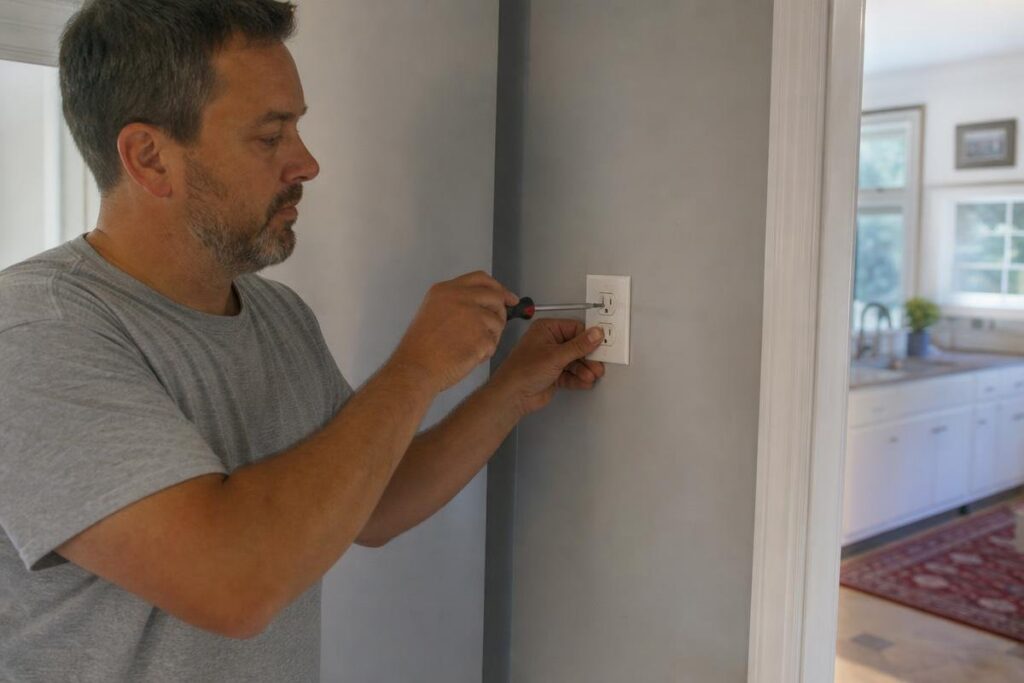
Plastic plug covers are easy to remove and easy to lose. A better fix is tamper-resistant receptacles, or TRRs. They have a built-in shutter that only opens when equal pressure hits both slots at once. A child cannot open them by inserting a single object.
The NEC required TRRs in new construction starting in 2008. Homes built before that year likely still have standard outlets. Replacing them is a straightforward job for a certified electrician. Also keep cords out of reach and teach kids early that outlets and cords are not toys.
Have questions about surge protection or outlet upgrades in your home? Call our team at (720) 464-4485 and we will walk you through your options.
How Electrical Safety Connects to Your Home’s Other Systems
Your electrical panel does not just power your lights and outlets. It feeds your HVAC system, water heater, and every major appliance in the house. When one system is stressed, it puts pressure on the others. That connection is something our team sees every day on service calls across Superior, Erie, and the surrounding area.
HVAC Systems and Electrical Load
Central AC and your furnace or heat pump are the two biggest electrical draws in your home. Together, they can push an older panel close to its limit. Add an EV charger or electric water heater, and a panel that was sized before central AC was standard may not keep up safely.
Our technicians regularly spot electrical capacity problems during HVAC service calls. A failing breaker or undersized circuit feeding an air handler is not just a comfort issue. It is a residential electrical hazard that can cause overheating and damage. If your breaker keeps tripping when the AC kicks on, that is a warning sign worth taking seriously. Knowing how long an HVAC system lasts also helps you plan for the electrical upgrades that often come with a system replacement.
Energy Audits and Electrical Efficiency
A home energy audit looks at insulation and air sealing, but it also flags electrical inefficiencies and safety risks you may not notice on your own. Auditors identify high-draw circuits and outdated components before they show obvious symptoms. That makes an audit a proactive electrical panel safety check, not just an energy-saving exercise.
If you are planning solar panels, a heat pump upgrade, or an EV charger anywhere in our service area, an audit is a smart first step. It tells you exactly what your current system can handle before any new work begins. Check out our article on signs it may be time to upgrade your electrical panel if you want to know what to watch for.
Why Louisville Homeowners Trust Our Team for Electrical Safety
Precision Plumbing Heating, Cooling & Electric has served Boulder County homeowners for decades. That means hands-on electrical work across the region, from aging panels in older Broomfield neighborhoods to EV charger installs in newer Erie homes. We are family-owned, woman-led, and based right here at 413 S Arthur Ave, Louisville, CO 80027. Our electricians hold current Colorado licensing, and you can verify contractor licensing through the Colorado Department of Regulatory Agencies before any work begins.
Our licensed electricians handle home electrical safety from start to finish. Smoke and CO detector installation, whole-home surge protection, circuit breaker service, and panel inspections. No need to call a separate contractor. If you have been wondering about warning signs, our article on the signs it is time to upgrade your electrical panel is a good starting point.
Customers across Superior, Longmont, and the wider area consistently describe our electricians as knowledgeable, on time, and easy to talk to. We offer same-day appointments and a Precision Care Club maintenance plan for homeowners who want ongoing electrical panel safety checks without the hassle of remembering to schedule.
Frequently Asked Questions
How often should I schedule a professional electrical inspection?
It depends on your home’s age. Homes under 25 years old need an inspection every 3 to 5 years. Homes between 25 and 40 years old should be checked every 1 to 3 years. If your home is over 40 years old, has aluminum wiring, or has an older Federal Pacific or Zinsco panel, schedule one annually. Buying or selling? Make an electrical inspection part of the transaction.
What should I do right now if I smell something burning near an outlet?
Turn off the breaker for that area immediately. If the smell is strong, comes from the panel, or you see smoke, leave the home and call 911. Arcing inside a wall can smolder for hours before igniting. Once the immediate risk is handled, call a licensed electrician before restoring power to that circuit. If your breaker keeps tripping alongside that smell, read our blog on 7 electrical issues to check if your breaker keeps tripping for more context.
What can I do myself versus what needs a licensed electrician?
The home electrical safety checklist in this article covers safe observation: look, listen, smell, and press test buttons on GFCI outlets. Anything that requires opening an outlet box, touching wiring, or working inside the panel is licensed-electrician territory. Unpermitted electrical work creates real problems for insurance and resale. For more on panel-specific warning signs, see our article on signs it may be time to upgrade your electrical panel.
How much does an electrical inspection cost?
Cost varies by home size and scope. We provide upfront pricing before any work begins. Call us at (720) 464-4485 or schedule online for a quote specific to your home.
Ready to Get Started with Precision Plumbing Heating, Cooling & Electric?
Call (720) 464-4485 to speak with our team directly. We’re ready to answer your questions, walk you through your options, and help you find the right solution for your needs. Whether you’re just starting to plan or ready to move forward, we’ll make the process simple and stress-free.
Reach out today and let’s talk about how we can help.