

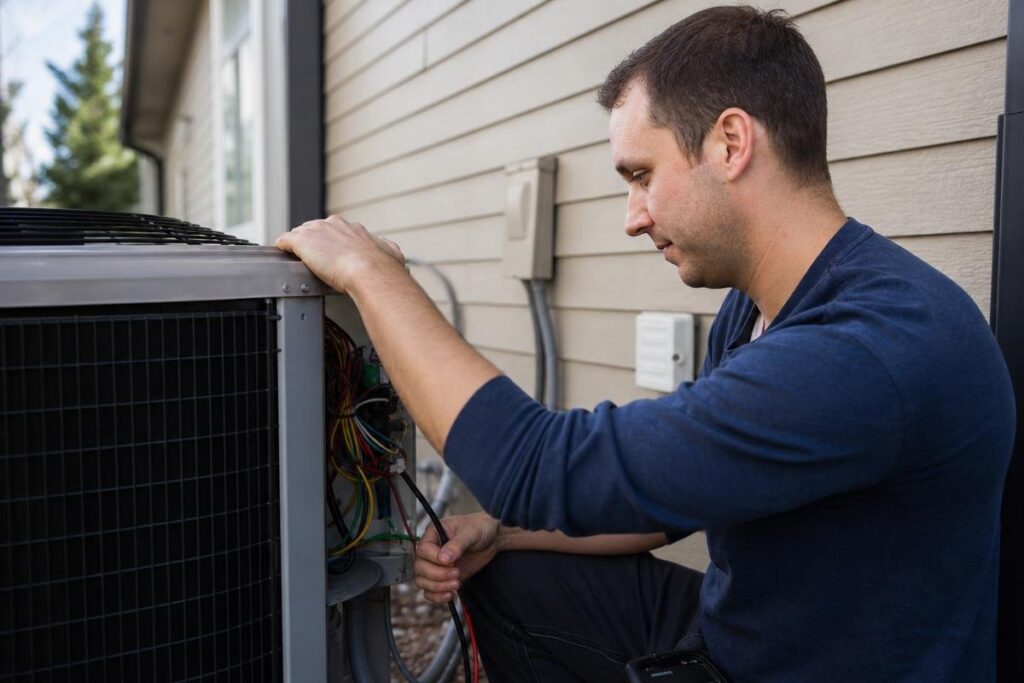
Wondering what HVAC replacement cost looks like for a Louisville home? Our climate is tough on equipment. Sub-zero winters and hot summers push systems hard, and when yours finally gives out, you need real numbers fast. We’ve been replacing HVAC systems in Louisville since 1982, so we know what local installs actually cost, including the high-altitude combustion adjustments that affect every gas furnace job here. This guide breaks it all down by system type so you can plan with confidence.
Get a straight, no-pressure answer on your replacement cost. Book a free on-site assessment with our Louisville team today.
Key Takeaways
- HVAC replacement cost in Louisville, CO typically ranges from $5,000 to $15,000 depending on system type and home size.
- Louisville’s elevation near 5,300 feet requires high-altitude combustion adjustments on gas furnaces, which can affect installation pricing.
- Xcel Energy rebates on qualifying high-efficiency systems, including heat pumps, can knock $100 to $1,200 off your out-of-pocket cost.
- Older homes in Old Town Louisville built in the 1970s often need a ductwork assessment before a new system is installed.
- Getting a local, contractor-provided estimate is the most reliable way to know your actual replacement cost.
Wondering what HVAC replacement costs in Louisville in 2026? If your system is failing and you need real numbers, you’re in the right place. Costs vary widely depending on your system type, home size, and what our team finds once we look at your existing setup.
Most homeowners replacing a furnace in this area see estimates ranging from around $3,500 to well over $12,000. Add a central AC or go with a full heat pump system and that number shifts again. The range is wide because no two homes are the same. A 1970s ranch near downtown with original ductwork needs a different approach than one of the newer builds that went up along the McCaslin corridor.
Precision Plumbing Heating, Cooling & Electric put this guide together to cover what you actually need to know before you spend a dollar: price ranges by system type, the factors that move your number up or down, and how to decide between repair and replacement. Louisville’s housing stock runs the gamut, from mid-century ranches to the wave of new construction that followed the Marshall Fire rebuild, and each of those brings its own cost drivers.
If you want to understand how long an HVAC system lasts before you commit to replacement, that’s a good place to start.
HVAC Replacement Cost at a Glance: Price Ranges for Louisville Homeowners
Replacing an HVAC system is not cheap, but knowing what to expect keeps you from getting caught off guard. The ranges below reflect installed prices, including equipment, labor, and Colorado-specific requirements like high-altitude combustion adjustments on gas equipment. Pricing here reflects local labor markets and Louisville and Boulder County permit costs.
Central AC Replacement Cost
Installed price range: $3,500 to $7,500. The spread comes down to SEER2 efficiency rating and compressor type. Federal law now sets 14.3 SEER2 as the minimum for Colorado, so any unit we install meets that floor. Two-stage and variable-speed compressors cost more upfront but cut summer cooling bills noticeably during the 90-degree July heat homeowners here know well. If your existing ductwork is in good shape, costs stay toward the lower end.
Gas Furnace Replacement Cost
Installed price range: $2,800 to $6,500. The biggest cost variable here is AFUE rating. An 80% AFUE furnace is less expensive upfront. A 96% AFUE model runs $500 to $1,500 more, but most local homeowners recover that difference in fuel savings within three to five winters. Every gas furnace we install at elevation gets high-altitude combustion adjustments to run safely and efficiently above 5,000 feet. If you want more detail on the replacement process, read our guide on furnace replacement tips for homeowners before you call.
Heat Pump Replacement Cost
Installed price range: $4,500 to $10,000. Heat pumps cost more than gas furnaces upfront, but cold-climate models from brands like Bosch, Mitsubishi Hyper Heat, and Carrier Greenspeed operate efficiently down to minus 13 degrees Fahrenheit. That matters here. Our cold snaps can hit single digits overnight in January, and a well-sized heat pump keeps up when the temperature drops that hard.
Ductless Mini-Split Cost
Single-zone installed: $2,500 to $5,500. Multi-zone systems: $5,000 to $14,000 or more. Mini-splits are a strong fit for older Old Town homes without existing ductwork, room additions, detached garages, and accessory dwelling units. No duct runs means less labor and less disruption to finished spaces. Multi-zone systems add cost with each additional indoor air handler.
Full System Replacement Cost (Furnace Plus AC)
Installed price range: $7,000 to $15,000 or more. Replacing both units at the same time almost always saves money compared to doing them separately. You pay for one mobilization, one permit pull, and one ductwork inspection. Matching equipment from the same manufacturer also protects your warranty. For larger homes or homes with aging duct systems that need work, budget toward the higher end of this range.
These ranges are starting points. Your actual HVAC replacement cost depends on home size, existing ductwork condition, and the system type you choose. We cover those factors in detail in the next section.
Not sure whether a repair or a full replacement makes more sense for your home? We’ll give you an honest, straightforward assessment before you commit to anything.
What Factors Influence Your HVAC Replacement Cost?

Several factors influence your HVAC replacement cost, including home size, ductwork condition, system type, and local permit requirements. Online price ranges are a useful starting point, but the number on your quote comes down to the specifics of your home. Here is what drives it up or down on a real job.
- Home size and square footage: A 1,200 sq ft home typically needs a 2-ton system. A 2,800 sq ft home may need 4 to 5 tons. Undersizing and oversizing both cause problems, so correct HVAC system sizing matters more than most homeowners realize. Getting this wrong costs you money every month in energy bills.
- System efficiency rating: Higher SEER2 ratings on cooling equipment and higher AFUE ratings on furnaces cost more upfront. A 96% AFUE furnace typically pays back the price difference in 4 to 6 years given Colorado gas rates. That payback math is worth running before you default to the entry-level unit.
- Existing ductwork condition: Leaking, undersized, or damaged ducts add $500 to $3,000 or more to a replacement job. Older homes near downtown often have undersized duct runs that were never designed for modern equipment. We always inspect ductwork before finalizing a quote.
- Installation complexity and permits: The City of Louisville requires a permit for HVAC replacement. That is not optional. At roughly 5,300 feet elevation, gas furnaces and boilers also need high-altitude combustion adjustments during installation. Attic and crawl space installs take more labor hours than a standard mechanical room setup.
- Brand and equipment tier: Entry-level equipment costs less upfront but typically carries shorter warranties. Brands like Carrier, Trane, Lennox, and Bosch offer longer coverage and better parts availability. The tier you choose affects both the install price and your long-term repair exposure.
- Time of year: Shoulder seasons, spring and fall, often mean faster scheduling. Demand is lower than peak summer and winter, which can work in your favor on timing even if the equipment price itself stays flat.
No phone estimate can account for all of these variables accurately. The only reliable number comes from a proper load calculation and an on-site assessment of your home, ductwork, and existing equipment.
When Does Repair Make More Sense Than Replacement?
Two questions cut through the noise fast: how old is your system, and how much will this repair cost? The answers tell you almost everything you need to know. Homeowners here deal with Front Range temperature swings, from sub-zero January nights to 95-degree July afternoons, and that puts serious wear on equipment. That wear changes the math on repair versus replacement.
The 50% Rule
If a repair quote comes in at more than 50% of a new system’s installed price, replacement almost always wins financially. Here is a real example. A 14-year-old furnace needs a heat exchanger replacement. The repair costs $1,800. A new furnace installed runs around $4,000. That repair is 45% of replacement cost, and the furnace is already past its midpoint. Add one more service call next winter and you have crossed the line.
Two or more service calls in the past 12 months is a clear signal. Cumulative repair costs add up fast, and you are likely approaching replacement territory without realizing it. Each repair also buys you less time on an aging system.
Age and Efficiency Thresholds
Age matters as much as repair cost. General thresholds to keep in mind:
- Gas furnaces: Replace after 18 to 20 years, especially if the AFUE rating is below 80%. Older units waste significant fuel every heating season.
- Central AC: Replace after 15 to 18 years, or sooner if the SEER rating is below 10. Pre-2006 equipment almost always falls into this category.
- Heat pumps: Replace after 12 to 15 years. Our climate extremes accelerate wear compared to milder U.S. regions, so lean toward the lower end of that range.
If you are unsure where your system falls, our guide on how long HVAC systems last breaks down expected lifespans by system type. It is a quick read and gives you a solid baseline before you call anyone.
If your system is within a few years of these thresholds and facing a major repair, replacement is almost always the smarter financial move. Putting $1,500 into a 19-year-old furnace is rarely money well spent.
Not sure if your system is worth repairing? Our team can give you an honest assessment. Call us at (720) 464-4485 and we will help you make the call without any pressure.
How to Save on HVAC Replacement Costs in Colorado
A new HVAC system is a big purchase. But Colorado homeowners have real options to cut that cost down. Between federal tax credits, utility rebates, and smart timing, you can often save $1,500 to $3,000 or more on a full system replacement.
Federal Tax Credits
The IRA 25C Energy Efficient Home Improvement Credit is still active in 2026. Here is what you can claim:
- Heat pumps: 30% of equipment and installation cost, up to $2,000. This applies to qualifying ENERGY STAR certified heat pump systems, including ductless mini-splits.
- High-efficiency furnaces and central AC: Up to $600 per unit for qualifying ENERGY STAR certified equipment.
These credits apply per year, so if you are replacing both a furnace and an AC, timing matters. Talk to your tax advisor to confirm eligibility before you buy. Our team can tell you which equipment qualifies during your assessment.
Xcel Energy and Utility Rebates
Xcel Energy serves most of Louisville and the surrounding communities. Its rebate program for 2026 pays out $100 to $1,200 depending on equipment type and efficiency tier. Qualifying cold-climate heat pumps tend to land at the higher end of that range, while high-efficiency furnaces typically fall in the $100 to $400 range. To qualify, equipment generally has to meet a minimum efficiency threshold, so it pays to confirm the specific SEER2 or AFUE rating before you buy.
If you are in a Black Hills Energy service area, similar rebate programs apply. These programs change, so verify current amounts before you purchase. We check current rebate eligibility as part of every replacement estimate we provide.
Maintenance Plans and Smart Timing
A well-maintained system lasts 3 to 5 years longer than a neglected one. Spending $150 to $200 per year on maintenance can delay a $7,000 to $12,000 replacement by several years. Review our guide on HVAC maintenance checklist to understand what that annual investment actually protects.
One more way to save: replace your furnace and central AC at the same time. You pay for one crew visit, one permit pull, and shared labor. Replacing each unit separately almost always costs more overall. If both systems are aging, bundling the replacement is the smarter financial move.
HVAC Replacement in Louisville, CO: What Makes This Market Different
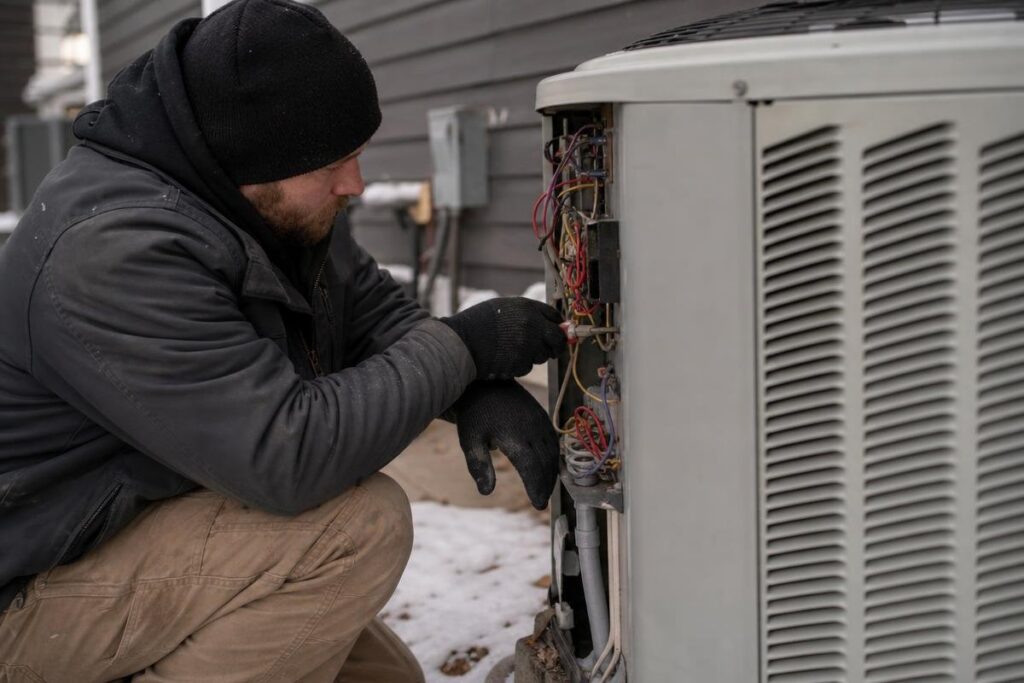
Not every HVAC market is the same. Louisville has specific conditions that change which systems work, how they get installed, and what you should expect to pay. If you are getting quotes on furnace replacement cost in Louisville, CO or heat pump installation cost here, these local factors matter.
Altitude and Climate Demands
Louisville sits at roughly 5,300 feet. That elevation is not just a fun fact. Gas furnaces and boilers must be de-rated for combustion at altitude, which affects equipment selection and adds complexity to the install. A technician who does not know Colorado code requirements for high-altitude combustion can size a system wrong or leave you with an unsafe install.
The climate swings hard here. Sub-zero overnight lows in winter and 95-degree afternoons in summer put above-average wear on any system. That stress is part of why proper sizing matters so much. An undersized system will run constantly and fail early. An oversized one short-cycles and never dehumidifies properly.
Older Louisville Neighborhoods and Aging Systems
Old Town Louisville and the Coal Creek area include a lot of 1970s-era and older homes. Many still have original ductwork, single-pane windows, and insulation that does not meet current standards. All of that affects how we size a replacement system. At the same time, the Marshall Fire rebuild has added a wave of brand-new, tightly sealed construction on the west side of town, and those homes call for very different equipment sizing and ventilation planning.
We use a Manual J load calculation on every job. It accounts for your actual home, not a square-footage guess. Homes built before 1995 often need duct sealing or modification during replacement. Skipping that step means your new equipment underperforms from day one. Budget for a duct assessment if your home is older.
Choosing the Right System for Louisville Winters
Cold-climate heat pumps have improved significantly. But they must be rated for temperatures below 0°F to handle the coldest nights in this climate zone. Many homeowners here choose a dual-fuel setup, a heat pump paired with a gas furnace backup. It gives you efficiency on mild days and reliable heat when temperatures drop hard.
Colorado’s dry climate is also worth planning around. New systems can be paired with whole-home humidity control and air filtration, which is especially valuable in the newer, tightly sealed rebuild homes. Our team is based at 413 S Arthur Ave, Louisville, CO 80027 and has been working in these neighborhoods since 1982.
Frequently Asked Questions
How much does a full HVAC system replacement cost in Louisville, CO?
In 2026, a full system replacement (furnace plus central AC) typically runs $7,000 to $15,000 installed. Single-unit replacements land between $2,800 and $7,500 depending on equipment tier and installation complexity. See the price breakdown in section two for system-specific ranges by home size.
Is it better to replace just the furnace or the whole HVAC system at once?
Replacing both units at the same time saves on labor and permitting. Mismatched systems, like a new high-efficiency AC paired with an aging furnace, reduce overall efficiency because the components are not engineered to work together. If one unit is near the end of its life, replacing both usually makes more financial sense.
How long does HVAC replacement take?
A single-unit swap takes 4 to 8 hours. A full system replacement typically fills one full workday. Ductwork modifications, new refrigerant line sets, or electrical panel upgrades add time. Most jobs are scheduled within a few business days of the initial assessment.
What efficiency rating should I choose for a Colorado home?
For Front Range winters, a 96% AFUE variable-speed furnace is the top performer. An 80% AFUE unit meets code and costs less upfront. For cooling, look at 16 to 18 SEER2 two-stage or variable-speed equipment. If you are considering a heat pump, it must be rated to at least negative 13°F to handle Colorado cold reliably.
Does your team offer financing for HVAC replacement?
Yes, financing options are available. Call us at (720) 464-4485 or visit precisionplumbing.com to ask about current plans. Utility rebates and federal tax credits covered earlier in this guide can also reduce your out-of-pocket cost significantly.
How do I know what size HVAC system my Louisville home needs?
Proper sizing requires a Manual J load calculation. That accounts for square footage, ceiling height, insulation levels, window area, and local climate data including our elevation near 5,300 feet. Rule-of-thumb estimates are not accurate enough for local conditions. Oversized systems short-cycle; undersized systems run constantly. Both outcomes cost you money. Read more about our guide on HVAC maintenance checklist to understand how sizing affects long-term performance.
Ready to Get Started with Precision Plumbing Heating, Cooling & Electric?
Call (720) 464-4485 to speak with our team directly. We’re ready to answer your questions, walk you through your options, and help you find the right solution for your needs. Whether you’re just starting to plan or ready to move forward, we’ll make the process simple and stress-free.
Reach out today and let’s talk about how we can help.