

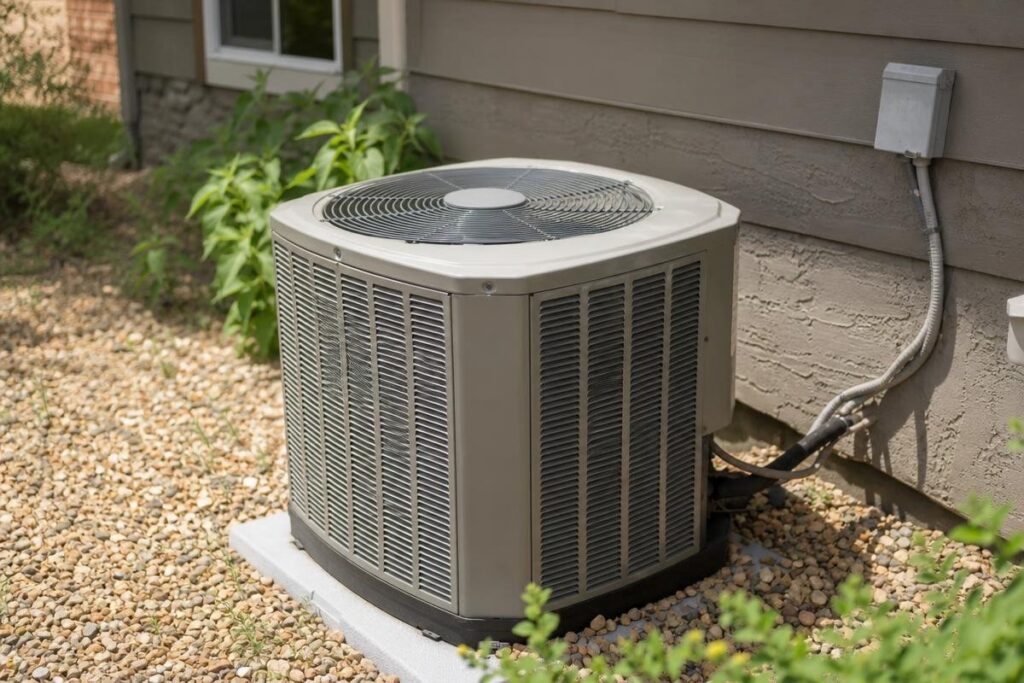
Your AC not cooling on a hot Louisville, CO afternoon is more than uncomfortable. It can mean a simple fix you handle yourself, or a repair that needs a licensed tech fast. We’ve been diagnosing and repairing AC systems along the Front Range since 1982, and we know exactly what to look for. This guide walks you through the 8 most common causes, starting with the checks you can do right now before you call for help. AC running but not cooling your home? Get answers today.
Key Takeaways
- A dirty air filter is the most common reason an AC stops blowing cold air and takes minutes to fix.
- Incorrect thermostat settings cause more “broken AC” calls than most homeowners expect.
- Seasonal debris from Louisville’s dense cottonwoods coats outdoor condenser coils fast, cutting cooling capacity before summer peaks.
- Low refrigerant and a frozen evaporator coil both require a licensed technician, not a DIY fix.
- Catching AC problems early almost always costs less than waiting until the system stops working entirely.
Start Here: What “AC Not Cooling” Actually Means
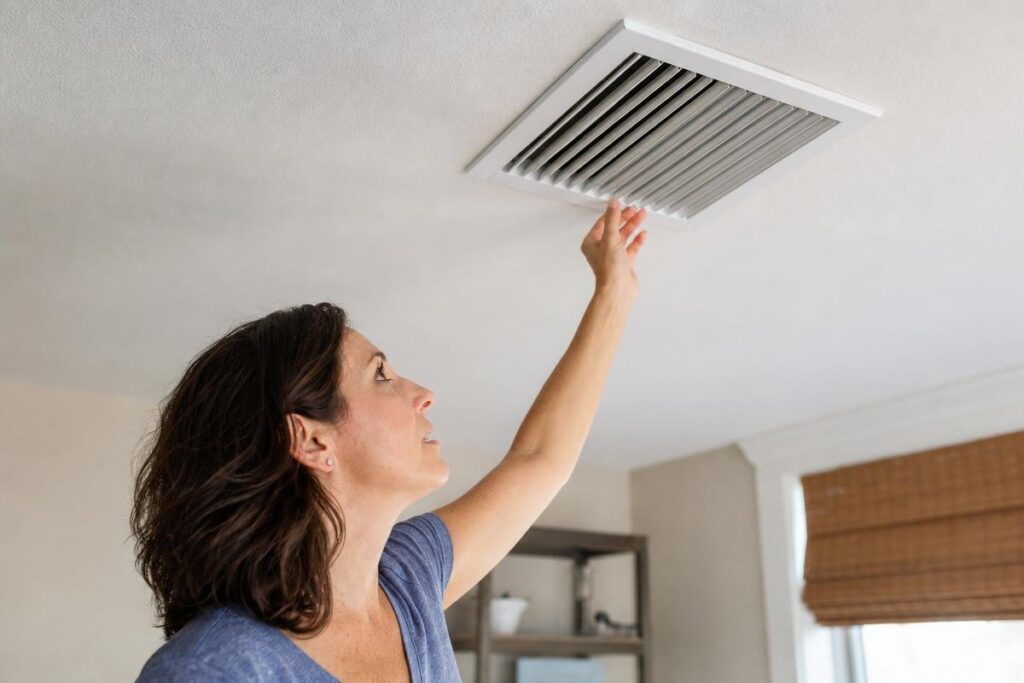
It’s mid-afternoon. Temperatures are pushing into the upper 90s. Your AC is running, you can hear it, but the air coming out of your vents is barely cool. That’s one of the most frustrating calls we get all summer.
The good news is that an AC running but not cooling your house doesn’t always mean a major repair. Some causes are simple DIY fixes. Others need a technician. This article walks you through all 8, so you know exactly what you’re dealing with before you pick up the phone.
We serve Louisville, CO and the surrounding Boulder County metro area. We see these problems constantly, especially during peak summer heat. Let’s start with what to look for.
Why Louisville’s Climate Makes AC Problems More Common in Summer
Louisville’s climate is harder on air conditioning systems than most homeowners realize. The elevation, the seasonal cottonwood debris, the dry air, they all gang up on your AC in ways that don’t happen at lower altitudes. If your central air not cooling the house is a recurring summer problem, local conditions are likely part of the reason.
High Elevation, High UV, and Your Outdoor Condenser Unit
Louisville sits at roughly 5,335 feet. At that elevation, the air is thinner, which means your outdoor condenser unit has to work harder and run longer to push heat out of your home. On a 95-degree afternoon in July, that unit may already be at or past its rated capacity.
Intense UV at Colorado’s altitude also degrades condenser coil fins and refrigerant line insulation faster than at sea level.
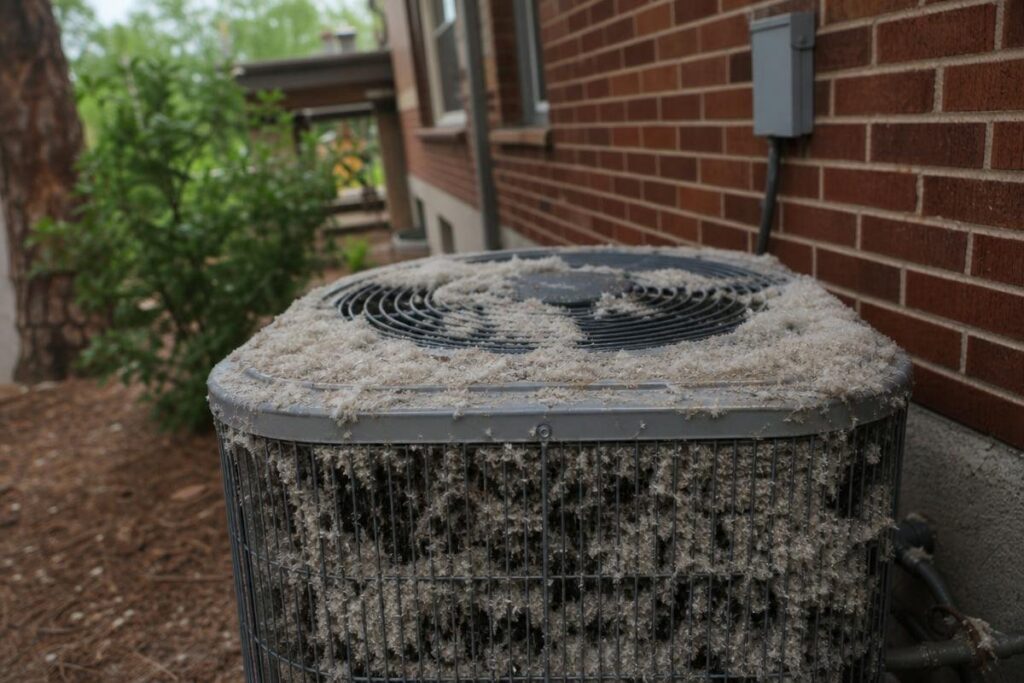
Then cottonwood season hits, typically late May through mid-June, and that fluff coats condenser coils in days. It is especially heavy along the Coal Creek corridor, where cottonwood trees grow dense. A clogged condenser can’t reject heat. The result is warm air coming through your vents and a system that runs constantly without catching up. This is why we always recommend scheduling your AC tune-up before June, not after the problem starts.
Low Humidity Hides the Problem Until It Gets Worse
Summer afternoon humidity in Louisville regularly drops to 15 to 30 percent. That dry air feels cool even when your AC is underperforming. Your house might feel tolerable while the system is actually struggling with early refrigerant loss or a partially blocked coil.
By the time you notice the problem, it’s usually gotten worse. That’s also when your energy bills spike. If you want to stay ahead of it, our post on how to lower your energy bills during peak summer heat covers practical steps for the area’s hottest days. On every Louisville-area service call, our technicians account for the low-humidity factor first.
The 8 Most Common Reasons Your AC Is Not Cooling
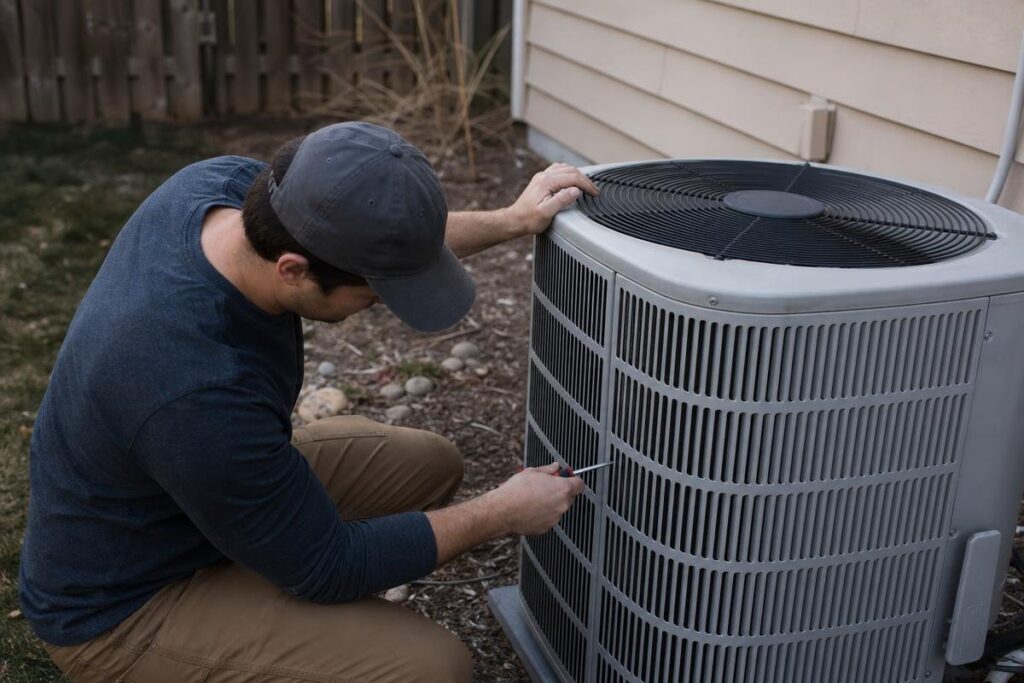
If your air conditioner is running but not blowing cold air, one of these eight causes is almost always behind it. Some you can fix in five minutes. Others need a technician. Here is how to tell the difference.
1. Dirty Air Filter
A clogged filter chokes off airflow across the evaporator coil. When airflow drops too low, the coil gets too cold and freezes over, and your AC stops blowing cold air entirely. Replace your filter every one to three months, sooner if you have pets or live near a dusty road. Not sure which filter to buy? Read our guide on choosing the right MERV rating for your filter before you head to the hardware store.
2. Incorrect Thermostat Settings
This one catches people off guard. Check three things: the mode must be set to COOL, the set temperature must be below the current room temperature, and the fan must be on AUTO, not ON. A fan set to ON blows air even when the system is not actively cooling, so the air from your vents feels warm. Smart thermostat misconfiguration is a common sub-cause here, especially after a power outage resets your schedule.
3. Dirty Condenser Coils
The outdoor condenser unit sheds heat from your home into the outside air. When the coils are coated in dirt, cottonwood fluff, or grass clippings, that heat transfer stalls and your system loses cooling capacity fast. As noted above, the late-spring cottonwood drop can cake an outdoor condenser in days, particularly for homes near Coal Creek. You can rinse the coils gently from the top down with a garden hose at low pressure. Bent fins or heavy fouling need a technician with a coil cleaner.
4. Low Refrigerant from a Leak
Refrigerants do not get “used up.” If your system is low, there is a leak somewhere. Signs include ice forming on the refrigerant lines, a hissing or bubbling sound near the indoor unit, and warm air from every vent in the house. Topping off the charge without finding and fixing the leak is a short-term patch at best. An EPA-certified technician is required by law to handle refrigerants.
Our technicians are EPA 608-certified and handle refrigerant recovery and recharge in compliance with federal regulations. For more on what this feels like from inside the house, see our post on why your AC is blowing warm air instead of cold. Think you have a refrigerant leak? We’ll find it fast.
5. Frozen Evaporator Coil
A frozen evaporator coil is usually caused by restricted airflow or low refrigerant. You may notice ice on the copper lines near the indoor unit or weak airflow from every register. Turn the system off, switch the fan to ON, and let it thaw for two to four hours. Replace the filter, then restart. If it freezes again within a day or two, call us. Something deeper is causing it.
6. Tripped Circuit Breaker
Your outdoor condenser and indoor air handler typically run on separate breakers. If the condenser breaker trips, the indoor fan keeps running but there is zero cooling happening. Check your panel and reset the breaker once. If it trips again, stop there. A repeatedly tripping breaker signals an electrical fault, not a fluke. Read more about what to do when a breaker keeps tripping in your home before you reset it a third time.
7. Blocked or Leaking Ducts
Closed supply vents, furniture pushed against registers, or duct leaks in an attic or crawlspace all reduce how much cold air actually reaches your rooms. This is common in older homes in Old Town Louisville, where original ductwork was never sealed to modern standards. Walk the house and make sure every vent is open and unobstructed. If some rooms are cold and others are not, a duct leak is a likely cause. Duct leaks need a technician to locate and seal properly.
8. Undersized or Aging System
If your AC runs all day without ever reaching the set temperature, the system may simply not be sized for your home’s current load. This is common in Louisville homes that added square footage, finished a basement, or upgraded windows without resizing the HVAC system. An older unit that has lost capacity over the years produces the same symptom.
Understanding why correct HVAC system sizing matters for your home is a good first step. If the system is more than 15 years old and struggling on peak days, it may be time to look at 5 reasons AC replacement is a smart move before next summer.
What You Can Check and Fix Yourself Before Calling
Before you pick up the phone, run through this checklist. Some of the most common reasons an AC is running but not cooling your house are things you can fix in five minutes. If your system checks out on all six steps and still isn’t blowing cold, then it’s time to call us.
Your 6-Step DIY Checklist
- Check and replace the air filter. A clogged filter is the number one cause of poor cooling. Pull it out and hold it up to light. If you can’t see through it, replace it. Check out our guide on choosing the right MERV rating for your filter if you’re not sure which one to buy.
- Confirm your thermostat settings. Set it to COOL, fan to AUTO, and make sure the temperature is set below the current room temp. Incorrect thermostat settings cause more service calls than you’d think.
- Check all supply and return vents. Walk the house. Make sure every vent is open and nothing is blocking airflow, furniture, rugs, boxes.
- Inspect the outdoor condenser unit. Look for debris packed against the coils. In Louisville, cottonwood fluff can coat a condenser fast in late May and June. A gentle rinse with a garden hose can help. Don’t use a pressure washer.
- Check your circuit breaker panel. Look for a tripped AC or condenser breaker. Reset it once. If it trips again, stop there and call.
- Look at the indoor air handler for ice. Ice on the refrigerant lines or coil means restricted airflow or a refrigerant issue. Turn the system off and let it thaw before running it again. Colorado’s dry climate means ice can evaporate quickly, so check promptly.
When to Stop and Call a Technician
Some problems are beyond safe DIY territory. Stop troubleshooting and call if you notice any of these:
- The breaker trips again after you reset it. A breaker that keeps tripping signals an electrical or compressor problem.
- Ice returns after you replace the filter.
- You hear hissing or bubbling from the refrigerant lines. That’s a leak. Refrigerant handling requires EPA Section 608 certification. Homeowners cannot legally or safely add refrigerant themselves.
- The outdoor unit isn’t running at all.
- Your system is 12 to 15 years old and has never been serviced.
Knowing where the line is keeps you safe and saves you from turning a small problem into a bigger repair bill. Still not blowing cold after the checklist? Our team is ready to diagnose it fast. Call us at (720) 464-4485 and we’ll get your AC back on track.
How Regular AC Maintenance Prevents Most of These Problems
Most of the eight causes covered in this article are caught and corrected during a single annual tune-up. A dirty condenser coil, a weak capacitor, a clogged condensate drain, low refrigerant charge: a technician finds all of these before they leave your central air not cooling on the hottest day of the year. Skipping maintenance is the most common reason we see preventable breakdowns in Louisville and across the Boulder County metro area.
What a Professional AC Tune-Up Actually Covers
Here is what we check and clean during a standard tune-up:
- Clean evaporator and condenser coils
- Measure refrigerant charge and inspect for leaks
- Clear and flush the condensate drain line
- Inspect electrical connections and test capacitors
- Verify thermostat calibration and settings
- Measure airflow and static pressure across the system
- Inspect the blower motor for wear
These are tasks that require gauges, meters, and refrigerant handling certifications. They are not things a homeowner can replicate with a garden hose and a YouTube video. A tune-up also gives you a clear picture of your system’s overall health, which matters if you are weighing whether AC replacement makes more sense than another repair season.
The Best Time to Schedule in Louisville
Schedule in April or early May. Louisville’s cottonwoods drop their fluff from late May through mid-June, and that debris coats outdoor condenser coils fast, especially near the Coal Creek corridor. Getting a pre-season cleaning done before it peaks means your coils stay clear through the worst of summer. By the time temperatures hit the mid-90s, your system is already dialed in.
We have been doing this across the Front Range since 1982. We know the seasonal rhythm here. If you want to stay ahead of AC not cooling calls this summer, early spring scheduling is the smart move.
Why Louisville Homeowners Trust Us for AC Repair
Precision Plumbing Heating, Cooling & Electric has been fixing AC systems on the Front Range since 1982. We are family-owned, woman-led, and based right here at 413 S Arthur Ave, Louisville, CO 80027. When your AC stops cooling on a 95-degree afternoon, you want someone local who knows this area, not a national call center routing your ticket to whoever is available.
40-Plus Years of Local Service, Same-Day Availability
We serve Louisville, Longmont, Broomfield, Arvada, Erie, and the wider Front Range, not just one zip code. Our technicians are EPA 608-certified for refrigerant work, and our team is available Monday through Friday 7am to 6pm and Saturday 8am to 4pm, with same-day appointments and emergency service when you need it fast. You will know the price before any work begins, no surprises after the fact.
If you are weighing a repair against a full replacement, our article on 5 reasons AC replacement is a smart move can help you think it through before we arrive.
What Our Customers Actually Say
Customers consistently mention our technicians by name and note that they show up on time, explain the problem clearly, and do not leave until the job is done right. That kind of feedback does not come from a script.
For Louisville homeowners, the difference is real-world experience at elevation, in cottonwood season, during the driest stretches of the year. The smart decision is to call Precision.
Frequently Asked Questions
How Do I Know If It Is a Dirty Filter or a Refrigerant Leak?
Replace the filter and give the system 30 minutes to respond. If cold air returns, the filter was the problem. If the air stays warm, ice forms on the indoor unit, or you hear a hissing sound near the refrigerant lines, a leak is likely. A technician can check refrigerant charge with gauges in about 15 minutes.
Why Does My AC Run Constantly but the House Stays Warm?
This usually points to an undersized system, lost refrigerant, or dirty condenser coils that cannot reject heat properly. On days when temperatures climb past 95 degrees, even a properly working AC may struggle to hit the set temperature. Check the outdoor temp before assuming something is broken. If conditions are moderate and the house still stays warm, call us.
Can I Run My AC if the Evaporator Coil Is Frozen?
No. Turn the system off immediately and switch the fan to ON so it can thaw. Running the compressor against a frozen coil can damage the compressor, which is the most expensive component in the system. Allow 2 to 4 hours to thaw, replace the filter, then restart.
How Much Does AC Repair Cost in Louisville?
Repair costs vary depending on the cause. A thermostat adjustment costs far less than a refrigerant recharge or a compressor replacement. We give you a firm price before any work begins, so there are no surprises on the invoice.
How Often Should I Have My AC Serviced?
Once a year, ideally in April before the heat arrives. Homes with pets, heavy cottonwood exposure, or systems older than 10 years benefit from twice-yearly service. Cottonwood fluff coats outdoor condenser coils fast in the Front Range area, so a post-season cleaning is worth considering.
Should I Repair or Replace My AC?
If your system is more than 12 to 15 years old, has needed multiple repairs in the past two years, or still uses R-22 refrigerant (phased out in 2020), replacement is often the smarter financial call. Read our breakdown of 5 reasons AC replacement is a smart move to help you decide.
If you have worked through the checklist and your air conditioner is still not blowing cold air, call us at (720) 464-4485. We offer same-day appointments across the Front Range, Monday through Friday 7am to 6pm and Saturday 8am to 4pm. You will know the price before any work begins. The smart decision is to call Precision.
Ready to Get Started with Precision Plumbing Heating, Cooling & Electric?
Call (720) 464-4485 to speak with our team directly. We’re ready to answer your questions, walk you through your options, and help you find the right solution for your needs. Whether you’re just starting to plan or ready to move forward, we’ll make the process simple and stress-free.
Reach out today and let’s talk about how we can help.