

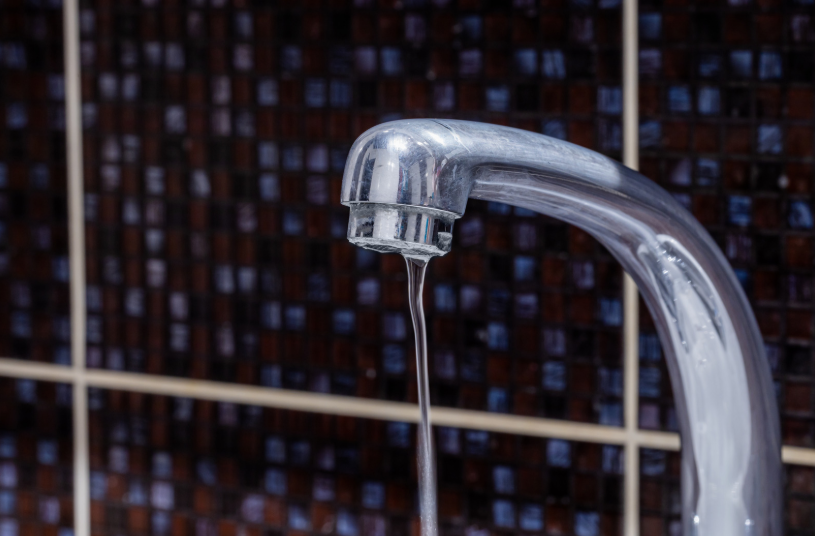
Low water pressure in Louisville, CO is one of those problems that starts as a minor annoyance and turns into a real headache fast. If you’re asking why your water pressure is low, the answer usually comes down to a handful of common causes: aging pipes, mineral buildup from hard local water, a failing pressure regulator, or a partially closed shutoff valve.
We’ve been diagnosing and fixing low water pressure for Louisville homeowners since 1982, running hundreds of pressure diagnostics across the city every year, and we back every diagnosis with a straight-answer estimate before any work begins. Tired of weak water pressure? We can find the cause and fix it fast.
Key Takeaways
- Low water pressure in Louisville homes is most often caused by mineral scale, aging galvanized pipes, or a faulty pressure regulator.
- Homes built in the 1940s through 1960s in Louisville’s Old Town area are especially prone to corroded galvanized supply lines that restrict flow over time.
- A partially closed main house shutoff valve or water meter valve is one of the easiest fixes you can check yourself today.
- Boulder County’s hard water accelerates mineral buildup inside pipes and fixtures, quietly reducing pressure year after year.
- If only one fixture has low pressure, the problem is likely local to that fixture; whole-house pressure loss points to the main line or regulator.
You step into the shower and the water barely reaches your shoulders. You run the kitchen faucet and it trickles. Your washing machine takes forever to fill. These are classic signs of low water pressure, and they’re more common in Louisville than most homeowners realize.
Water pressure problems in the home generally fall into two categories: issues inside your house (valves, a failing pressure regulator, corroded or mineral-clogged pipes, hidden leaks) and issues outside it (municipal supply pressure, shared service lines, or elevation). This article walks you through both.
You’ll learn how to self-triage, what the most common culprits are in Louisville and the surrounding Boulder County area, and when calling a licensed plumber is the right move. Precision Plumbing Heating, Cooling & Electric has been diagnosing exactly these problems for homeowners here since 1982, right from our office at 413 S Arthur Ave in Louisville.
What Does Normal Water Pressure Actually Look Like?
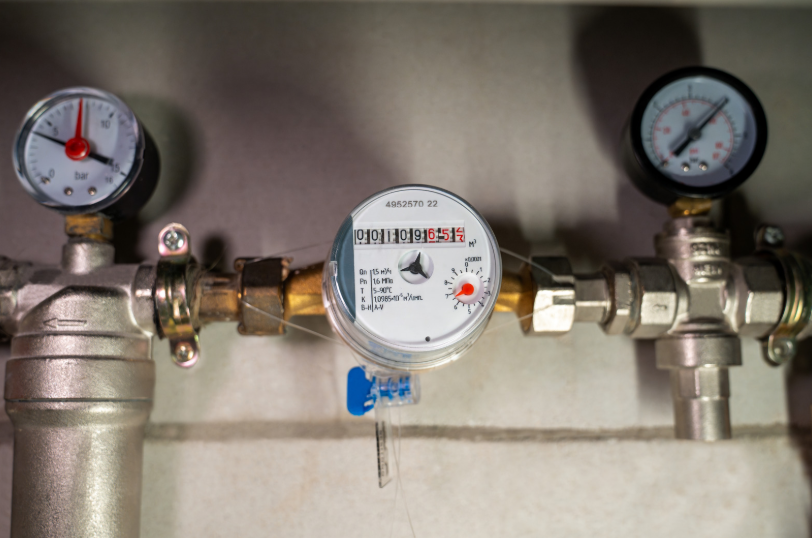
PSI stands for pounds per square inch. It measures the force pushing water through your pipes, not how much water flows. Think of it as the muscle behind every shower, faucet, and appliance in your home.
The PSI Range Every Homeowner Should Know
Normal residential water pressure runs between 40 and 80 PSI. Most plumbers aim for 60 PSI as the practical sweet spot. That range keeps your shower strong, your dishwasher happy, and your pipe joints under no extra stress.
Below 40 PSI and you have a real water pressure problem in your home. Above 80 PSI and you are quietly stressing appliance inlet valves, washing machine hoses, and pipe connections every single day. Both extremes cause damage over time.
One more thing worth knowing: homes at higher elevations naturally receive lower pressure from the municipal supply. It is a fixed physical condition tied to gravity and distance from the pumping station, not a broken pipe.
How to Test Your Home’s Water Pressure in Under 5 Minutes
You do not need a plumber to get a baseline reading. Pick up a simple pressure gauge at any hardware store for under $15. Here is the process:
- Shut off all running water inside the house, including appliances.
- Thread the gauge onto an outdoor hose bib.
- Turn the bib on fully and read the dial.
A reading below 40 PSI confirms low pressure. A reading that swings up and down at different times of day points to a different root cause than a reading that stays consistently low. That distinction matters when diagnosing a warning sign of a leaking pipe versus a supply-side issue. Write down your number before calling anyone.
Why Is My Water Pressure Low? The Most Common Causes
Most low water pressure problems in homes trace back to four root causes. Before you assume the worst, a quick walkthrough of these common culprits can save you time and money. Here is what our plumbers check first on every low-pressure call.
Partially Closed Shutoff Valves
Yes, a partially closed valve really can drop pressure throughout your entire home. There are two valves that matter here. The main house shutoff is usually in your utility room, crawl space, or near the water heater. The water meter valve sits at the street and is controlled by the utility.
Ball valves have a quarter-turn lever handle. When it is fully open, the lever runs parallel to the pipe. Gate valves use a multi-turn wheel.
They need to be turned all the way counterclockwise until they stop. Either type, even slightly closed, restricts flow to every fixture at once. You can check your house shutoff yourself. The meter valve requires a call to your water utility.
A Failing or Misadjusted Pressure Regulator
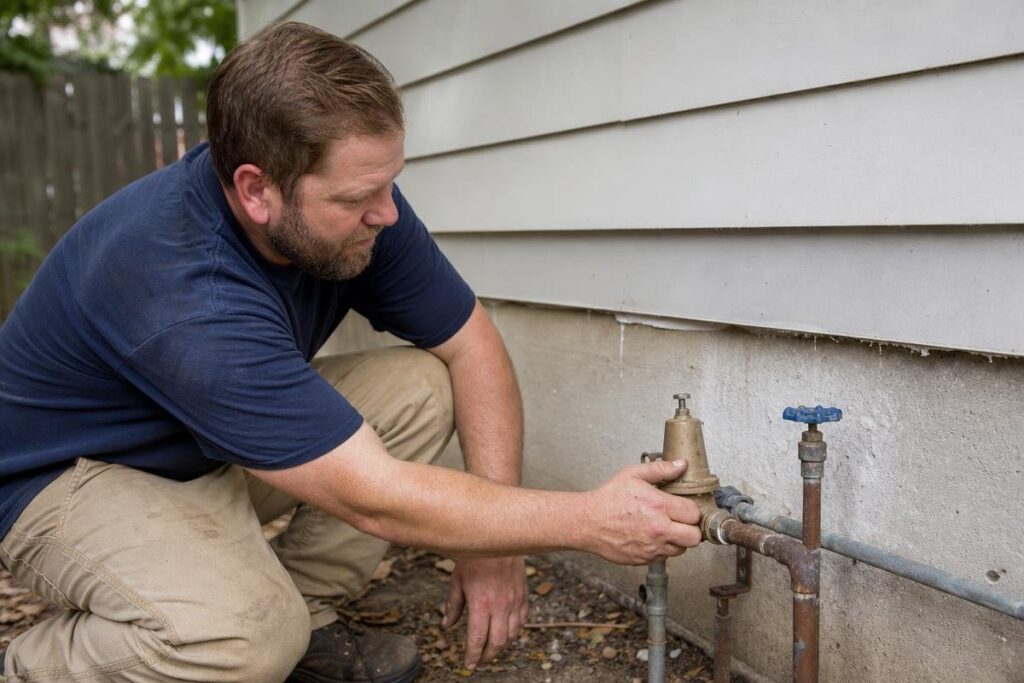
A pressure-reducing valve (PRV) is a bell-shaped device installed where the main water line enters your home. It is factory-set to deliver 50 to 60 PSI (pounds per square inch) inside your house, even if street pressure runs higher. Over time, the internal diaphragm wears out and the PRV either loses its ability to hold pressure or fails in the closed position, starving the whole house.
PRVs typically last 10 to 15 years. If your home was built before the 1980s and you have never replaced it, there is a good chance it is either failing or was never installed to begin with. A failing PRV is one of the most commonly missed water pressure problems in older homes across Boulder County.
Think your pressure regulator is failing? We replace PRVs, often same-day, and recalibrate pressure to the correct 50 to 60 PSI range before we leave.
Mineral Buildup and Corroded Pipes
Colorado Front Range water is hard. Boulder County water runs approximately 150 to 200 mg/L total dissolved solids. That means calcium and magnesium carbonate deposits accumulate on the interior walls of galvanized steel pipes over years, slowly narrowing the effective diameter. The result is reduced flow at every fixture downstream.
Mineral buildup in pipes is a real and significant cause of low water pressure in Colorado homes. Many Old Town Louisville homes were built in the 1940s through 1960s with galvanized steel supply lines, and those original pipes are now well past their prime. Copper and PEX pipe are far less susceptible to this kind of scale buildup. If your home has galvanized steel, that pipe is likely the first place to look.
Suspect scale is choking your galvanized lines? Get a free pressure check and a clear repipe estimate with no obligation.
A Hidden Leak Somewhere in the System
When water escapes through a leak before it reaches your fixtures, pressure drops. The tricky part is that many leaks are invisible. Watch for unexplained spikes in your water bill, damp spots on walls or ceilings, or the sound of running water when every fixture in the house is off. These are classic warning signs of a leaking pipe that should not be ignored.
Slab leaks are a particular concern in older homes built on concrete foundations. The pipes run through or under the slab, and a small crack or joint failure can divert significant water flow without any visible wet spot. Locating a slab leak requires professional detection equipment. Guessing at the location and cutting into concrete without it is expensive and often wrong.
When the Problem Starts at the Street, Not Your Pipes
Not every water pressure drop in your house is a pipe problem. Sometimes the issue begins well before water ever reaches your home. The city supply line, your elevation relative to the pumping station, or a shared lateral can all cause low water pressure that no amount of DIY fixing will solve.
Municipal Supply Pressure Issues
The City of Louisville water utility occasionally drops pressure across an entire zone during main line repairs, hydrant flushing, or after an unexpected main break. If your neighbors are all experiencing the same thing, that is a strong sign the problem is upstream. Check the utility’s service alert page or call them directly before assuming anything is wrong inside your home.
Elevation matters too. At roughly 5,335 feet, Louisville homes farther from a pumping station or sitting at a higher grade naturally receive lower municipal pressure. That is not a pipe fault. A booster pump is often the right long-term answer for those properties. You can also read about how aging underground lines affect your home’s plumbing when the supply infrastructure itself is part of the picture.
Shared Pipelines and Peak-Demand Drops
Older Louisville neighborhoods, including parts of Old Town, sometimes share a single supply lateral from the street main among several homes. During peak-demand hours, typically 6 to 9 AM and again from 5 to 8 PM, everyone draws water at once. Your individual tap pressure drops noticeably as a result. If your pressure recovers by mid-morning, shared-line demand is likely the cause.
A small number of properties on the rural edges of Boulder County rely on private wells instead of municipal supply. For those homes, a failing well pump or an undersized pressure tank are the first things to check when pressure drops.
Fluctuating vs. Consistently Low Pressure: Why the Difference Matters
This distinction helps you self-triage before calling anyone. Here is a simple framework:
- Pressure drops only at certain times of day: Points to shared-line demand or a pressure regulator (PRV) that cannot hold its set point under load.
- Pressure is low at all hours, at every fixture: Points to a PRV failure, a partially closed shutoff valve, or a pipe restriction inside your home.
- Pressure dropped suddenly and stays low: Could be a municipal main break, a leak, or a PRV that has failed completely.
Knowing which pattern you have saves time and gives our team a clearer starting point when you do call.
DIY Checks You Can Do Before Calling a Plumber
Before you pick up the phone, run through these quick checks. Many water pressure problems in home plumbing have simple causes you can confirm in under 10 minutes. Knowing what you find also helps our team diagnose faster when you do call.
Check Every Fixture or Just One?
Start here. Turn on faucets in the kitchen, the bathroom, and the utility sink. Run the shower. If pressure is weak everywhere, the problem is upstream, think the main shutoff, the pressure regulator (PRV), or the municipal supply line. If only one faucet is sluggish, the fix is usually local to that fixture.
The most overlooked fix for single-fixture pressure loss is a clogged aerator. Unscrew the small tip from the faucet spout, rinse out the mineral deposits and sediment, and reattach it. Takes two minutes. Costs nothing. In older Louisville homes, this alone often solves the problem. Boulder County’s moderately hard water accelerates mineral buildup in aerators faster than most homeowners expect.
This is a key first step when figuring out how to fix low water pressure without calling anyone.
Inspect Your Shutoff Valves
Find your main house shutoff valve, usually near the water meter or where the supply line enters the home. Check the type you have:
- Ball valve: The lever should be parallel to the pipe. Perpendicular means it is closed or partially closed.
- Gate valve: Turn counterclockwise until it stops to confirm it is fully open.
Older homes often have both valve types mixed throughout the system after decades of partial updates. A valve that is even slightly closed will drop your pressure noticeably.
Look for Visible Signs of a Leak
Check under every sink, around toilet bases, and in the utility room. Look for moisture, staining, or corrosion on supply lines. These are common warning signs of a leaking pipe that most homeowners miss until the damage is significant.
Then do a meter test. Turn off every fixture in the house. Watch your water meter dial or digital display for 60 seconds. If it moves, water is flowing somewhere it should not be. That points to a hidden leak, and that is when you need professional leak detection equipment. Knowing how to prevent drain backups and repairs starts with catching small leaks early.
Ran through the checklist and still have low pressure? Our licensed plumbers can diagnose what is happening inside your walls or underground. Call us at (720) 464-4485.
How Louisville’s Local Conditions Affect Water Pressure Over Time
Some water pressure problems aren’t caused by a single broken part. They build up slowly over years, shaped by the local water supply, the age of your home, and Colorado’s climate. If you’ve lived on the Front Range for a while, your pipes have been dealing with all three.
Hard Water and Pipe Scale on the Front Range
Water supplied to homes across Boulder County runs at moderate-to-high hardness, roughly 150 to 200 mg/L total dissolved solids. That mineral-heavy water leaves deposits inside your pipes and water heater every single day. Over time, that scale is one of the most common causes of a slow, steady water pressure drop in your house.
You can check your current hardness levels in your utility’s annual water quality report. A whole-house water softener or filtration system won’t undo existing scale, but it will slow future accumulation. That’s a smart long-term investment for any home here. Keep in mind that summer heat can stress your plumbing system too, compounding the effects of scale buildup year-round.
Older Home Stock and Galvanized Supply Lines
Old Town Louisville has a high concentration of homes built in the 1940s through 1960s. Many of those homes still have original galvanized steel supply lines. Galvanized pipe has a functional lifespan of roughly 40 to 70 years, and interior corrosion can cut the usable pipe diameter by 50 percent or more in severe cases.
If your home is in that era and you’ve never repiped, that’s likely where your pressure is going. Repiping with copper or PEX is the permanent fix. It’s not a small job, but it solves the problem for good.
Freeze-Thaw Cycles and Pipe Stress
At 5,335 feet, Louisville sees hard freezes from October through March, with temperatures regularly dropping below 20 degrees Fahrenheit. Pipes in crawl spaces, exterior walls, and unheated garages are the most vulnerable. A freeze can create micro-fractures that reduce flow even after the pipe thaws out completely.
Those small fractures don’t always announce themselves. But they weaken the pipe wall, and the next hard freeze can turn a slow drip into a full burst. Our team handles frozen and burst pipe repairs throughout Louisville, Longmont, and Superior, CO, and we see this pattern every winter.
When to Call a Licensed Plumber for Low Water Pressure
Some low water pressure causes are easy DIY fixes. Others are signs of a deeper problem that gets worse the longer you wait. Knowing the difference saves you time, money, and a lot of frustration.
Signs the Problem Is Beyond a DIY Fix
Stop troubleshooting on your own and call a plumber if any of these apply:
- Pressure is low at every fixture in the house, and both shutoff valves are confirmed fully open
- Pressure has dropped gradually over months or years, which often points to progressive pipe scale or corrosion
- Your water meter shows movement with every fixture turned off, meaning water is going somewhere it shouldn’t
- You notice damp spots, staining, or musty odors in walls or floors
- Your pressure regulator (PRV) is more than 10 years old and pressure feels inconsistent throughout the day
Aging supply lines are a real concern in older Louisville neighborhoods, especially around Old Town. If your house is more than 40 years old, corroded galvanized pipes may be choking your flow from the inside. That’s not something a valve adjustment fixes. Similarly, if you’ve noticed your water heater showing signs it’s on its last leg, low pressure and a failing water heater often share the same root cause: mineral buildup from hard water.
What a Professional Pressure Diagnostic Includes
A licensed plumber doesn’t just guess at low water pressure causes. Here’s what a real diagnostic looks like:
- Pressure readings taken at the main line and at individual fixtures to pinpoint exactly where the drop occurs
- PRV inspection for calibration drift and physical wear, with recalibration or replacement as needed
- Electronic leak detection equipment that locates hidden leaks without opening walls or breaking concrete
- Camera inspection inside supply lines to identify scale buildup or corrosion you can’t see from outside
Our team, including technicians like Dino, Devon, and Billy, walks you through every finding before any work begins. No guesswork, no surprises. If you need help figuring out how to fix low water pressure in your home, contact our team to schedule a diagnostic visit.
Frequently Asked Questions
Can low water pressure damage my appliances?
Yes. Tankless water heaters need a minimum flow rate of around 0.5 to 0.75 GPM to fire the heating element. Below that threshold, you get cold water or no hot water at all. Ice makers and reverse osmosis systems also struggle below 40 PSI, leading to incomplete cycles and poor output.
Is low water pressure a sign of a slab leak?
It can be. A gradual pressure drop over several weeks, combined with warm spots on the floor or a water bill that keeps climbing, points strongly to a slab leak. Our team uses electronic leak detection to confirm the location without breaking concrete. Check our post on warning signs of a leaking pipe for more detail.
How much does it cost to fix low water pressure?
Cleaning an aerator costs nothing. A pressure regulator valve (PRV) replacement runs a few hundred dollars in parts and labor. Repiping a corroded galvanized section is a larger project. We give you a clear diagnosis before any work begins so there are no surprises.
Will a water softener improve my water pressure?
Not directly. A softener slows the mineral scale buildup that gradually chokes your pipe diameter. If scale is already severe, hydro jetting or repiping may need to come first.
How long does a pressure regulator last, and can I replace it myself?
A PRV typically lasts 10 to 15 years, though hard water shortens that. DIY replacement is possible for experienced homeowners, but improper installation can set pressure too high or too low. Most Louisville homeowners we serve prefer having a licensed plumber handle it.
My water pressure is only low in the morning. What causes that?
Peak morning demand on shared supply lines is almost always the cause. Neighbors drawing water simultaneously drops pressure across the whole lateral. A pressure booster pump is the permanent fix if this happens consistently.
If you have worked through the DIY checks and the pressure is still weak, the problem is likely inside your walls or underground. Our team uses electronic leak detection, pressure testing at multiple points, and camera inspection to find the cause without guesswork or unnecessary wall openings.
Call us at (720) 464-4485 or stop by our office at 413 S Arthur Ave, Louisville, CO 80027. We serve Louisville, Denver, Longmont, Broomfield, and communities across the Front Range. Our licensed plumbers will give you a straight answer about what it will take to fix it.
Ready to Get Started with Precision Plumbing Heating, Cooling & Electric?
Call (720) 464-4485 to speak with our team directly. We’re ready to answer your questions, walk you through your options, and help you find the right solution for your needs. Whether you’re just starting to plan or ready to move forward, we’ll make the process simple and stress-free.
Reach out today and let’s talk about how we can help.