

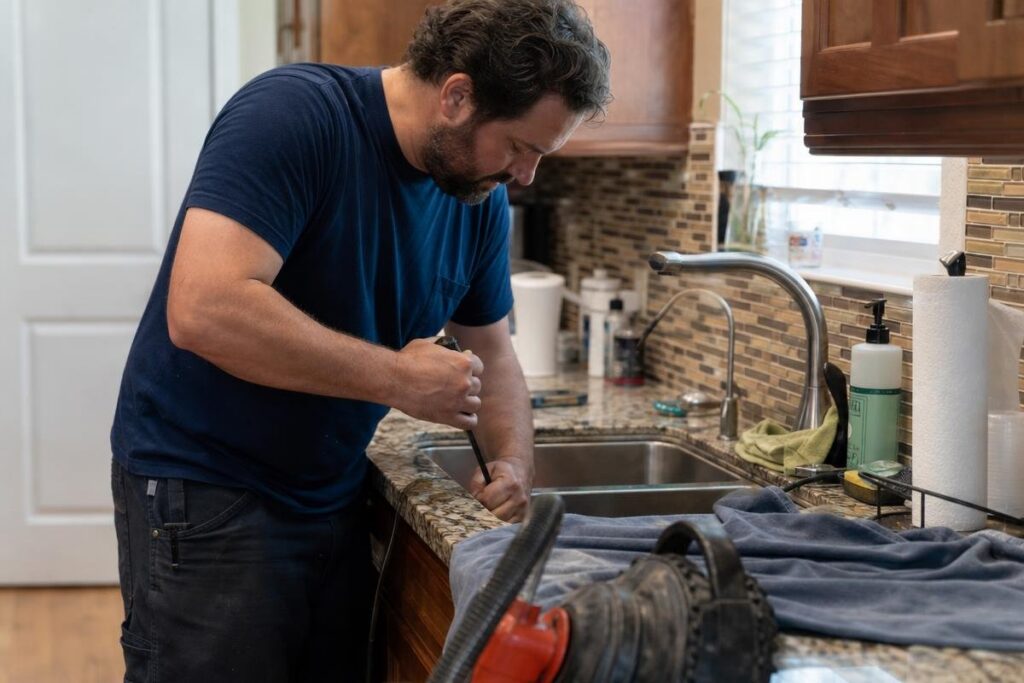
Got a slow or stopped drain in your Louisville, CO home? You’re not alone. Older homes in and around Old Town Louisville deal with mineral buildup, grease, and hair clogs on a regular basis. Knowing how to unclog a drain yourself can save you time and money. We’ll walk you through the most effective methods step by step, from a simple plunger to a hand auger. And if the clog keeps coming back, our team at Precision Plumbing Heating, Cooling & Electric has been solving drain problems for Colorado homeowners since 1982.
Clog won’t budge? Our Louisville plumbers are ready to help today.
Key Takeaways
- Most drain clogs in Louisville, CO homes respond to a plunger, hand auger, or a baking soda and vinegar flush.
- Knowing how to unclog a drain correctly prevents damage to older pipes common in Colorado homes built before 1980.
- Boiling water works well on grease clogs but should not be poured directly into older PVC drain lines or porcelain sinks. Let the water cool for two minutes first.
- Recurring clogs often signal a deeper problem like root intrusion or mineral scale that needs a professional drain cleaning.
Why Do Drains Clog in Louisville Homes?
Drains clog in Louisville homes for two main reasons: what goes down the drain and what is already narrowing the pipe before anything goes down it. Clogs don’t happen randomly, and knowing what you’re actually dealing with makes a DIY drain fix a lot more effective. Understanding both factors is the difference between clearing a clog once and clearing it over and over.
The Most Common Culprits by Drain Type
Different drains fail for different reasons. Here’s what we find most often:
- Kitchen sink: FOG (fats, oils, and grease) is the top offender. It pours down hot and liquid, then cools and solidifies on the pipe wall. In older Louisville homes with cast-iron drain lines, the rough interior surface grabs grease fast.
- Bathroom sink and tub: Hair is the main problem. A single shower sheds 50 to 100 hairs. They tangle around the stopper or collect in the p-trap until water can barely move. Check out our guide on top tips on how to unclog shower drains if this is your situation.
- Toilet: Non-flushable wipes are the biggest culprit. Even products labeled “flushable” do not break down like toilet paper. They snag in older sewer laterals and cause full backups.
- Basement floor drain: Spring snowmelt off the foothills raises the water table each March through May. That added ground pressure can push water back through floor drains in homes across the older parts of town.
How Louisville’s Hard Water Makes Clogs Worse
Louisville’s tap water sits in the moderately hard range typical of Front Range municipal supplies, leaving calcium and magnesium deposits on the inside of your pipes. Homeowners often notice the same white scale on faucets and shower heads that builds up inside drain lines out of sight.
Over time, that mineral scale narrows the pipe diameter. A pipe that used to handle grease or hair without trouble now catches everything. Homes in the older neighborhoods near Old Town, many built decades ago, have galvanized steel or early PVC drain lines that accumulate scale faster than modern materials. Scale buildup is often why your drain keeps clogging right after you clear it. You removed the blockage but not the rough, narrowed surface that caused it. Read more about why proper drain cleaning matters for your home to understand the full picture. Clearing a stubborn drain in Louisville often means addressing the scale, not just the clog itself.
5 Ways to Unclog a Drain Before Calling a Plumber
Trying to figure out how to unclog a drain without a plumber? Start simple and work your way up. These five methods handle most residential clogs. Try them in order.
Method 1: Boiling Water or Very Hot Water Flush
Boil a full kettle, then let it cool for two minutes. Pour it in two or three stages, waiting 30 seconds between each pour. That pause lets the hot water work on the grease or soap scum before the next wave hits.
One caution: skip true boiling water on porcelain sinks or PVC pipes. Sustained heat above 140°F can soften PVC joints over time. Very hot tap water works fine. Also, hot water alone will not dissolve the mineral scale that Louisville’s moderately hard water leaves behind. If the drain is still slow after this, move to Method 3.
Method 2: Plunger (The Right Way)
Use a cup plunger for flat sink and tub drains. Use a flange plunger for toilets. The step most homeowners skip: stuff a wet rag into the overflow drain opening before you start. Without that seal, you lose suction and the plunger does almost nothing.
Fill the basin with enough water to cover the plunger cup. Do 10 to 15 firm, rapid pumps, then pull up sharply. Repeat two or three times. A small beehive-style mini plunger works especially well on bathroom sink drains where a standard cup plunger is awkward to seat.
Method 3: Baking Soda and Vinegar
Remove any standing water first. Pour half a cup of baking soda directly into the drain, then immediately follow with half a cup of white vinegar. Cover the drain opening right away with a rag or stopper. That forces the reaction down into the pipe instead of up and out.
Wait 15 to 30 minutes, then flush with hot (not boiling) water. This method works well on light grease, soap scum, and mild mineral buildup. It also deodorizes. A quick note on chemical drain cleaners like Drano or Liquid-Plumr: lye-based formulas can corrode galvanized steel and soften PVC joints with repeated use. Older Louisville homes with original galvanized lines are especially vulnerable, so a gentler flush is the safer choice for aging pipes.
Method 4: Drain Snake or Hand Auger
A 25-foot hand auger handles most residential clogs and costs $20 to $40 at any hardware store. For bathroom sinks, remove the stopper first. Feed the cable in slowly, cranking clockwise as you push forward. When you hit resistance, keep rotating to either break up the clog or hook it. Then pull back and flush with hot water.
For tougher clogs, a drill-powered auger adds torque. This is one of the most effective fixes you can do yourself. That said, a 25-foot auger will not reach hardened grease buildup, serious mineral scale, or root intrusion. Homes with longer drain runs may need professional equipment. For shower drains specifically, our earlier guide on unclogging shower drains fast in Colorado homes offers a more targeted approach.
Method 5: Wet/Dry Vacuum
Set your wet/dry vac to liquid mode. Press a plunger cup over the drain opening to create a seal, then hold the vacuum hose against it. Run the vacuum on its highest setting for 30 to 60 seconds.
This works best for pulling hair and soft debris sitting near the drain opening in tub and shower drains. It is not effective on deep clogs or grease buildup. Think of it as a first-pass option before reaching for the snake.
Recurring clogs in the same drain? We run a camera down the line to find the root cause instead of guessing. Schedule a camera inspection with our Louisville team today.
Drain Cleaning Products: What Works, What’s Controversial, and What to Avoid
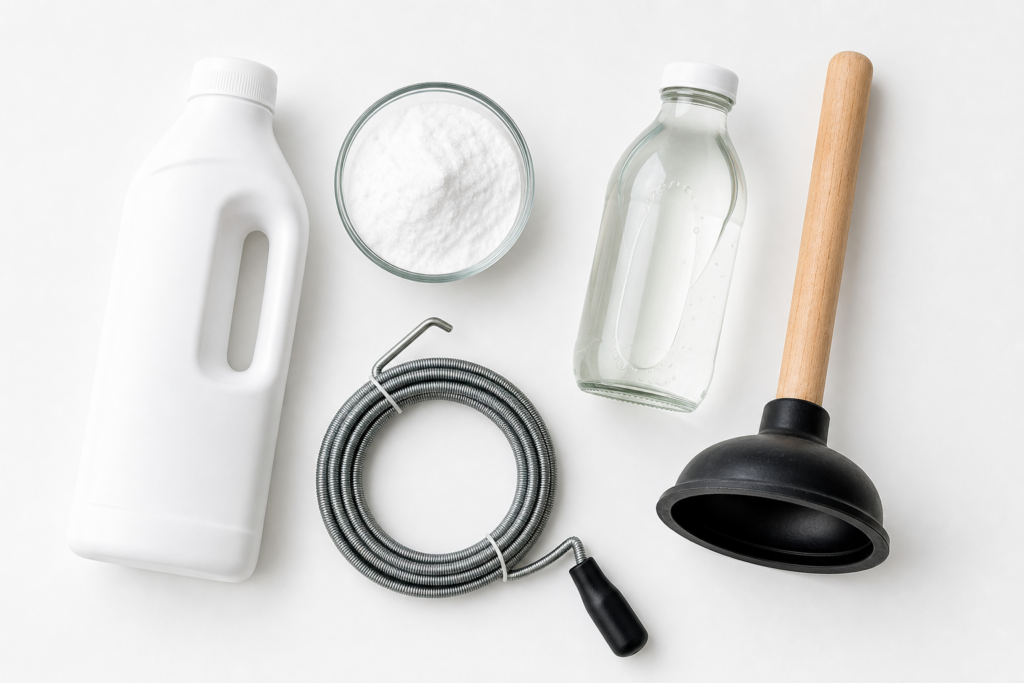
Not all drain cleaning products are equal. Some work. Some cause real damage. And some create a bigger headache for the plumber you end up calling anyway. Here is an honest breakdown from our team.
Chemical Drain Cleaners: The Risks Colorado Plumbers See
There are two main types of chemical drain cleaners. Caustic cleaners use lye or sodium hydroxide (think Drano Max Gel style products). Acid-based cleaners use sulfuric acid and are mostly professional-grade. Both generate heat as they react with the clog.
That heat is the problem. In PVC pipes, it can warp joints. In galvanized steel lines, repeated use speeds up corrosion from the inside out. Older Louisville homes with original galvanized drain lines are especially at risk. And if the cleaner does not clear the clog? Now there is a pipe full of caustic liquid sitting there. Our technicians deal with that exact situation on service calls. It is a real hazard.
There is also an environmental angle. Along the Front Range, chemical compounds from drain cleaners can pass through municipal treatment systems incompletely. That is worth considering before you pour.
Enzymatic Drain Cleaners: A Safer Maintenance Option
Enzymatic cleaners like Bio-Clean or Green Gobbler Enzyme use bacteria and enzymes to digest organic matter. They are safe for all pipe materials, including older galvanized and PVC. The catch is time. They need six to eight hours to work and are not built for emergency clogs. Think of them as monthly maintenance, not a fast fix. They will not help you tonight, but used regularly they keep buildup from becoming a problem in the first place. Our guide on how to prevent costly drain backups and repairs covers this kind of routine maintenance in more detail.
Drain Cleaning Tools Worth Keeping Under Your Sink
If you want to know how to unclog a drain without a plumber, having the right tools on hand matters more than any product. Keep these basics stocked:
- Cup plunger: For flat-bottomed sinks and tubs. Creates a seal on flat surfaces.
- Flange plunger: For toilets. The extra rubber flap fits the drain opening.
- 25-foot hand auger: Gets past what a plunger cannot reach. Worth every penny.
- Zip-It tool: A cheap plastic strip with barbs. Pulls hair out from bathroom sink stoppers fast.
- Drain hair catcher or strainer: Fits over tub and shower drains. Prevents the clog from forming in the first place.
Not sure if your drain needs a product, a tool, or a plumber? Call our team at (720) 464-4485 and we will tell you straight.
When DIY Isn’t Enough: Signs You Need a Professional Drain Clearing Service
Sometimes a plunger and a baking soda flush just won’t cut it. If you’re dealing with a stubborn drain clog anywhere across Louisville, knowing when to call a plumber can save you from a much bigger mess.
Warning Signs That Point to a Deeper Problem
Run through this checklist. If any of these match what you’re seeing, stop the DIY attempts and call a pro.
- Multiple drains backing up at once: This isn’t a branch clog. It points to a blockage in your main sewer line and needs immediate attention.
- Gurgling sounds from other fixtures: Hear your toilet gurgle when you run the sink? That’s air being displaced by a partial blockage in the shared drain stack.
- Water backing up into other fixtures: If flushing the toilet causes water to rise in the tub, your main line is blocked. Call now, not tomorrow.
- The same drain clogs three times in six months: Recurring clogs signal mineral scale narrowing, root intrusion, or a partial pipe collapse. In older parts of Louisville, cast-iron lines many decades old are common culprits. Learning how to prevent costly drain backups and repairs can help, but a camera inspection is the real answer here.
- Persistent sewer odor: A smell that won’t go away after refilling a dry p-trap suggests a venting problem or a break in the drain line itself.
- Completely blocked for more than 24 hours: If nothing you’ve tried has moved the clog at all, a deeper obstruction is likely. Don’t keep forcing it.
Louisville’s mature street trees and the cottonwoods lining Coal Creek send out root systems that actively seek moisture, which is why root intrusion is a common cause of the drain clearing calls we get every season.
What Professional Drain Clearing Actually Involves
Knowing when to call a plumber for a clogged drain is one thing. Knowing what happens next builds confidence in the process.
We start with a camera inspection. A small camera goes into the line so we can see exactly what we’re dealing with, whether roots, scale, grease, or a collapsed section of pipe. No guessing. Then we choose the right clearing method.
- Motorized drain auger: Good for soft organic clogs. Gets further than any hand snake you’d buy at a hardware store.
- Hydro jetting: High-pressure water up to 4,000 PSI scours pipe walls clean. It doesn’t just punch through grease and mineral scale, it removes it. That is why hydro jetting sewer line demand keeps growing, especially for homes with recurring problems.
- Sewer line repair: If the pipe itself is cracked or separated, clearing the clog is only a temporary fix. We’ll tell you straight.
One of our customers put it simply: “Dino assessed the situation with a clogged drain and was able to address the issue immediately, professional and knowledgeable.” That’s the standard we hold every visit to. Our tech Devin goes a step further, showing customers what caused the problem and how to keep it from coming back. Every visit is backed by upfront pricing, so you know the cost before we start.
If your drain keeps coming back, hydro jetting is usually worth it. A snake punches through. Hydro jetting cleans the pipe wall. There’s a real difference in how long the fix lasts.
Drain Clogs in Louisville Homes: What Local Plumbers See Most
Yes, drain problems are more common in older Louisville neighborhoods. When our team gets called out to the streets around Old Town and the mid-century subdivisions built as the town grew, we often find the same thing: original cast-iron or galvanized steel drain lines that have been in the ground for decades. Those pipes are rough on the inside. Grease sticks. Mineral scale builds up. A clog that a plunger clears in a newer home on the east side of town can take hydro jetting to clear in a mid-century ranch a few blocks away.
Older Neighborhoods, Older Pipes
Cast iron and galvanized steel were solid materials for their time. But after 50 to 80 years, the interior surfaces corrode and pit. That texture catches everything: grease, hair, soap scum, and mineral deposits from Louisville’s moderately hard water supply. What starts as slow drainage turns into a full blockage faster than you’d expect.
Tree root intrusion is real, and it happens more than most homeowners realize. Mature cottonwoods and silver maples with root systems that seek out moisture surround many older lots. Older clay-tile or cast-iron sewer laterals have joints those roots can penetrate. Once roots get in, debris catches on them and clogs build fast. If your drain backs up repeatedly with no obvious cause, root intrusion is worth investigating. Read more about how homeowners who conduct sewer line replacement avoid tearing up their yards to fix this.
Seasonal Drain Issues in Louisville
We see two clear spikes every year. The first runs from Thanksgiving through New Year. Holiday cooking means more grease going down kitchen drains, and grease is the top cause of kitchen clogs nationwide. Learn to save your drains during the holiday season before the problem starts.
The second spike hits in March through May. When the foothills snowpack melts off, the water table rises. That puts pressure on sewer laterals and basement floor drains. Louisville’s clay-heavy soils also shift and shrink during dry summers, stressing older lateral joints and creating partial separations that catch debris. If you’re seeing recurring backups in spring, the pipe itself may be the problem, not just what’s inside it.
Frequently Asked Questions
How do I unclog a drain that won’t respond to a plunger?
After 10 to 15 firm plunger attempts with no result, move to a hand auger. If the snake also fails, the clog is likely deeper than 25 feet, hardened grease, mineral scale, or root intrusion. All three need professional equipment. Forcing it further risks cracking older pipes.
Is it safe to use baking soda and vinegar to clean drains?
Yes. This flush is safe on PVC, ABS, cast iron, and galvanized steel. It is good for light buildup and deodorizing. It will not clear a fully blocked drain or dissolve mineral scale. Never combine it with chemical drain cleaners. That mixture produces harmful fumes.
How much does professional drain clearing cost in Louisville, CO?
Standard drain clearing with a motorized auger typically runs $150 to $350 depending on drain location, clog depth, and access. Hydro Jetting of sewer lines generally runs $300 to $600 for a residential line. Camera inspection is often recommended alongside clearing. Our team gives you upfront pricing before any work begins.
Can I use a drain snake on a toilet?
Do not use a standard hand auger on a toilet. The metal cable will scratch and crack the porcelain bowl. Use a toilet auger, also called a closet auger, with a protective rubber sleeve. They cost $20 to $40. If the toilet is still blocked after two or three attempts, the clog is in the drain stack or main sewer line.
How do I know if my clog is in the main sewer line or just one drain?
One slow fixture means the clog is in that drain branch. Usually a DIY fix. Two or more fixtures backing up at the same time, or a toilet flush that causes water to rise in the tub, means the main sewer line is blocked. That needs professional clearing and a camera inspection.
How often should I have my drains professionally cleaned?
Most Colorado homes benefit from professional drain cleaning every 18 to 24 months. Homes with older cast-iron or galvanized lines, heavy tree root exposure, or recurring clogs do better with annual cleaning. Kitchen drains in households that cook frequently often need attention sooner. Read more about why proper drain cleaning matters for your home to understand the full impact on your plumbing system.
Does Precision Plumbing offer same-day drain clearing in Louisville?
Yes. Same-day appointments are available for drain clearing in Louisville and surrounding communities. Our team has been serving this region since 1982 and carries equipment to handle everything from a simple hair clog to a full main line hydro jetting on the same visit.
Ready to Get Started with Precision Plumbing Heating, Cooling & Electric?
Call (720) 464-4485 to speak with our team directly. We’re ready to answer your questions, walk you through your options, and help you find the right solution for your needs. Whether you’re just starting to plan or ready to move forward, we’ll make the process simple and stress-free.
Reach out today and let’s talk about how we can help.