

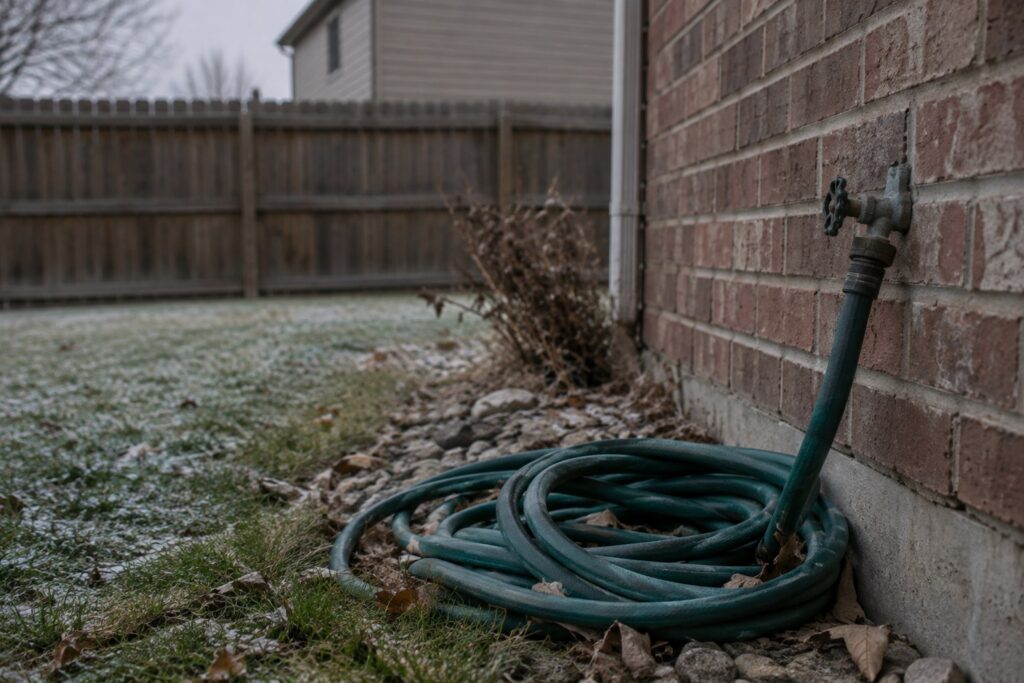
Knowing how to prevent frozen pipes is one of the most useful things a Louisville homeowner can learn before winter settles over the Front Range. A single cold night can turn a forgotten garden hose or an uninsulated crawl space line into a cracked pipe and a soaked floor. At Precision Plumbing Heating, Cooling & Electric, our licensed technicians have helped Boulder County families protect their plumbing since 1982. We see the same weak spots every fall, and most of them take an afternoon or less to fix. Below is the October checklist we walk our own customers through, plus what to do if a pipe freezes anyway.
Want a second set of eyes on your plumbing before the cold arrives? Our team is ready to help.
Key Takeaways
- The first fall freeze around Boulder County usually arrives in early to mid October, so the best time to winterize your plumbing is late September or early October.
- Disconnect every garden hose before the first freeze, even if you have frost-free sillcocks, because an attached hose traps water that can freeze and crack the valve.
- Pipes in crawl spaces, garages, attics and exterior walls are the most likely to freeze and should be insulated and protected from drafts.
- Keep your thermostat at 55°F or higher when you travel, and open cabinet doors and let a faucet drip during deep cold snaps.
- If a pipe freezes, thaw it gently with a hair dryer or warm towels, never an open flame, and call a plumber if you cannot reach or locate the frozen section.
Louisville sits around 5,300 feet, and our weather can swing hard. A sunny 60-degree afternoon can give way to an upslope snowstorm and single-digit lows within a day. That freeze-thaw pattern is tough on plumbing, especially in older homes where pipes run through unheated spaces.
According to the NOAA Physical Sciences Laboratory in Boulder, the average first fall freeze in our area falls in early to mid October. That means your window to prepare is short. The good news is that most freeze protection is simple, inexpensive and well within reach for a typical homeowner.
Why Pipes Freeze and Burst in Boulder County Homes
Water expands as it turns to ice. When ice forms inside a pipe, it creates a blockage, and pressure builds in the water trapped between that blockage and a closed faucet. That pressure, not the ice itself, is usually what splits the pipe. Often the break shows up in a section that never froze at all.
The Temperature That Puts Pipes at Risk
Research from the Insurance Institute for Business & Home Safety (IBHS) has pointed to roughly 20°F outdoors as the point where pipes in homes with little or no insulation become likely to freeze. Here in Louisville, nights in the teens and below are common through the heart of winter, and arctic fronts can push temperatures well below zero. If any of your pipes are unprotected, you can expect them to be tested at least a few times each season.
Why Older Homes Are More Vulnerable
Many homes in Old Town Louisville were built long before modern insulation standards. Water lines may run along exterior walls, under drafty floors or through unconditioned crawl spaces. Newer homes in neighborhoods like Coal Creek tend to have better protection, but even they can have hose bibs, garage lines or bonus rooms over unheated spaces that freeze in a hard cold snap.
Dry Air and Wind Make It Worse
Our dry Front Range air and strong winter winds pull heat out of a house quickly. A small gap around a dryer vent, a pipe penetration or a foundation crack can send a stream of frigid air straight onto a water line. That is why sealing drafts matters almost as much as insulation.
Your October Checklist: How to Prevent Frozen Pipes Outside
The outside of your home is where most freeze problems start. Work through these steps before the first forecast low below 32°F.
Disconnect and Drain Garden Hoses
Unscrew every hose from its spigot, drain it and store it in a garage or shed. A hose left attached holds water against the valve. When that water freezes, it can back up into the spigot and the pipe behind it.
Frost-Free Sillcocks Still Need the Hose Off
Many Louisville homes have frost-free sillcocks, which place the actual shutoff valve several inches inside the heated wall. They are a great feature, but they only work if the water can drain out of the spigot after you close it. An attached hose blocks that drainage, so the trapped water can freeze and crack the valve body inside your wall. These cracks often go unnoticed until the first time you turn the spigot on in spring and water runs into the basement or wall cavity.
Shut Off and Drain Older Hose Bibs
If your home has standard hose bibs, look for an interior shutoff valve on the line feeding each one, often in the basement or crawl space. Close it, then open the outdoor spigot to let the remaining water drain. Leave the outdoor spigot open for the winter. An insulated foam cover over each spigot adds another layer of protection.
Winterize Sprinkler Lines
Irrigation systems need to be shut off and cleared of water before the ground freezes. Many homeowners schedule a sprinkler blowout in late September or early October. Do not skip this step on the backflow device, which is often exposed above ground and freezes easily.
Not sure whether your spigots are frost-free or how to drain them? Give our team a call and we will talk you through it.
Protect Vulnerable Pipes Inside Your Home
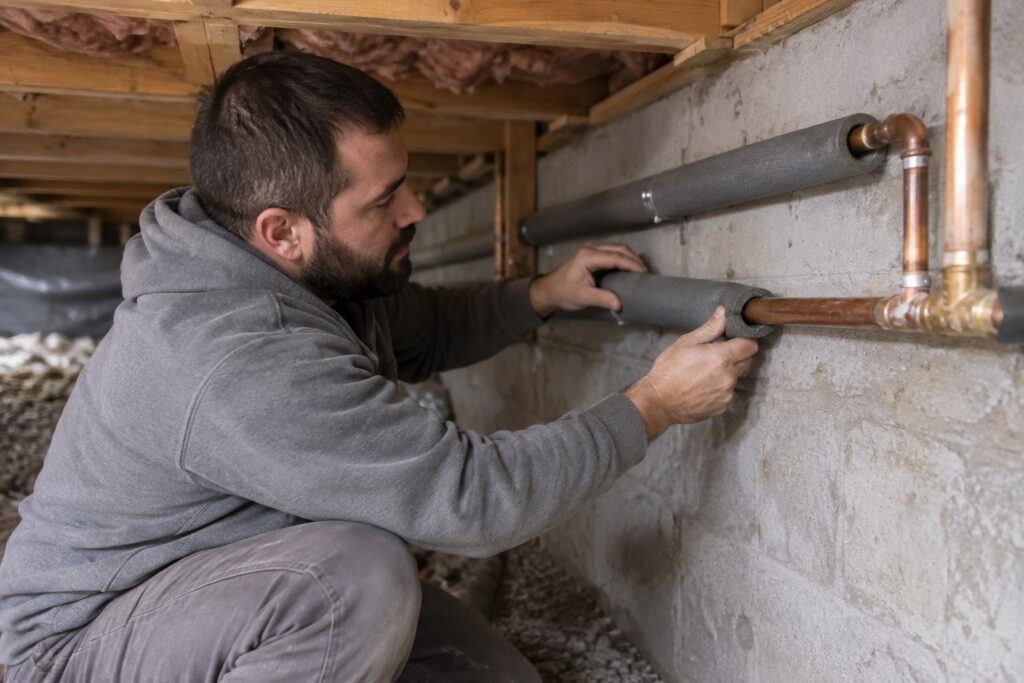
Once the outside is buttoned up, turn your attention to the pipes that run through cold parts of the house. The table below shows where we find frozen lines most often and how to protect them.
| Location in the Home | Risk | Fix |
|---|---|---|
| Outdoor hose bibs and sillcocks | High. Exposed directly to outside air. | Disconnect hoses, close interior shutoffs, drain spigots and add foam covers. |
| Crawl spaces | High. Unheated and often drafty. | Insulate pipes with foam sleeves, close or seal vents in winter and block gaps in the foundation. |
| Attached garages | High. Garage doors open and close all day. | Keep the garage door closed, insulate exposed lines and consider relocating lines that serve laundry or utility sinks. |
| Attics | Medium to high. Very cold on winter nights. | Insulate pipes and make sure attic insulation covers them on the cold side, not underneath. |
| Exterior walls and under sinks | Medium. Cold seeps through the wall cavity. | Open cabinet doors during cold snaps, seal drafts and add wall insulation where practical. |
| Basements and utility rooms | Low to medium. Usually warmer, but rim joists leak cold air. | Seal rim joist gaps and insulate lines that run along the foundation wall. |
Insulate Pipes in Crawl Spaces, Garages and Attics
Foam pipe sleeves from a hardware store are an easy first step. Cut them to length, slip them over the pipe and tape the seams so there are no gaps. Pay extra attention to elbows, valves and any spot where a pipe passes close to an outside wall. In very cold or hard-to-reach areas, our technicians may recommend more robust protection.
Seal Drafts Near Pipes
Look for daylight or feel for cold air around pipe penetrations, dryer vents, rim joists and foundation cracks. Seal small gaps with caulk and larger ones with expanding foam rated for the job. Stopping a draft can keep a pipe several degrees warmer on the coldest nights.
Improve the Insulation Around Your Plumbing
Sometimes the real issue is the building envelope itself. Thin attic insulation or an uninsulated wall cavity leaves pipes exposed no matter how many sleeves you add. Our home insulation services can help close those gaps, which also keeps your home more comfortable and can ease the load on your heating system.
Cold Snap Habits That Keep Water Moving
Insulation is your long-term defense. During a deep arctic outbreak, a few daily habits make up the rest of the plan.
Keep the Thermostat at 55°F or Higher
The American Red Cross recommends leaving the heat on and set no lower than 55°F if you will be away during cold weather. Keep it steady overnight as well. A deep nighttime setback can let pipes in exterior walls drop below freezing. If you travel often, a smart thermostat that alerts you to a temperature drop is worth considering, and a neighbor who can check the house is even better.
Open Cabinet Doors and Let Faucets Drip
When the forecast calls for single digits or below zero, open the kitchen and bathroom cabinet doors on exterior walls so warm room air can reach the pipes. Let a cold water faucet served by exposed pipes drip. Moving water is much less likely to freeze, and an open faucet relieves pressure if ice does start to form. Move cleaners and chemicals out of reach if you have kids or pets.
Know Where Your Main Water Shutoff Is
Every adult in the house should know where the main shutoff valve is and how to close it. In many Louisville homes it sits in the basement or crawl space near where the water line enters, and in some homes it is in a utility closet or garage. Test it in the fall. If the valve is stuck, corroded or leaking, it is far better to find out now than during a flood. If you are planning a trip, consider shutting off the main and draining the lines before you leave.
What to Do If a Pipe Freezes
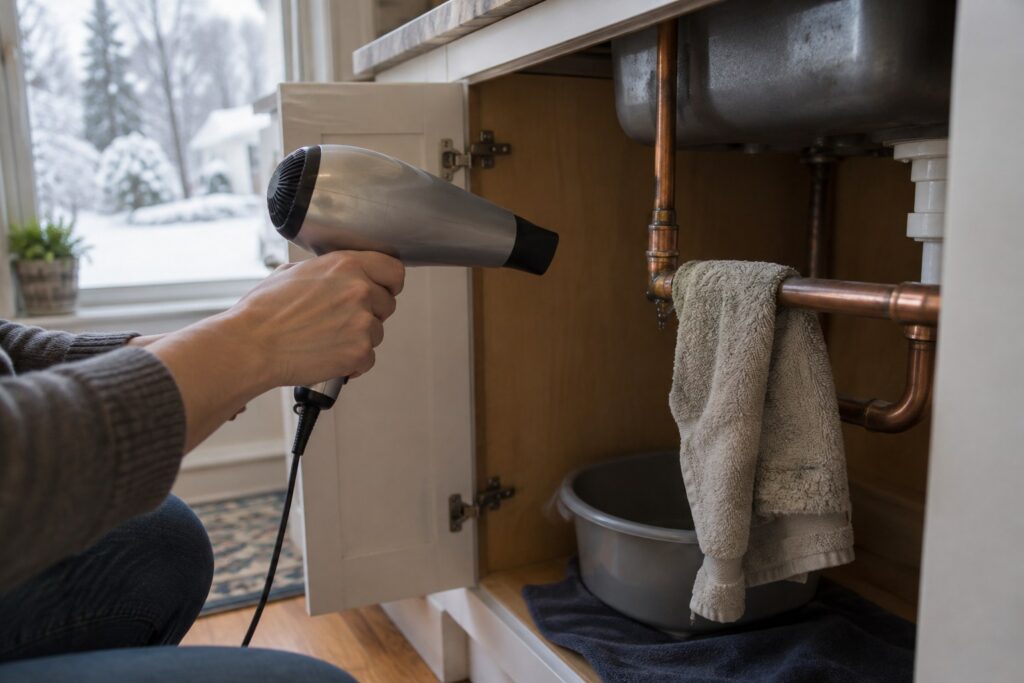
Even with good preparation, a pipe can still freeze during an extreme cold snap. The most common sign is a faucet that produces only a trickle or nothing at all while other fixtures work normally. Frost on an exposed pipe is another clue.
Open the Faucet First
Open the faucet that the frozen pipe serves, both hot and cold sides. As the ice melts, flowing water helps clear the rest of the blockage and gives pressure a place to go.
Apply Gentle Warmth
Start warming the pipe at the faucet end and work back toward the frozen section. A hair dryer, warm towels wrapped around the pipe or a portable space heater kept a safe distance from anything flammable all work. Never use a propane torch, open flame or charcoal heater. These can start a fire, damage the pipe and create a carbon monoxide hazard. Keep electrical appliances away from standing water.
Check Every Other Faucet
If one pipe froze, others may be close behind. Turn on each faucet in the house to confirm water flows normally, and pay close attention to fixtures on exterior walls.
When to Call a Plumber
Call a professional if you cannot find the frozen section, if it is inside a wall or ceiling, or if your efforts are not restoring flow within a reasonable time. Our frozen and burst pipe repair team can safely thaw lines and check them for damage before you turn the water back on.
Signs a Pipe Has Burst and What to Do Next
A burst pipe is not always obvious. Sometimes it splits while frozen and does not leak until the ice thaws hours later. Watch for these warning signs after a hard freeze.
Common Warning Signs
- Water stains, bulging drywall or dripping from a ceiling or wall.
- The sound of running water when every fixture is off.
- A sudden drop in water pressure throughout the house.
- Puddles in the basement, crawl space or garage.
- A water meter that keeps moving when no water is in use.
Low pressure has many causes, and our post on why water pressure drops in Louisville homes covers the most common ones. After a freeze, though, a pressure drop should always prompt a closer look.
Shut Off the Water and Call for Help
If you see water, close the main shutoff right away and open a faucet on the lowest level to drain the system. If water is near outlets, an electrical panel or appliances, stay clear and turn off power at the breaker only if you can reach the panel safely without standing in water. Then call for emergency plumbing service. Take photos for your insurance company and move belongings out of harm’s way.
Find Hidden Leaks Before They Spread
A small crack in a hidden line can leak slowly for weeks. If you suspect a problem but cannot see it, professional leak detection pinpoints the source without tearing open walls at random.
Long-Term Fixes for Older Old Town Louisville Homes
If the same pipe freezes every winter, sleeves and dripping faucets are just a bandage. Older homes often need a more permanent solution, and fall is the ideal time to plan it.
Start With a Plumbing Inspection
A professional plumbing inspection maps where your lines run, identifies pipes in cold zones and checks the condition of your shutoff valves and fixtures. Our technicians explain every option before any work starts, so you can decide what makes sense for your home and budget.
Repiping and Relocating Vulnerable Lines
In many older Louisville homes, the best fix is to move water lines out of exterior walls, garages and crawl spaces and into heated parts of the house. Aging galvanized steel pipes are also prone to corrosion and leaks, which makes them a poor match for our freeze-thaw cycles. Our repiping services can replace old lines with modern materials and reroute them where they are better protected. Pricing varies with the size of the home and the scope of the work, so we always provide a written, upfront estimate.
Plan Ahead for Next Winter
Repiping and insulation projects are easier to schedule before the busiest weeks of winter. Financing is available through Service Finance Company for larger projects. Our local Louisville plumbing contractor team can help you plan work that fits your timeline.
Ready to protect your plumbing before the first hard freeze? Book a visit and our technicians will check your most vulnerable lines.
Frequently Asked Questions
When Should I Winterize My Pipes in Louisville?
Aim to finish by early October. The NOAA Physical Sciences Laboratory in Boulder places the average first fall freeze in early to mid October, and some years bring a freeze in September. Disconnecting hoses, draining spigots and insulating exposed lines before that first cold night gives you the best protection with the least stress.
Do Frost-Free Sillcocks Need a Hose Disconnected?
Yes. A frost-free sillcock keeps its valve inside the heated wall, but it relies on water draining out of the spigot after you close it. An attached hose blocks that drainage, so water can freeze inside the valve and crack it. The damage is often hidden until spring, when the spigot leaks into your wall or basement.
What Temperature Should I Keep My House at to Prevent Frozen Pipes?
The American Red Cross recommends keeping your thermostat at no lower than 55°F when you are away during cold weather. Many homeowners keep it a bit warmer during extreme cold snaps, especially if pipes run along exterior walls. Avoid deep overnight setbacks when temperatures drop into the single digits or below zero.
Should I Let My Faucets Drip at Night?
During deep cold snaps, yes. Let a cold water faucet served by exposed or exterior wall pipes drip slowly. Moving water is less likely to freeze, and an open faucet relieves pressure if ice starts to form. You do not need to drip every faucet, only the ones on the most vulnerable lines.
Can I Use a Heat Gun or Torch to Thaw a Frozen Pipe?
Never use a torch or any open flame. It can start a fire inside a wall, damage the pipe and create a carbon monoxide risk. Use gentle heat such as a hair dryer, warm towels or a space heater kept a safe distance from anything flammable. If you cannot reach the frozen section, call a plumber.
How Do I Know If a Frozen Pipe Has Burst?
Watch for water stains, dripping ceilings, puddles, a sudden drop in water pressure or the sound of running water with every fixture off. Some pipes split while frozen and only leak once they thaw. If you see signs of a burst, close the main shutoff right away and call Precision Plumbing Heating, Cooling & Electric at (720) 464-4485.
Learning how to prevent frozen pipes now can save you from water damage, cleanup and disruption in the middle of winter. Disconnect your hoses, insulate exposed lines, seal drafts and keep your home warm through every cold snap. If you want help, call Precision Plumbing Heating, Cooling & Electric at (720) 464-4485. We proudly serve Louisville, Boulder, Superior, Lafayette, Erie, Broomfield and the greater Denver metro area from our office at 413 S Arthur Ave, Louisville, CO 80027.
Ready to Get Started with Precision Plumbing Heating, Cooling & Electric?
Our licensed and insured technicians have protected Boulder County plumbing since 1982, with honest advice and upfront pricing before work begins. Call (720) 464-4485 or reach out online to schedule a visit before the first hard freeze.